
Xulane Patch Review: Is This Birth Control Patch Worth It?
 By Anna Krause November 2, 2026
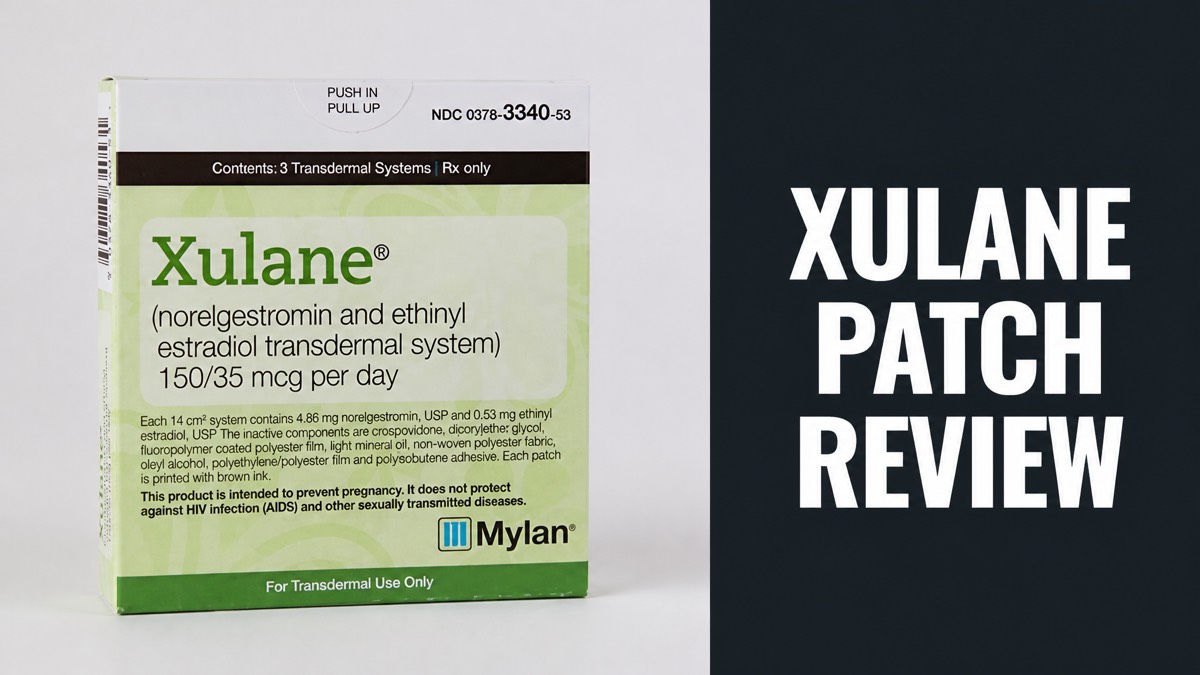
The Xulane patch is a once-weekly combined hormonal birth control patch made by Mylan Technologies. It contains ethinyl estradiol and norelgestromin and requires a prescription. Doctors prescribe the patch to prevent pregnancy in people with a BMI below 30, and it offers no infection protection.
Xulane works by stopping ovulation, and each cycle uses three patches over four weeks. The patch is about 99% effective with perfect use and 93% with typical use. Common side effects include headache, nausea, and skin irritation. Costs range from $41 with a coupon to about $149 without one, so the price depends heavily on the pharmacy and the discount used.
User ratings split almost evenly between positive and negative experiences. Breakthrough bleeding and weak patch adhesion draw the most complaints. Read on to see how Xulane compares with Twirla, who should avoid it, how to apply it, and whether it earns a place in your weekly routine.
What Is the Xulane Patch?
The Xulane patch is a once-weekly combined hormonal birth control patch that sticks to the skin. The patch holds an estrogen and a progestin. Doctors prescribe it to prevent pregnancy, which is its only FDA-approved use.
Mylan Technologies makes Xulane as a generic version of Ortho Evra. Ortho Evra won approval in 2001 and has since been discontinued. Xulane followed in 2014. Zafemy is another generic of the same patch.
Xulane is available by prescription only. A doctor must approve it before a pharmacy fills it. The patch only prevents pregnancy. Does it protect against infections? No. The patch does not protect against HIV or other sexually transmitted diseases.
What Is in the Xulane Patch?
Xulane combines two hormones: an estrogen called ethinyl estradiol and a progestin called norelgestromin. Each 14 cm² (about 2.2 square inches) patch holds 0.53 mg of ethinyl estradiol and 4.86 mg of norelgestromin.
The patch delivers 35 mcg of estrogen and 150 mcg of progestin per day. A peach, square patch with rounded edges carries the strength printed in brown ink. Inactive parts include polyisobutene adhesive, mineral oil, and oleyl alcohol.
Xulane Composition:
| Component | Detail |
|---|---|
| Estrogen | Ethinyl estradiol, 0.53 mg per patch |
| Progestin | Norelgestromin, 4.86 mg per patch |
| Daily delivery | 150 mcg norelgestromin and 35 mcg ethinyl estradiol |
| Patch size | 14 cm² (2.2 square inches) |
| Appearance | Peach square with rounded edges |
How Does the Xulane Patch Work?
The patch stops the ovaries from releasing an egg. Hormones pass from the patch through the skin into the body. Doctors call this suppressing ovulation.
The body senses that hormones already arrive from the patch. So the ovaries rest and make no egg. Why does that matter? Without an egg, pregnancy cannot happen.
Two backup effects exist. The hormones also change the cervical mucus and the lining of the uterus. Both changes make fertilization and implantation harder.
How Do You Apply the Xulane Patch?
A cycle lasts 28 days and uses three patches. Apply one new patch each week for three weeks. Week four is patch-free, and the period usually starts that week. Wear only one patch at a time.
Stick the patch on the upper outer arm, stomach, buttock, or back. Skip the breasts and any cut or irritated skin. Avoid spots rubbed by tight clothing, like a bra strap or waistband. Rotate sites each week to cut irritation.
Apply the patch to clean, dry skin with no lotion or makeup. Never cut it. Check it daily. Press a lifting edge down firmly for 10 seconds. A patch that does not stick fully will not work properly.
Weekly Routine:
- Pick a patch change day and apply the first patch to clean, dry skin.
- Replace the patch on the same day each week for three weeks.
- Skip the patch in week four and expect a period.
- Start a new cycle on the usual change day.
Start timing decides backup protection. A first-day start means applying within the first 24 hours of the period, and no backup is needed. A Sunday start means applying on the chosen day after the period begins, and backup is needed for 7 days.
A late patch matters. Why? The ovaries can wake up and release an egg. If a patch comes off for under 24 hours, reapply it or use a new one on the same schedule. After more than 24 hours, or an unknown gap, start a new patch and a new 28-day cycle. Use backup for 7 days. Replacements need a separate prescription.
What Are the Benefits of the Xulane Patch?
The patch replaces a daily pill with one change per week. Weekly dosing drives much of the appeal. One 20-year-old who tried Depo and the pill first called the patch the best option so far.
Doctors also use the patch off-label for irregular periods, heavy periods, menstrual cramps, endometriosis, and PCOS. Hormone regulation may ease headaches or acne. Contraception is the only approved use. So are the other uses proven by the label? No. They remain off-label.
Does the Xulane Patch Prevent Pregnancy Effectively?
Yes. The patch is about 99% effective with perfect use. Normal use drops that to roughly 93%, because mistakes happen.
Weight changes the picture. The patch may be less effective at 198 pounds (90 kg) or more. The label also bars use at a BMI of 30 or above. The reason is blood clot risk.
Timing matters too. A patch applied late or lost can cut protection. Backup methods such as condoms cover the gap.
Can the Xulane Patch Help With Heavy Periods?
Yes. The patch can ease heavy periods and menstrual cramps in some users. Doctors list heavy periods among its off-label uses.
One long-term user with a very heavy flow reports less pain. Skipping periods for a month or two is an option.
Results vary. Another user kept heavy, painful bleeding for over a year while on the patch. The benefit is not guaranteed.
What Do Xulane Patch Reviews Say?
Opinions split between positive and negative experiences. Of 499 user ratings, the average sits at 5.7 out of 10. A total of 41% of users reported a positive experience, while 33% reported a negative one.
A smaller group of ten self-reported ratings averaged 3.2 out of 5. Small groups shift easily, so treat that number with care.
The average is middling. So why do some users stay on the patch for years? One user has worn it for over 8 years. Pills failed to work, and the Depo shot was off the table.
What Do Users Like About the Xulane Patch?
Users praise the weekly routine and the end of daily pill-taking. One user calls the once-a-week step the main appeal.
Mood benefits come up. One 19-year-old says the patch got them out of depression and built confidence.
Adhesive irritation fades for some. One user found the adhesive itchy because of sweat at first. The itch stopped after the first month.
What Users Like:
- Weekly dosing instead of a daily pill
- Lighter, less painful periods for some users
- Mood lift for some users
- Adhesive itch fading after month one
What Are the Common Complaints About the Xulane Patch?
Breakthrough bleeding tops the list of complaints. One user dealt with spotting for three months. Another bled on and off for over a year, even after trying to skip periods.
Adhesion draws criticism. Showers loosen some patches, and they can slide across the skin. Some users notice square prints left by the adhesive. One user advises against the patch for anyone who showers often or does water activities.
Body effects also appear. Tender breasts, hair loss, vaginal dryness, and discomfort wearing contact lenses turn up in single accounts. Mood turned very negative for one user.
Common Complaints:
- Breakthrough bleeding and spotting
- Patch lifting or coming off in water
- Square marks left by the adhesive
- Tender breasts
- Mood changes in some users
Xulane vs Twirla: How Do the Patches Compare?
Twirla and Xulane follow the same weekly schedule but use different progestins. Twirla contains levonorgestrel. Xulane contains norelgestromin. Both contain ethinyl estradiol, and both suit people with a BMI below 30.
Size and shape differ. Twirla is a circular, beige 28 cm² patch. Xulane is a peach square of 14 cm². Twirla won FDA approval as a new drug in 2020. Xulane arrived in 2014 as a generic of Ortho Evra.
Estrogen exposure differs. Xulane delivers about 56 mcg of ethinyl estradiol per day in the body, roughly 60% above a 35 mcg pill. Twirla sits near 30 mcg per day, comparable to a low-dose pill. Does that raise clot risk? Studies have not confirmed a higher risk for Xulane than for 30 to 35 mcg pills.
Xulane vs Twirla:
| Feature | Xulane | Twirla |
|---|---|---|
| Progestin | Norelgestromin | Levonorgestrel |
| Daily delivery | 35 mcg estrogen, 150 mcg progestin | 30 mcg estrogen, 120 mcg progestin |
| Patch size | 14 cm² | 28 cm² |
| Shape | Peach square | Beige circle |
| FDA approval | 2014, generic of Ortho Evra | 2020, new drug |
| Maker | Mylan Technologies | Agile |
Is the Xulane Patch Better Than the Pill?
No. Neither method wins for every person. The patch trades a daily pill for one weekly change. Pills avoid skin adhesive problems.
Cost differs too. Generic pills run about $10 to $50 per month without insurance. The generic patch runs about $50 to $85 per month. Pills cost less. So why choose a patch? Weekly dosing suits people for whom a daily pill does not fit their routine.
What Are the Side Effects of the Xulane Patch?
The most common side effects include headache, nausea, breast discomfort, and skin irritation at the patch site. Clinical trial rates show headache at 21.0% and application site disorder at 17.1%. Nausea reached 16.6%.
Other reported effects include abdominal pain, mood and anxiety changes, vomiting, vaginal yeast infection, dizziness, acne, and weight increase. The table lists each rate.
Side Effect Rates in Trials:
| Side Effect | Rate |
|---|---|
| Headache | 21.0% |
| Application site disorder | 17.1% |
| Nausea | 16.6% |
| Abdominal pain | 8.1% |
| Mood, affect and anxiety disorders | 6.3% |
| Vomiting | 5.1% |
| Vaginal yeast infection | 3.9% |
| Dizziness | 3.3% |
| Acne | 2.9% |
| Weight increase | 2.7% |
Breakthrough bleeding peaks early. Spotting happens more in month one and less in month two. By month three most users have regular periods in the patch-free week. Why does bleeding past month three matter? A different method may suit better.
Serious risks are rare. Blood clots, heart attack, and stroke can occur. Get medical help right away for chest pain, arm or leg weakness, leg pain or swelling, sudden severe headache, or vision changes.
Who Should Avoid the Xulane Patch?
Anyone with a BMI of 30 or higher should avoid Xulane. Women over 35 who smoke also cannot use it. Cigarette smoking raises the risk of serious cardiovascular events.
Other risk factors raise clot danger. High blood pressure and obesity top the list. People with these risks should discuss safer options with a doctor before starting.
The label also notes that the patch can decrease breast milk production.
How Much Does the Xulane Patch Cost?
A package of three patches costs roughly $89 to $149 before discounts. Average retail pricing sits near $125. Coverage depends on the insurance plan.
Discounts cut the price sharply. A coupon price as low as $41 appears for three patches, about 67% off average retail. A manufacturer savings card and a patient assistance program also exist.
Xulane Price Snapshot:
| Price Type | Amount |
|---|---|
| Lowest coupon price | About $41 for 3 patches |
| Typical monthly estimate | $50 to $85 |
| Cash price | About $89 per 4-week supply |
| Average retail | About $125 for 3 patches |
| Higher pharmacy quote | About $149 for 3 patches |
Prices vary widely. Why? Depending on the pharmacy, the same three patches cost anywhere from $41 to $149.
Where Can You Buy the Xulane Patch?
Pharmacies fill Xulane only with a prescription. No over-the-counter version exists. A doctor must approve it first.
Online care services also prescribe it. At one online provider, a visit costs $129 without insurance. With in-network insurance it costs $30 or less. A $19.99 monthly membership applies.
A prescription covers one package of three patches. Replacement patches need a separate prescription.
Is the Xulane Patch Worth the Price?
Yes. The patch offers good value at the discounted price of about $41 per cycle for someone who prefers weekly dosing. At the full $125 retail price, the math changes.
Pills cost less overall. The patch makes sense when a daily pill does not fit a routine and the user qualifies on BMI. Poor adhesion can waste patches and money, since replacements need a new prescription.
Is the Xulane Patch Worth It?
Yes. The patch is worth considering for people with a BMI under 30 who want weekly dosing. The patch delivers about 99% effectiveness with perfect use and 93% with typical use.
The cons carry weight. Breakthrough bleeding, adhesion trouble, and higher estrogen exposure than a 35 mcg pill all count against it. Ratings stay middling at 5.7 out of 10. So who comes out ahead? Most users have regular periods by month three.
Who Is the Xulane Patch Best For?
The patch fits people who find daily pills hard to remember. Users need a BMI under 30. Smokers over 35 are excluded. Comfort with a weekly skin patch helps.
The patch suits poorly anyone who showers or swims often and struggles with adhesion, or anyone prone to clots. Bottom line: a solid option for the right user, not a pick for everyone. Talk to a doctor before starting.
Coffee Loving Card Makers is a reader-supported platform. Purchases made through our links may earn us an affiliate commission at no extra cost to you. Learn more.