
Is Twirla Patch Worth It in 2026? An Honest Review
 By Anna Krause November 4, 2026
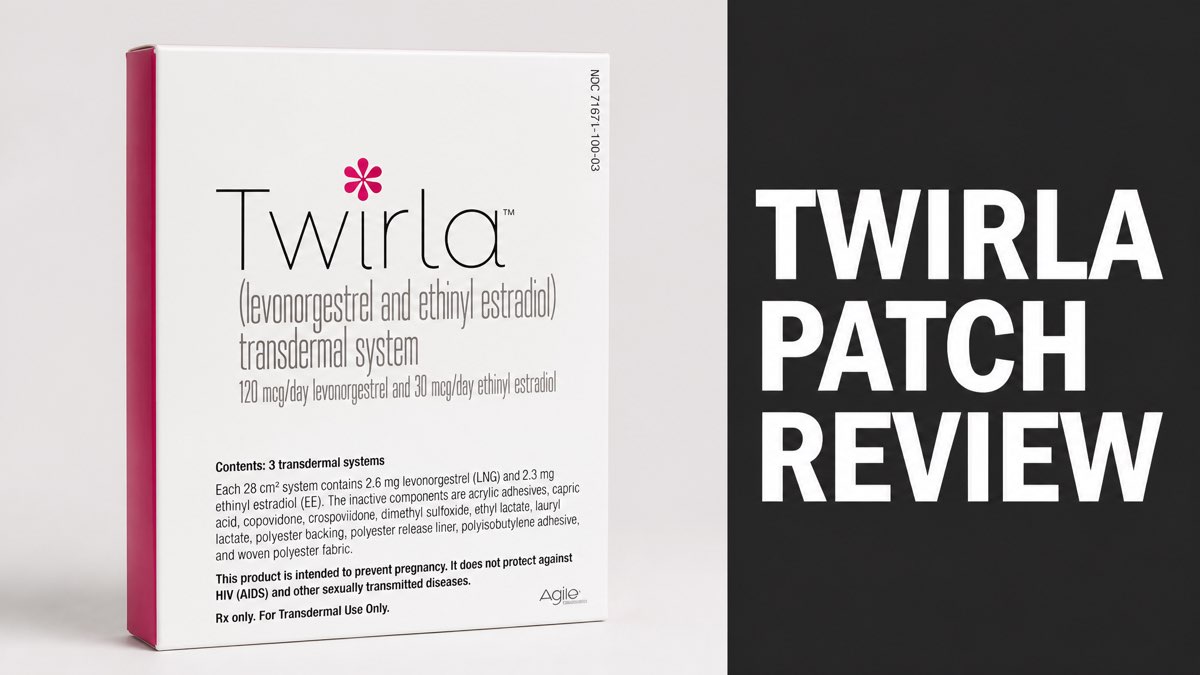
Twirla is a once-weekly birth control patch that combines levonorgestrel and ethinyl estradiol. The FDA approved it in February 2020 for people with a BMI under 30. Agile Therapeutics makes it as a lower-dose alternative to Xulane. A prescription is required, and no generic version exists.
The patch replaces a daily pill with three changes a month. A trial measured a Pearl Index of 5.8, and body weight shifts that number sharply. Reviews split between fans of the routine and users who quit over skin reactions, bleeding, or a patch that will not stay on. WebMD averages 3.9 out of 5 across 25 reviews.
Cash prices run about $205 to $211 per carton, far above generic Xulane. Insurance can bring that cost close to zero. The right buyer gets a convenient method, and the wrong buyer gets a poor fit. Read on for side effects, who must avoid the patch, and a straight verdict on whether Twirla earns its price.
What Is Twirla?
Twirla is a once-weekly contraceptive patch that combines levonorgestrel and ethinyl estradiol. Doctors prescribe the patch to prevent pregnancy in people who can become pregnant and have a body mass index (BMI) under 30 kg/m2.
The FDA approved Twirla on February 14, 2020. Agile Therapeutics developed the patch as a lower-dose alternative to the only other US contraceptive patch, Xulane.
Twirla needs a prescription. No generic version exists. Why does that matter? Every fill is the brand product, so the price stays high. Labeling lists a BMI of 30 or more as a contraindication.
How Much Estrogen Does Twirla Contain?
The Twirla patch is built around 120 mcg of levonorgestrel and 30 mcg of ethinyl estradiol. Agile packs both hormones into a five-layer patch called Skinfusion, which holds the active ingredients and blocks debris from the skin.
The manufacturer's professional site cites 10 mcg per day of ethinyl estradiol exposure. That figure earns Twirla the claim of the lowest estrogen dose among combined hormonal patches.
Levonorgestrel is the progestin. Ethinyl estradiol is the estrogen. The pair works like the combination pill.
How Does Twirla Work?
Twirla prevents pregnancy by delaying ovulation, the same way the combination pill does. The skin absorbs both hormones from the patch and passes them into the bloodstream across the full seven days of wear.
A cycle lasts 28 days. A new patch goes on each week for three weeks. Week four stays patch-free. What happens then? Withdrawal bleeding arrives during that break.
The schedule trades a daily task for a weekly one. That means three patch changes a month. Missed pills are a common complaint, so many users value the swap.
The 28-Day Cycle:
- Apply the first patch on day 1 and wear it for seven days.
- Change to a new patch on day 8 and wear it for seven days.
- Change to a third patch on day 15 and wear it for seven days.
- Remove the patch on day 22 and stay patch-free for seven days.
How Do You Apply the Twirla Patch?
The patch goes on clean, dry, unbroken skin on the upper arm, buttocks, back, or lower abdomen. Skin that tight waistbands rub is a poor choice, because friction lifts the edges.
Users change the patch on the same day each week. A change that runs 24 to 48 hours late needs a fresh patch on the usual day. A delay beyond 48 hours means a new cycle starts at once, with backup contraception for the first week.
Makeup, lotion, powder, and oil weaken the adhesive. Why skip them? The patch needs bare skin to stay stuck. Labeling also advises against 30 minutes or more of water contact, which matters for swimmers.
A used patch gets folded sticky side in and thrown away where children and pets cannot reach it. Never flush a patch down the toilet.
What Are the Benefits of Twirla?
Twirla offers weekly dosing for people who struggle to take a pill every day. Forgetting pills ranks among the most common reasons for contraceptive failure, and a weekly patch removes the daily step.
The patch carries a lower estrogen design than older patches. Agile markets Twirla as the lowest-dose estrogen option in the patch category.
Bleeding patterns settle over time. How fast? Unscheduled bleeding and spotting days averaged 1.6 per month by cycle 13. Only 2.2% of trial participants quit because of bleeding irregularity.
Some users report extra effects. Lighter periods, clearer skin, and fewer migraines appear in user accounts. Those reports are individual experiences, not trial endpoints.
Does Twirla Prevent Pregnancy?
Yes. The SECURE trial measured a Pearl Index of 5.8, with a 95% confidence interval of 4.5 to 7.2. That rate counts pregnancies per 100 woman-years of use.
The trial enrolled 2,031 women aged 18 to 60. The main efficacy analysis covered 1,736 women aged 35 or younger. The average age was 26 years.
Body weight changes the result sharply. Why does BMI matter so much? Because the numbers climb with it. The Pearl Index reached 3.5 under a BMI of 25, 5.7 between 25 and 30, and 8.6 at 30 or above.
Short answer: the gap explains the label. Twirla is contraindicated at a BMI of 30 or more. Effectiveness also drops in the 25 to 30 range.
Pearl Index by BMI:
| BMI (kg/m2) | Pearl Index |
|---|---|
| Under 25 | 3.5 |
| 25 to under 30 | 5.7 |
| 30 or above | 8.6 |
What Do Twirla Reviews Say?
Twirla reviews land in the middle, with a split between loyal users and people who quit. WebMD lists an average of 3.9 out of 5 across 25 reviews, and about 76% of reviewers reported a positive effect.
Drugs.com shows 4.0 out of 10, but only 2 ratings back that number. Can anyone trust that score? A sample that small proves nothing in either direction.
The written reviews fall into two camps. One camp praises convenience and mild side effects. The other camp reports adhesion trouble, skin reactions, and bleeding changes.
What Do Users Like About Twirla?
Users like the weekly routine most of all. Several describe switching from the pill because they kept forgetting doses, and one reviewer calls it the best birth control used in five months.
Tolerability earns praise too. Some users report fewer side effects than other methods they tried. A lower estrogen dose and easier removal come up as reasons to prefer Twirla over Xulane.
A few reviewers credit the patch for lighter periods, less acne, and fewer migraines. Others note an unchanged or higher drive. These results vary from person to person.
What Do Users Complain About?
Here's the biggest gripe: adhesion. Several users say the patch peels in the shower, in a pool, or even in bed. Few placement spots hold well, and the cloth material stays damp after contact with water.
Skin reactions come next. How bad do they get? Reviewers describe itching, burning, raw-feeling skin, bumps, and hives. One user reports facial swelling that needed a steroid shot.
Bleeding and cramps drive others away. Accounts include heavy bleeding with clots, three weeks of breakthrough bleeding, and severe cramps in week three. Mood changes and nausea also appear.
Smaller gripes round out the list, too. The patch is larger than Xulane and harder to hide under swimwear. One user wants more skin tones, and another became pregnant with a BMI over 25. Some insurers refuse coverage.
Twirla vs Xulane: Which Is Better?
Neither patch wins outright. Twirla offers a lower estrogen design, while Xulane offers a generic price. Xulane contains norelgestromin 150 mcg and ethinyl estradiol 35 mcg.
Twirla uses levonorgestrel instead of norelgestromin. Only the brand version exists, which keeps the price higher.
User switches go both ways. One long-time Xulane user moved to Twirla for the lower dose and easier removal. Another reports considering a switch back because Xulane sticks better and looks smaller.
Twirla vs Xulane:
| Feature | Twirla | Xulane |
|---|---|---|
| Progestin | Levonorgestrel | Norelgestromin |
| Estrogen design | 30 mcg ethinyl estradiol | 35 mcg ethinyl estradiol |
| Generic available | No | Yes |
| Cash price | $205 to $211 per carton | $50 to $85 per month |
Does Twirla Have Less Estrogen Than Xulane?
Yes. Twirla is designed to deliver less estrogen than Xulane, and Agile calls it the lowest-dose patch available. Xulane users show higher blood estrogen levels than oral contraceptive users.
Higher estrogen exposure links to concerns about blood clots in the legs and lungs. A lower dose aims to reduce that exposure.
Lower does not mean risk-free. Why not? Clot risk remains elevated for hormonal patches compared with oral methods, and the FDA requires a long-term observational study of clot risk in new Twirla users.
What Are the Side Effects of Twirla?
Application site reactions top the list of side effects at 6.2% of trial participants. Nausea followed at 4.1%, headache at 3.6%, menstrual cramps at 2.3%, and weight gain at 2.0%.
Serious effects are rarer but real. Blood clots, stroke, and heart attack are the main warnings. Jaundice, severe headache, and signs of depression also call for medical attention.
Serious adverse events appeared in 1.7% of trial participants. That rate matches other low-dose combined hormonal products.
Skin darkening on the face, called chloasma, affects some users. Sun exposure worsens it. Sunscreen with SPF 30 or higher helps, and tanning beds are off the table.
Common Side Effects in the Trial:
| Side Effect | Share of Users |
|---|---|
| Application site reaction | 6.2% |
| Nausea | 4.1% |
| Headache | 3.6% |
| Menstrual cramps | 2.3% |
| Weight gain | 2.0% |
Who Should Avoid Twirla?
People with a BMI of 30 or more must not use Twirla. The label also rules out uncontrolled high blood pressure, heart disease, liver disease, and diabetes with organ damage.
Hormone-related cancers, unexplained vaginal bleeding, and severe migraine with aura also rule the patch out. Smokers over 35 face a much higher clot and stroke risk.
Conditions That Rule Out Twirla:
- BMI of 30 or more
- Uncontrolled high blood pressure
- Heart disease
- Liver disease
- Diabetes with organ damage
- Hormone-related cancers
- Unexplained vaginal bleeding
- Severe migraine with aura
Other situations need care. Pregnancy and breastfeeding both rule out use. The hepatitis C drug Viekira interacts with the patch, and grapefruit may raise side effects.
Surgery changes the plan too. For how long? Patch use stops at least four weeks before major surgery and stays off for two weeks after.
How Much Does Twirla Cost?
Twirla costs roughly $205 to $211 per carton of three patches at cash prices. GoodRx lists that range, and one telehealth service quotes about $211 for the same three-patch box.
Other estimates differ. A 2021 provider guide put the average at $175 per box. A cost-comparison site estimates $100 to $150 per month. Prices shift by pharmacy and year.
The good news? Savings exist. Commercially insured patients can pay as little as $25 per month with the copay card. Discount coupons cut retail prices by 20% to 50%.
Ways to Save:
| Option | Savings |
|---|---|
| Discount coupons | 20% to 50% off retail |
| Twirla copay card | As low as $25 per month |
| Planned Parenthood and Title X clinics | Free or sliding scale |
The prescription visit adds cost. Visits run from $0 to $250 depending on insurance and provider.
Is Twirla Worth the Price?
No. At full cash price, Twirla costs far more than generic Xulane, which runs about $50 to $85 per month. Cash buyers pay a premium for the lower dose.
Insurance changes the math. By how much? Covered patients pay $0 to $25 per month with a plan or copay card, and the price gap vanishes.
The value case is narrow. Twirla pays off for people who want the lower estrogen design and have coverage. Everyone else has cheaper patch options.
Where to Buy Twirla?
Pharmacies fill Twirla prescriptions at the counter or by mail. Buyers need a valid prescription first, because no retailer sells the patch over the counter.
Telehealth services also write prescriptions online. Some arrange delivery. The prescriber still screens for BMI, blood pressure, and smoking before approving.
Discount routes lower the bill. Options include GoodRx coupons, the Twirla copay card, Planned Parenthood, and Title X clinics with sliding-scale pricing.
Do You Need a Prescription for Twirla?
Yes. Twirla is available by prescription only. The FDA classes the patch as a prescription contraceptive, and no over-the-counter version exists.
Providers screen before prescribing. They check BMI, blood pressure, smoking status, migraine history, and clot risk. A BMI of 30 or more ends the discussion.
Telehealth makes access easier. Online visits cost about $20 to $129 depending on the service and insurance.
Is Twirla Worth It?
Yes. Twirla is worth it for a narrow group of users. The weekly schedule, lower estrogen design, and mild side effects suit a lean, non-smoking person who forgets pills.
The downsides are real. Adhesion problems, skin reactions, a BMI limit, a higher failure rate than many methods, and a brand-only price all count against it.
Bottom line: the verdict hinges on fit. Twirla works well for the right user and poorly for the wrong one.
Who Is Twirla Best For?
Twirla fits people with a BMI under 25 who do not smoke and want a weekly method. Insurance coverage or a copay card makes the price reasonable.
The patch fits poorly for people with a BMI of 30 or more, smokers over 35, and anyone with sensitive skin. Frequent swimmers also struggle with the adhesion.
Coffee Loving Card Makers is a reader-supported platform. Purchases made through our links may earn us an affiliate commission at no extra cost to you. Learn more.