
ThermaCare Patch Review: Is It Worth It in 2026?
 By Anna Krause November 10, 2026
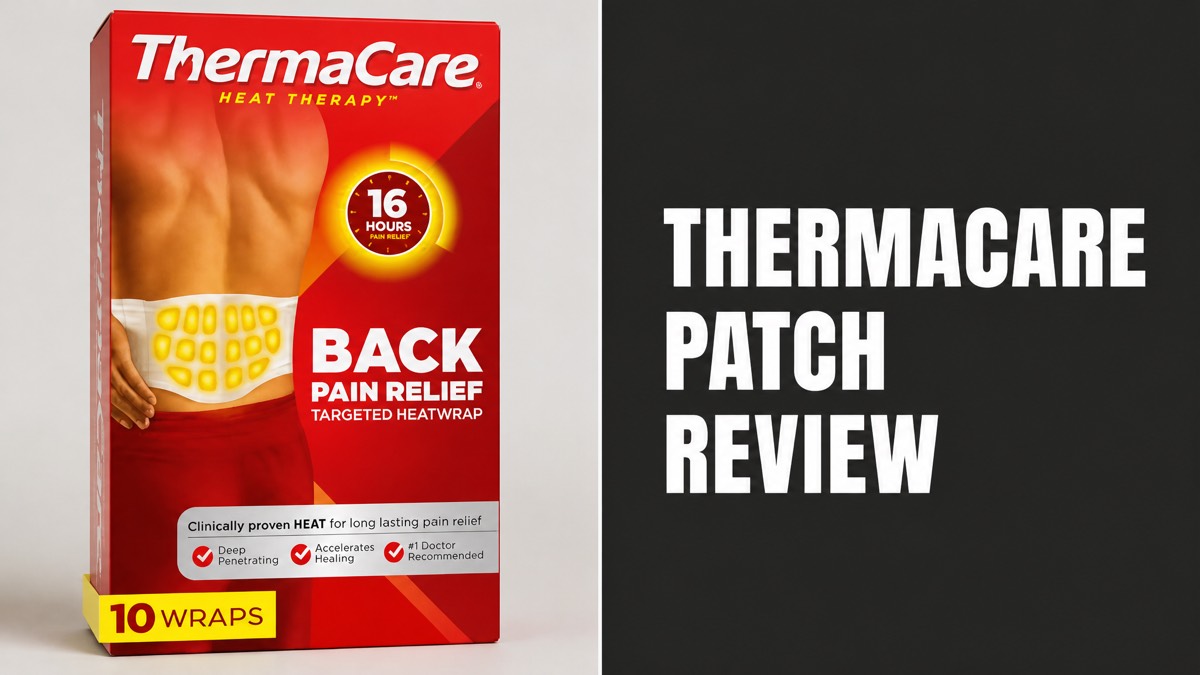
A ThermaCare patch is a single-use heat wrap that relieves minor muscle and joint pain without medication. The brand comes from Bridges Consumer Healthcare, and each wrap warms to about 104°F (40°C) for 8 hours once the pouch opens. Back, neck, knee, joint, and menstrual versions all exist.
Heat comes from iron reacting with air, so no cord or battery is needed. Users praise the steady warmth and the portability. They also flag fit problems, price hikes, and heat that fades early for some wearers. The wraps carry real burn warnings and an 8-hour wear cap. Prices run from about $1.95 to $4.32 per wrap, which adds up fast for daily use.
The big picture is simple: ThermaCare trades control for convenience, and that trade suits some buyers far better than others. The sections below cover how the heat works, what buyers like and dislike, who needs to avoid it, what it costs, and whether it earns a spot in a bag, a car, or a travel kit before the next sore day.
What Is a ThermaCare Patch?
A ThermaCare patch is a single-use, air-activated heat wrap for minor muscle and joint pain. Bridges Consumer Healthcare makes the brand. Each wrap relies on heat cells instead of a drug.
In plain English: the label lists the use as temporary relief of minor muscular and joint aches tied to overexertion, strains, sprains, and arthritis. The wraps contain no medication. Heat does the work, and the wrap holds it against one spot on the body.
Shoppers search for 'ThermaCare patch' as if it were one product, but the line covers several shapes. Back, neck, knee, joint, muscle, and menstrual versions all exist, and each one targets a different body area with the same basic heat cell.
Which ThermaCare Patch Types Exist?
The range covers seven therapy types: knee, back, neck, joint, muscle, menstrual, and arthritis. The knee version is the newest addition. A separate heat plus lidocaine range also exists.
Back and hip wraps come in S/M for waists up to 34 inches (86 cm) and L/XL for 35 to 47 inches (89 to 119 cm). Here's why size matters: a wrap must lie flat. A wrong size slides or bunches.
Closures differ by type. The back wrap locks in place with Velcro on an elastic belt. Neck and arm wraps peel to reveal an adhesive side. Menstrual patches stick to underwear.
Therapy Types:
- Knee
- Back
- Neck
- Joint
- Muscle
- Menstrual
- Arthritis
How Does a ThermaCare Patch Work?
A ThermaCare patch makes heat through a chemical reaction between iron and air. The process is called iron oxidation. When does it start? The moment the pouch is torn open and oxygen reaches the heat cells.
Each heat disc is designed to reach about 104°F (40°C) within 30 minutes. How long does that heat last? Eight hours. And here's the part most people miss: normal body temperature is 98.6°F (37°C), so the wrap runs only slightly above it.
Heat relaxes tight muscle and raises blood flow to the sore area. More blood flow delivers more oxygen and nutrients to damaged tissue. Heat also stimulates thermoreceptors, which block pain signals to the brain.
The wrap works at the pain site. An oral painkiller works through the bloodstream and blocks prostaglandin production. The two approaches act in different places.
What Is Inside the Heat Cells?
The heat cells contain iron powder, activated charcoal, sodium chloride, sodium thiosulfate, sodium polyacrylate, and water. Iron reacts with oxygen to make heat. Charcoal gives the iron powder a surface to react on.
Salt speeds up the reaction between iron and oxygen. Sodium thiosulfate controls hydrogen generation. Sodium polyacrylate controls the level of water in the cell. Water is needed for the reaction itself.
Heat Cell Ingredients:
| Ingredient | Role |
|---|---|
| Iron powder | Reacts with oxygen to make heat |
| Activated charcoal | Gives the iron a surface to react on |
| Sodium chloride | Speeds up the reaction |
| Sodium thiosulfate | Controls hydrogen generation |
| Sodium polyacrylate | Controls the level of water |
| Water | Needed for the reaction |
Each heat cell holds about 2 grams (0.07 ounces) of iron. Is the filling dangerous? If swallowed, yes. Skin or eye contact needs a rinse with water. The wrap body is a soft nonwoven cloth, the same material family used in diapers.
What Are the Benefits of ThermaCare Patches?
The main benefit is portable, drug-free heat that lasts for hours. A wrap goes under clothing and moves with the wearer. No cord, outlet, or battery is involved.
The maker advertises up to 16 hours of relief on back wraps. So where does 16 hours come from? The figure adds 8 hours of heat while worn to 8 hours of relief after removal. To be clear, the label itself caps wear time at 8 hours.
What's more, discretion is the other perk. A wrap is thin enough to hide under clothing. Users keep boxes in cars, purses, and linen closets for quick use.
Do ThermaCare Patches Actually Relieve Back Pain?
Yes. Heat works as a first defense against lower back pain for many users. The American College of Physicians recommends real heat as a first defense against lower back pain.
About 80 percent of US adults deal with lower back pain at some point, often from strained, tight muscles. Heat targets that source. Users describe a wrap taking the edge off pain during commutes, golf, and long car rides.
Does it work for everyone? No. One user with a fused lower spine and rods felt nothing, and another reported no effect on pain. A heat wrap treats minor muscle and joint aches, as the label states, and nothing more.
Do ThermaCare Patches Stay in Place?
Yes. Wraps hold well on the lower back, hips, and neck for most wearers. A golfer reports no slipping during a swing. A neck user says the wrap stayed put all day.
Now, the fit problems. Wraps tend to slide down when worn above the hips. Wearers with a larger frame report trouble positioning a back wrap on curvy hips. Average or smaller women may need the smaller size.
The closures draw complaints. One user calls the side extensions light and paper-like with weak Velcro. Another prefers the older adhesive fasteners. Never over-tighten a wrap, since the label warns against it.
What Do ThermaCare Patch Reviews Say?
Ratings run high overall. The 10-count back and hip box holds 4.5 out of 5 stars across 8,298 ratings. The box ranks number 1 in Adhesive Heat Patches on Amazon.
The bad news? Complaints cluster around three themes. Price has climbed, fit varies, and some wraps feel too weak or too hot. Heat that fades early and no effect at all also appear. Satisfaction splits along those lines.
What Do Users Like?
Users like the long, steady warmth and the portability. Many say a wrap stays warm for hours. One says the wraps beat the heating pad at home.
For example, real-life uses vary. People wear them to work, to bed, on planes, on golf courses, and under ski gear. One cruise traveler picked them because a heating pad was not recommended onboard. Another wears one before yard work.
Menstrual users stand out. One calls the wraps better than carrying an electric pad to work. Another finds heat helps on days when oral painkillers do not. Both wear the patch discreetly under clothing.
What Users Like:
- Steady warmth for hours
- Easy to carry and wear under clothing
- Discreet heat for menstrual cramps
- Works on planes, courses, and cruises
What Are the Common Complaints?
Complaints center on price, fit, and heat that does not last. One user says a box rose from $6-$7 to $14. Another notes a heating pad costs about the same as one box.
Heat duration draws mixed feedback. The box front says 16 hours, but the directions cap wear at 8. Why the gap? The 16 counts 8 hours of relief after removal. One user found a wrap cool after 2 hours. Others report steady warmth for the full 8 hours.
Pack size confuses some buyers. One shopper did not realize a listing held a 3-count pack when the same product sold in 4-packs for less. So check the count before ordering.
What Users Dislike:
- Price increases
- Fit that varies by body size
- Weak Velcro closures
- Heat that fades early for some wearers
How Does ThermaCare Compare to Heating Pads and Other Patches?
ThermaCare trades adjustable power for portability and zero setup. Does a pad beat a wrap? On control, yes. A plug-in heating pad offers adjustable heat for as long as needed, while a wrap offers a fixed 104°F (40°C) for 8 hours anywhere.
Other options compete on the same shelf. Cordless rechargeable pads and other disposable air-activated wraps give heat. Lidocaine and menthol patches work differently. A 12-hour 4 percent lidocaine patch and a 5 percent menthol patch both appear among the alternatives.
Cost per use favors neither side cleanly. Wraps run from about $1.95 to $4.32 each depending on pack and store. A reusable pad costs more upfront and nothing after. Daily users may prefer the pad.
ThermaCare vs Electric Heating Pads?
A heating pad wins on control and cost over time, while ThermaCare wins on mobility. Wraps work in a car, on a plane, or at a desk. A pad needs an outlet or a charge.
Think of it this way: safety profiles differ. A wrap cannot be turned off, only removed. The back and hip label also carries an 8-hour cap and a no-sleep warning. Check skin often with either option.
One user finds the wraps better than a heating pad. By comparison, another says a pad suits a heavier frame better because the wrap will not stay put. Fit and body type decide the winner more than the brand.
Wrap vs Heating Pad:
| Factor | ThermaCare Wrap | Heating Pad |
|---|---|---|
| Heat level | Fixed, about 104°F (40°C) | Adjustable |
| Runtime | 8 hours | As long as needed |
| Power | None, air-activated | Outlet or charge |
| Control | Remove only | Can be turned off |
Are ThermaCare Patches Safe?
ThermaCare patches are generally safe when used exactly as labeled. The label still states plainly that the product can cause burns. Who faces the highest burn risk? Anyone 55 or older, plus anyone who sleeps in a wrap, wears it tight, or wears it too long.
Here's what protects the skin: Wear the wrap over a thin layer of clothing. Place it flat, never folded or bunched. Do not over-tighten it, lean on it, or wear a tight belt over it. Check skin often.
The good news? Mild skin redness after removal is normal. Redness lasting several hours calls for a break until it fades. Shorter wear time, looser outer clothing, and a thin layer between wrap and skin lower the chance of lasting redness.
Safe Use Steps:
- Wear the wrap over a thin layer of clothing.
- Place the wrap flat, never folded or bunched.
- Do not over-tighten the wrap or lean on it.
- Check the skin often during use.
- Remove the wrap at the first sign of irritation or a burn.
Who Should Avoid ThermaCare Patches?
People with diabetes, poor circulation, heart disease, rheumatoid arthritis, or pregnancy need a doctor's approval before use. The label names each of these groups. Skin sensitivity to heat adds another reason for care.
Skip the wrap on broken or damaged skin, fresh bruising or swelling from the past 48 hours, and numb areas. Skip it with pain rubs, creams, or other heat sources. Children, infants, and anyone unable to remove it are excluded.
Age 55 and older raises burn risk. Wear the wrap over clothing and never while sleeping. The label also tells wearers to remove the product before any MRI.
Skip the Wrap If:
- Skin is broken or damaged
- Bruising or swelling appeared within 48 hours
- The area is numb
- Pain rubs, creams, or other heat sources are in use
How Long Can You Wear One?
A wrap stays on for up to 8 hours in any 24-hour period. Longer wear raises burn risk. Daily use for more than 7 days in a row is also off limits, or 4 days for the menstrual patch.
Heat arrives within 30 minutes of opening the pouch. Wearers adjust for comfort once it warms, and that's about it. A wrap that cools cannot be revived. Why not? The iron is used up, so a spent wrap goes in the trash. Never microwave one.
Here is the kicker: pain that worsens or lasts more than 7 days is a stop signal. Swelling, rash, burning, or discomfort that persists is another. Talk to a doctor if either appears.
How Much Do ThermaCare Patches Cost?
Prices run from about $1.95 to $4.32 per wrap, set by pack size and store. A 10-count L/XL back and hip box costs $22.99 on Amazon at the time of writing ($2.30 per wrap). Subscribe & Save lowers it to $20.69 ($2.07 per wrap), or $19.54 ($1.95 per wrap) with extra savings.
Walmart lists a 3-count lower back box from $10.47 and the S/M version at $12.97 ($4.32 per wrap). Neck and shoulder 4-count boxes start at $17.05. A 2-pack of 4-count boxes runs $20.42 ($2.55 per wrap).
Price Per Wrap:
| Store and Pack | Price | Per Wrap |
|---|---|---|
| Amazon, 10-count L/XL | $22.99 | $2.30 |
| Amazon subscription, 10-count | $19.54 | $1.95 |
| Walmart, 3-count S/M | $12.97 | $4.32 |
| Walmart, 2-pack of 4-count | $20.42 | $2.55 |
Prices rose in recent years. By how much? One long-time buyer remembers $6 to $7 for a box and now sees $14. Pack count matters, so compare per-wrap cost instead of the box price.
Are ThermaCare Patches Worth the Price?
Yes. ThermaCare earns its price for occasional or travel use. A single wrap covers a work shift or a flight. Daily users spend more over a month than a reusable pad would cost.
But value drops with poor fit or weak results. A wrap that slides off or cools after 2 hours wastes money. Test one box before stocking up, and match the size to the waist measurement.
At the same time, bulk and subscription pricing narrows the gap. Amazon's per-wrap rate falls below $2 on subscription. FSA and HSA funds also cover the wraps on Amazon, which lowers the after-tax cost for eligible shoppers.
Where Can You Buy ThermaCare Patches?
ThermaCare patches sell on Amazon, Walmart, Sam's Club, and the brand's own where-to-buy page. The Amazon back and hip box is sold by Bridges Consumer Healthcare, the maker. Walmart lists 37 ThermaCare items.
Buying from the maker's listing avoids third-party markups. Check that the seller name matches Bridges Consumer Healthcare. Confirm the count and size in the title before checkout.
Eligible buyers can pay with FSA or HSA funds on Amazon. A card can be added at checkout, or reimbursement can follow later. Free delivery applies to Amazon orders over $35 shipped by Amazon.
Is ThermaCare Worth It?
Yes. ThermaCare is worth it for short-term relief of minor muscle and joint aches. Eight hours of cordless heat is hard to beat for travel, and the wraps convince less for daily or long-term use.
Bottom line: it's a solid buy for occasional back, neck, or cramp relief. Burn risk needs care, fit varies, prices have climbed, and results differ from person to person. Follow the 8-hour limit and the clothing rule every time.
Who Is ThermaCare Best For?
ThermaCare suits travelers, desk workers, golfers, and anyone with occasional muscle tightness. Menstrual cramp sufferers who want discreet heat also fit. The wraps work best at or below the hip line.
Daily users, wearers with fit issues, and people with diabetes or circulation problems need other options. A reusable heating pad or a doctor's advice fits them better.
Coffee Loving Card Makers is a reader-supported platform. Purchases made through our links may earn us an affiliate commission at no extra cost to you. Learn more.