
StriVectin Peptide Plump Collagen Cushion Cream Review: Is It Worth $79?
 By Anna Krause October 26, 2026
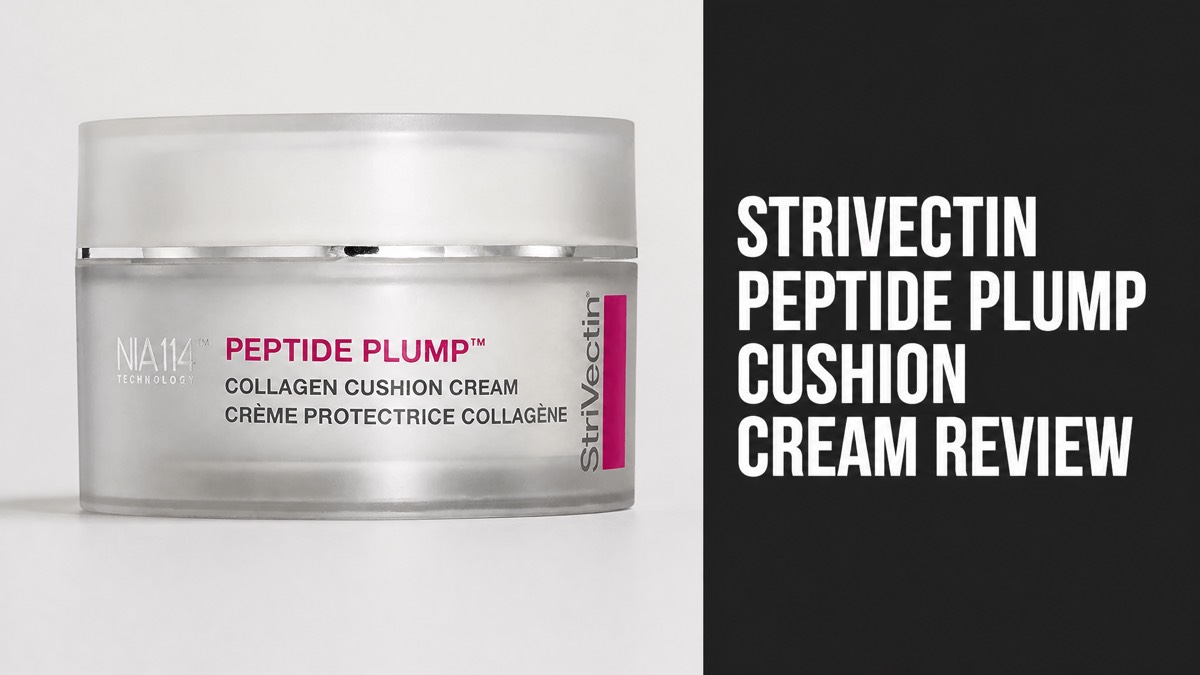
StriVectin Peptide Plump Collagen Cushion Cream is a $79 anti-wrinkle moisturizer from Crown Laboratories. The 1.7 oz (50 ml) jar launched in February 2025 with a gel-cream texture, a patented Alpha-3 Peptide, and a bold claim that most testers would pick it over injectable filler.
The formula pairs hydrating glycerin and squalane with Argireline and proteoglycans. Users praise the light texture and the steady hydration. Wrinkle results arrive slowly and vary from person to person. Fragrance and limonene sit on the label, which matters for reactive skin. The brand's clinical numbers all come from one small 35-person test.
The big picture: this is a pleasant, well-rated cream that smooths more than it lifts. Below, the ingredients, clinical figures, user feedback, risks, price, and a head-to-head with the Bounce Serum show who gains the most from the jar and who does better with a different moisturizer.
What Is StriVectin Peptide Plump Collagen Cushion Cream?
StriVectin Peptide Plump Collagen Cushion Cream is an anti-wrinkle face moisturizer with a gel-cream texture. The 1.7 oz (50 ml) jar targets fine lines, laugh lines, 11 lines, and forehead wrinkles. The brand pitches it as a plumping alternative to injectable filler.
The formula launched in February 2025 as the newest addition to the Peptide Plump collection. Ulta and Amazon began selling the jar on February 9. Ulta stores followed on February 23. The listing names the face and neck as target areas for all skin types.
The cream is new by skincare standards. Is that a problem? Not really, since the review count has already grown into the hundreds.
Who Makes It?
Crown Laboratories, based in Johnson City, Tennessee, owns the StriVectin brand. The privately held skincare company sells in more than 60 countries. StriVectin itself runs its corporate headquarters out of New York.
StriVectin calls itself a prestige clinical skincare brand with more than 35 years of clinical research behind it. Every StriVectin formula carries NIA-114 technology. The brand also labels its products cruelty-free and paraben-free.
So what does NIA-114 mean on the label? It shows up as myristyl nicotinate, which sits in the middle of this cream's ingredient list.
What Is in StriVectin Peptide Plump Collagen Cushion Cream?
The base starts with water, propanediol, and glycerin. Dimethicone and bis-stearyl dimethicone add the smooth, cushioned feel. Betaine, sucrose, squalane, and sodium PCA join the hydrating side of the formula.
The skin-conditioning list includes hydrolyzed hyaluronic acid, adenosine, beta-glucan, and lactic acid. Plant extracts from lentil, goji (Lycium barbarum), apple, and watermelon sit lower on the list. Crambe abyssinica seed oil adds a light emollient layer.
Key Ingredients:
- Alpha-3 Peptide (the brand's patented lead)
- Argireline (acetyl hexapeptide-8)
- Proteoglycans
- Hydrolyzed hyaluronic acid
- Adenosine
- Squalane
- Beta-glucan
Water, propanediol, and glycerin lead the list. Why does that matter? The hydrating base explains the soft, moisturized feel users describe.
Which Peptides Does It Use?
Three peptide-style actives lead the formula's claims. Alpha-3 Peptide is the patented headliner. Argireline, listed as acetyl hexapeptide-8, is the second. Pentapeptide-84 amide acetate also appears on the label.
The brand says Alpha-3 targets the skin's natural collagen, elastin, and hyaluronic acid. Proteoglycans join the mix to restore moisture. Together, the peptides carry the claim of restored bounce in areas that lose volume over time.
Does the Formula Contain Fragrance?
Yes. Fragrance and limonene both appear on the ingredient list. Both rank among common fragrance allergens. Red 33 (CI 17200) gives the cream its soft pink tint.
To be clear, the fragrance is a flag for sensitive or reactive skin. The formula is also not fungal acne (malassezia) safe. Silicones and common allergens round out the caution list.
Fragrance sits near the bottom of the label. Does that make it harmless? No. Reactive skin is the group most likely to feel it.
How Does StriVectin Peptide Plump Collagen Cushion Cream Work?
The cream hydrates the surface and plumps the look of lines. A bouncy gel-cream texture delivers humectants and silicones that smooth the skin right away. The peptides then target collagen over repeated use.
Alpha-3 Peptide and Argireline carry the wrinkle claims. Hyaluronic acid and proteoglycans support the plump look. Here's the thing: the immediate smoothing comes from the base, while the deeper claims need weeks of daily use.
The texture is a gel-cream hybrid. Why does that matter? A bouncy gel-cream spreads fast and leaves a cushioned finish.
How Do You Use It?
The directions call for application on a clean face in the morning and evening. The eye area stays off limits. The formula lists face and neck as target areas.
Steps:
- Cleanse the face.
- Apply the cream in the morning and skip the eye area.
- Layer it after serums at night.
- Repeat the application every evening.
The brand pairs the cream with the Peptide Plump Line Filling Bounce Serum for extra volume. Some users wear it as a light day cream under sunscreen and makeup. Others save it for night after their serums.
How Well Does StriVectin Peptide Plump Collagen Cushion Cream Work?
Results land in the smoother-and-hydrated range, not the filler range. Users commonly describe softer, hydrated, smoother skin. Many notice a plumping effect. Fine-line reduction takes longer and varies.
The spread is wide. One user reports nearly a year of nightly use with diminished fine lines. Another reports that lines on a cheek creased from side sleeping have almost vanished. A third notes no plumping at all.
What Do the Clinical Numbers Show?
The brand tested the cream on 35 subjects. After one week, expert grading found skin smoother and more plump. After four weeks, the cream visibly improved four types of wrinkles.
Self-assessment adds two headline figures. After four weeks, 97% said they would choose the cream over filler. After eight weeks, 91% reported no new lines or wrinkles forming.
Clinical Results:
| Timeframe | Result | Method |
|---|---|---|
| 1 week | Skin smoother and more plump | Expert grading |
| 4 weeks | Four wrinkle types visibly improved | Expert grading |
| 4 weeks | 97% would choose it over filler | Self-assessment |
| 8 weeks | 91% saw no new lines or wrinkles | Self-assessment |
The brand says 97% would pick the cream over filler. Is that a lab measurement? No. It is a questionnaire answer from 35 people.
Both questionnaire figures come from the brand's own test. Self-assessment measures perception, not wrinkle depth. No independent trial appears in the available material.
What Do Users Say About StriVectin Peptide Plump Collagen Cushion Cream?
Ratings run high across major retailers. Amazon lists 4.6 out of 5 stars from 384 ratings. The jar ranks #645 among face moisturizers there. Praise centers on texture and hydration.
Opinions on lasting results split. Some users see skin soften within two weeks. Others need more time and report no change yet. The cream rewards patience more than it delivers an instant lift.
That 4.6-star score looks strong. Does it mean the cream works for everyone? No. Users with oily or sensitive skin report breakouts.
What Do Users Like?
Texture earns the most praise. The cream is light, absorbs fast, and does not feel greasy or pill. It layers under sunscreen and makeup without trouble.
Hydration comes second. Skin feels soft and plump after a few days of use. Several users call the scent nice. One user with very sensitive skin reports no reaction at all.
Pros:
- Light gel-cream texture
- Fast absorption without greasiness
- No pilling under sunscreen or makeup
- Soft, hydrated, plump-looking skin
- Pleasant scent for many users
What Are the Common Complaints?
Slow results and skin reactions top the complaint list. Some users see no plumping or lift. Others need weeks before judging. Users with sensitive or oily skin report breakouts.
Weight is the other gripe. Some find the cream too heavy for daytime wear. Fragrance sensitivity adds to the list. The bad news? Those problems cluster in the same oily and reactive skin types.
Cons:
- Wrinkle results arrive slowly
- Some users see no plumping effect
- Breakouts on sensitive or oily skin
- Too heavy for daytime for some users
- Fragrance in the formula
How Does StriVectin Peptide Plump Collagen Cushion Cream Treat Sensitive Skin?
Outcomes for sensitive skin are mixed. Some users describe a gentle, soothing cream with no issues. Others with sensitive or oily skin report breakouts. Fragrance sits behind most of the risk.
The brand labels the cream suitable for all skin types. The formula carries fragrance, limonene, and silicones. A patch test on the jawline before full-face use limits the risk.
One user with very sensitive skin reports no issues. So is the cream safe for reactive skin? Fragrance still makes it a gamble.
Who Should Avoid It?
Anyone with fragrance sensitivity needs a different moisturizer. The same applies to people prone to fungal acne. Those allergic to limonene also need to skip the jar.
Skip the Cream If:
- Fragrance irritates the skin
- Fungal acne flares easily
- Limonene triggers an allergy
- Oily skin breaks out under rich creams
Oily skin carries a second warning. Breakouts and heaviness show up in complaints from that group. Dry and mature skin fits the formula best.
How Much Does StriVectin Peptide Plump Collagen Cushion Cream Cost?
The jar costs $79 for 1.7 oz (50 ml). That works out to about $1.58 per milliliter ($46.47 per ounce).
Ulta offers a Replenish and Save plan with 5% off the first subscription order and 5% off every recurring order. Free shipping applies to subscriptions. Ulta excludes the brand from most store coupons.
The jar costs $79 for 50 ml. Is that a lot? Not by premium skincare standards, since the per-milliliter price stays under $1.60.
Where Can You Buy It?
Ulta, Amazon, Dermstore, LovelySkin, and Walmart all stock the cream. Ulta and Amazon carried it first, from February 9, 2025. Ulta stores added it on February 23.
Retailers:
- Ulta (online and in store)
- Amazon
- Dermstore
- LovelySkin
- Walmart
Dermstore ships free on orders over $50, and the jar clears that threshold alone. Ulta usually ships within 24 hours.
How Does StriVectin Peptide Plump Collagen Cushion Cream Compare to the Peptide Plump Bounce Serum?
The cream and the Line Filling Bounce Serum share the same peptide platform. Both use Alpha-3 Peptide. The serum listed at $89 in 2024, while the cream costs $79. The serum focuses on line-smoothing, and the cream adds a cushiony moisturizer step.
The serum builds around adenosine and hydrolyzed hyaluronic acid. The cream carries both of those, along with Argireline. The overlap explains why the brand pairs the two products.
Cream vs Serum:
| Feature | Cushion Cream | Bounce Serum |
|---|---|---|
| Price | $79 | $89 (2024 price) |
| Size | 1.7 oz (50 ml) | 1 oz (30 ml) |
| Main job | Cushiony hydration and plumping | Line-smoothing |
| Shared actives | Alpha-3, adenosine, hyaluronic acid | Alpha-3, adenosine, hyaluronic acid |
Should You Use Both Together?
Yes. The brand recommends layering both for the most volume. The serum goes on first and the cream follows. The pair adds up to $168 at the listed prices.
Budget-minded buyers can start with one product. The cream alone covers hydration and the main peptide claims. The serum becomes an add-on if the lines still need attention.
Is StriVectin Peptide Plump Collagen Cushion Cream Worth the Money?
Yes. For dry or mature skin that tolerates fragrance, the cream earns its $79 price. The texture is light, the hydration is reliable, and the 4.6-star average backs up the experience.
Bottom line: the wrinkle claims deserve patience. Results build over weeks, and the clinical figures come from a small brand test. Oily skin and skin that reacts to fragrance get less out of the jar.
Results build over weeks. Is that a dealbreaker? Not for patient buyers with dry skin.
Who Gets the Most Out of It?
Dry, mature skin benefits the most. Users in their 60s and 70s praise the hydration and the day-cream feel. Sunscreen and makeup layer well over it.
Buyers hunting for an injectable substitute need realistic goals. The cream smooths and hydrates. It does not replace filler.
Coffee Loving Card Makers is a reader-supported platform. Purchases made through our links may earn us an affiliate commission at no extra cost to you. Learn more.