
Sports Research Collagen Peptides Review: Is It Worth It in 2026?
 By Anna Krause October 26, 2026
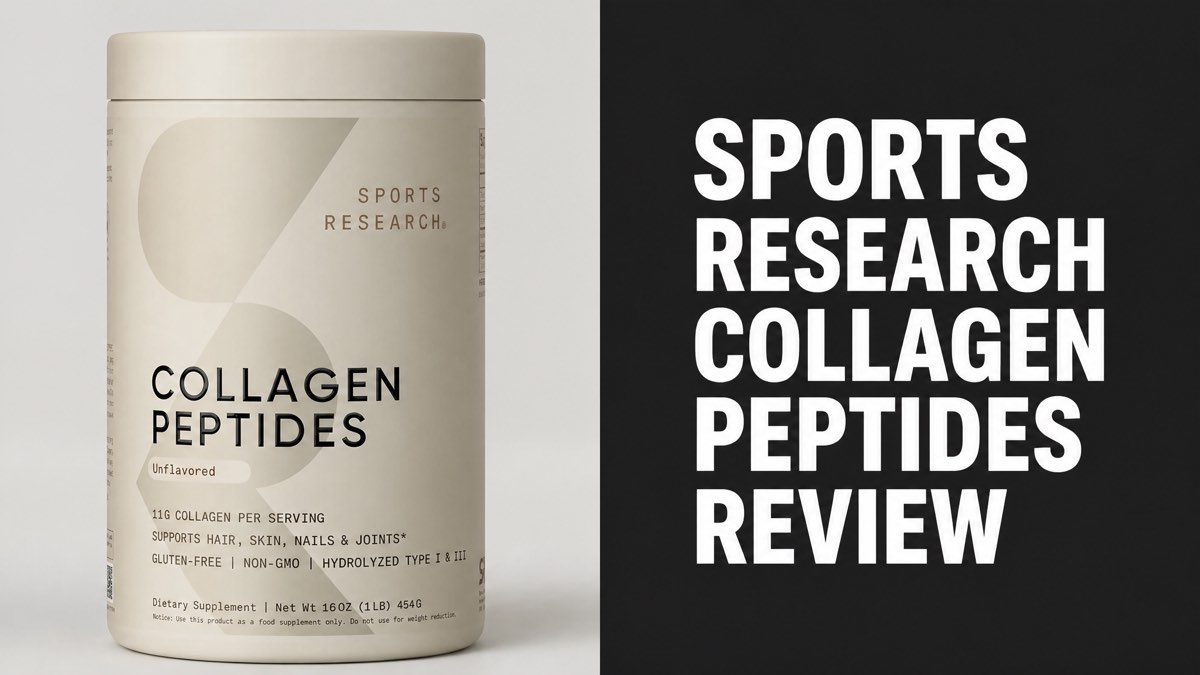
Sports Research Collagen Peptides is a hydrolyzed bovine collagen powder made from grass-fed, pasture-raised cattle. Each scoop delivers 11 grams of Type I and Type III collagen from a single ingredient. The family-owned brand has sold it for years, and the 16 ounce tub holds 41 servings.
The formula has one ingredient and about 40 calories per scoop. Hydrolysis breaks the collagen into small peptides for easier absorption. Paleo, Keto and IGEN labels back the quality, though NSF Certified for Sport is missing. Trials support nail and joint benefits, while skin evidence stays mixed. Pricing sits between Nutricost and Vital Proteins.
Taste draws the loudest complaints, and real results take 8 to 12 weeks of daily use. Safety looks strong for most adults, with a few groups needing a doctor first. Read on to see whether the dose, the price and the proof add up for your own daily routine and your own budget today.
What Is Sports Research Collagen Peptides?
Sports Research Collagen Peptides is a hydrolyzed bovine collagen powder with Type I and Type III collagen. Each scoop delivers 11 grams (0.39 ounces) of collagen and about 10 grams of protein. The cattle are grass-fed and pasture-raised.
The unflavored version is the main product. But vanilla, chocolate, matcha and organic versions exist too. A 16 ounce (454 gram) tub holds 41 servings. So one tub lasts about six weeks at one scoop a day.
Popular? Absolutely. Shoppers have rated the 16 ounce tub 4.6 out of 5 across 130,471 Amazon ratings. The tub ranks number 4 in the Collagen Supplements category.
Why does collagen matter at all? Types I and III make up most of the collagen in skin, tendons, bones, hair and nails. The body makes less of both as adults age. A collagen powder aims to supply the raw material for those tissues.
Who Makes It?
Sports Research is a family-owned supplement company founded in 1980 and based in San Pedro, California. The brand built its name in sports nutrition. Collagen is now one of its best-known products.
The supplements come from cGMP-compliant facilities in the United States. And here's a handy detail: a Track Your Lot feature lets buyers look up a certificate of analysis and third-party test results for their batch.
The collagen itself comes from grass-fed, pasture-raised bovine hides sourced in Argentina and Brazil. The company states that the cattle receive no added hormones or antibiotics. Hides, not bones, supply the raw collagen.
What Is in It?
The ingredient list contains a single item: hydrolyzed bovine collagen peptides. No fillers, artificial sweeteners or preservatives appear on the label. The formula also skips gluten, dairy, soy and added sugar.
Let me break that down: one scoop (about 11 grams) supplies roughly 40 calories, 10 grams of protein and 11 grams of collagen peptides. The powder has zero sugar, zero fat and zero carbohydrates. Sodium sits at 60 milligrams per scoop.
Nutrition Per Scoop:
| Nutrient | Amount |
|---|---|
| Calories | About 40 |
| Protein | 10 g |
| Collagen peptides | 11 g |
| Sugar | 0 g |
| Fat | 0 g |
| Carbohydrates | 0 g |
| Sodium | 60 mg |
What's more, the peptides carry 18 amino acids. Glycine, proline and hydroxyproline lead the profile. Proline supports skin elasticity. Hydroxyproline helps stabilize collagen. Glycine takes part in collagen synthesis and sleep regulation.
The formula adds no vitamin C. Why does that matter? Vitamin C helps the body build collagen. So many users pair each scoop with orange juice or a vitamin C supplement.
Is It Third-Party Tested?
Yes. The product carries Keto Certified, Certified Paleo Friendly and Non-GMO Project Verified labels. IGEN testing through Nutrasource adds an independent GMO check.
Certifications:
- Keto Certified
- Certified Paleo Friendly
- Non-GMO Project Verified
- IGEN testing through Nutrasource
But here's the gap. The standard line lacks NSF Certified for Sport, and Vital Proteins carries it. What does that program do? NSF buys product off the shelf, confirms the label and screens for banned substances. Competitive athletes who face drug testing care most.
Certificates of analysis for every lot don't appear openly on the product page. Buyers reach them through the Track Your Lot lookup or by asking customer service. Some premium brands publish them for every batch.
The good news? The safety record is clean. Searches of FDA recall and warning letter databases turn up nothing tied to this product. The organic version adds USDA Organic and Informed Choice certification.
How Does It Work?
Hydrolysis breaks whole collagen into small peptides of roughly 3,000 to 5,000 Daltons. Smaller pieces move through digestion more easily than intact collagen protein. Most quality collagen powders use the same basic process.
Here's why that matters. Once absorbed, the peptides signal fibroblast cells in the skin to produce collagen of their own. The body then builds new collagen rather than simply storing the supplement. Skin trials point to this signalling effect.
In plain English: glycine, proline and hydroxyproline supply raw material for cartilage and other connective tissue. Peptides also accumulate in cartilage, where they appear to prompt repair. Joint studies rest on this mechanism.
What Are the Benefits?
Sports Research Collagen Peptides targets four areas: skin hydration and elasticity, joint comfort, nail strength and hair thickness. Bone density and muscle preservation appear in the research as well.
Main Benefits:
- Skin hydration and elasticity
- Joint comfort
- Nail strength
- Hair thickness
- Bone density support
- Muscle preservation with training
Does the dose fit the research? Yes. Trials typically use 5 to 15 grams a day. One scoop falls inside that window, and two scoops (22 grams) pass the dose used in the muscle study.
How soon do results show up? Nails often change within 2 to 4 weeks. Skin hydration improves at 4 to 12 weeks. Joint comfort takes 8 to 12 weeks, and the full effect builds past week 12.
To be clear, limits apply. Collagen can't undo years of sun damage. Results differ from person to person, and a few users notice nothing at all after months of daily use.
Does It Help Skin?
Yes. A 2019 systematic review by Choi and colleagues in the Journal of Drugs in Dermatology pooled 11 randomized trials with 805 patients and found better skin elasticity, hydration and dermal collagen density.
Do all the trials agree? Not quite. An independent summary notes that stripping out lower quality and industry-funded studies leaves the strongest trials with no clear effect. Skin gains are possible, not guaranteed.
Consistency decides the outcome. Daily use for 8 to 12 weeks is the realistic test. Vitamin C, good hydration and sun protection back up the powder, since collagen alone doesn't repair sun damage.
How Does It Affect Joints, Hair, and Nails?
Joint evidence comes from a 2008 study by Clark and colleagues, where 10 grams of collagen hydrolysate daily reduced activity-related joint pain in athletes over 24 weeks. One scoop sits right at that dose.
Nail evidence is stronger. A 2017 study by Hexsel and colleagues found a 12% rise in nail growth rate and a 42% drop in brittle nail symptoms in women after 12 weeks.
Hair evidence is thinner. The amino acids support the scalp layer where follicles sit. A dietitian who tracked 90 days of use noticed thicker, shinier hair. But skin and knee pain stayed about the same.
Bone density has some backing too. A 2018 trial by König and colleagues in Nutrients gave postmenopausal women 5 grams of collagen peptides daily for 12 months. And spine and femoral neck density improved.
What Do Reviews Say?
Shopper scores sit high across most listings. The 16 ounce tub holds a 4.6 out of 5 average across 130,471 Amazon ratings. A rating pool that large makes the score hard to dismiss.
Praise centers on a few themes. The powder mixes cleanly and tastes like almost nothing in hot coffee, tea or smoothies. Stronger nails arrive within weeks, and some users with achy joints report less daily stiffness.
What did a registered dietitian find after 90 days? Taste scored 5 out of 5 and value scored 5 out of 5. Results scored 3 out of 5: thicker hair, but no clear skin or knee change.
But scores drop on one warehouse club listing. The 24 ounce tub averages 3.4 out of 5 across 42 ratings. Twenty-one buyers gave five stars, while ten gave one star.
What Are the Common Complaints?
Taste draws the loudest complaints. Several buyers describe a sour or bitter aftertaste in coffee. Most of those complaints involve the organic version, and the standard unflavored tub earns far fewer.
Cold drinks cause trouble too. The powder can clump or float in cold liquids, even though it dissolves well in hot ones. A shaker bottle or slightly warmed liquid fixes the problem.
Results disappoint some buyers. Skin and hair changes stay subtle for many users, and a minority notice nothing. Short trials of two or three weeks miss the benefits that build by week 12.
Digestion bothers a few. Mild bloating or fullness appears in the first days of use for some people, then fades.
How Does It Compare to Vital Proteins and Nutricost?
Vital Proteins delivers 20 grams of collagen per serving and carries NSF Certified for Sport. Nestlé has owned the brand since 2020. The cost lands near $1.00 per serving.
By comparison, Sports Research gives 11 grams per serving at roughly $0.73 to $0.80. Visible Certified Paleo, Keto Certified and IGEN seals back the label. The price sits between the premium and budget options.
Nutricost matches the 11 gram dose at about $0.60 per serving. The brand relies on general GMP claims instead of visible third-party seals. So budget-first buyers favor it.
Does Vital Proteins really pack more? Only on paper. A dietitian who compared the two labels found little difference scoop for scoop. The larger serving size makes Vital Proteins look stronger.
Brand Comparison:
| Brand | Collagen Per Serving | Cost Per Serving | Certification |
|---|---|---|---|
| Vital Proteins | 20 g | About $1.00 | NSF Certified for Sport |
| Sports Research | 11 g | $0.73 to $0.80 | Paleo, Keto, IGEN |
| Nutricost | 11 g | About $0.60 | General GMP claims |
How Does It Compare to Youtheory Verisol?
Youtheory Concentrated Effect uses Verisol, a patented collagen peptide tested in trials built around skin outcomes. The daily dose is 2,500 milligrams, and the format is a tablet.
Sports Research offers a much larger total collagen dose in powder form. The wider dose covers connective tissue, nails and muscle work, not only skin. Powder also adds cooking and mixing options.
The choice follows the goal. A skin-only goal favors Verisol and its targeted evidence. Broad support at a lower cost per gram favors Sports Research.
Is It Safe?
Yes. Sports Research Collagen Peptides is generally well tolerated, and side effects are rare and mild. A short ingredient list lowers the odds of a reaction for most adults.
Digestive effects top the list. Bloating, fullness or a slightly upset stomach can appear in the first days. Why start with half a scoop? Building up to a full scoop eases the adjustment.
Contaminant testing covers heavy metals (arsenic, cadmium, lead and mercury), pesticides, hormones and antibiotics. The brand sources hides rather than bones, which cuts one common heavy metal worry.
No drug interactions are known with common supplements such as multivitamins, omega-3s or probiotics. Still, adults on prescription medication gain from a quick doctor check first.
Who Should Avoid It?
Beef allergy sufferers need a different product altogether. The collagen comes from cattle, and bovine protein triggers reactions in sensitive people.
Vegans and vegetarians also rule it out. Collagen is an animal-derived protein, and plant-based alternatives work through different mechanisms.
Pregnant and nursing women, and adults on medication, ask a doctor before starting. Collagen is a natural protein, but sensitive health periods call for professional guidance.
People with kidney conditions get the same advice. Extra protein adds amino acid load, and doctors monitor that load in kidney disease.
Who Skips It or Asks a Doctor First:
- Anyone with a beef or bovine allergy
- Vegans and vegetarians
- Pregnant or nursing women
- Adults on prescription medication
- People with kidney conditions
How Do You Use It?
One scoop (about 11 grams) a day is the standard dose. Two scoops (22 grams) suit joint goals or resistance training. Muscle trials used 15 grams a day alongside lifting.
Daily Dose by Goal:
| Goal | Daily Dose |
|---|---|
| Skin, hair and nail support | 1 scoop (11 g) |
| Joint support | 1 to 2 scoops (11 to 22 g) |
| Muscle with resistance training | 2 scoops (22 g) |
Timing stays flexible. Collagen works cumulatively, so morning, afternoon and evening all produce the same result. Daily consistency matters far more than the clock.
The unflavored powder mixes into hot coffee or tea, smoothies, oatmeal, yogurt, soups and baked goods. Cold water takes longer to dissolve, so a shaker bottle helps.
Now, what should the first weeks look like? The first two weeks show little change. Softer nails follow around weeks 3 to 4, and skin and joint changes appear around weeks 6 to 8. Full benefits build past week 12.
Can You Mix It in Coffee?
Yes. Unflavored Sports Research powder dissolves in hot coffee with a quick stir and leaves no clumps. Coffee is the most popular way to take it.
Does hot coffee wreck collagen? No. Coffee at 130 to 180 degrees Fahrenheit (54 to 82 degrees Celsius) sits far below the temperature that destroys peptides. The claim that hot coffee denatures collagen doesn't hold up.
Taste is the real risk. A few coffee drinkers report a bitter or sour note, and the complaints cluster around the organic version. A first week with a half scoop shows quickly whether the flavor works.
How Much Does It Cost?
The 16 ounce tub costs about $30 to $33 across retailers. Amazon listed the tub at $32.95, and other retailers sit near $30. The tub holds 41 servings.
Cost per serving lands between $0.73 and $0.80. Some pages quote lower figures of $0.40 to $0.70 for the larger tub. Why does the bigger tub cost less per scoop? The 32 ounce size holds about 82 servings.
Retail options are wide. Amazon, Whole Foods, GNC, Walmart, warehouse clubs and the brand site all carry the product. Amazon Subscribe and Save cuts 5% to 15% off the price.
Single-serve packets exist for travel. The per-serving cost runs higher, but the packets travel without a tub or scoop.
Is It Worth the Price?
Yes, for most buyers. Sports Research sits between Nutricost at about $0.60 and Vital Proteins at about $1.00 per serving. The middle price matches a middle level of proof.
So what does the premium over Nutricost buy? Visible certifications and testing documentation. Buyers who value those seals get what they pay for.
Budget-first buyers face a different answer. Nutricost delivers the same 11 grams for less, and a buyer who trusts general GMP claims saves 25% to 30%.
Is Sports Research Collagen Peptides Worth It?
Yes. Sports Research Collagen Peptides is a solid, honest single-ingredient collagen that earns a recommendation for most buyers. The dose, certifications and price line up well.
The strengths are clear. The formula has one ingredient, the 11 gram dose matches trial ranges, the powder mixes cleanly, and the 4.6 average holds across a huge rating pool.
The weaknesses are clear too. The standard line has no NSF Certified for Sport, lot certificates aren't posted openly, taste draws some complaints, and skin evidence stays mixed.
Pros:
- Single-ingredient formula
- 11 g dose in the trial range
- Visible certifications
- Clean mixing in hot drinks
- Mid-range price
Cons:
- No NSF Certified for Sport
- Lot certificates not posted openly
- Some taste complaints
- Mixed skin evidence
Bottom line: give it 8 to 12 weeks of daily use. Why that long? Anyone who quits at week 2 never tests the product properly.
Who Is It Best For?
The best fit is an adult who wants skin, hair and nail support at a mid-range price. Keto and paleo eaters gain from the matching certifications, and first-time collagen buyers get documented quality without the premium tier.
Competitive athletes who need NSF Certified for Sport skip it and choose Vital Proteins. Strict budget buyers pick Nutricost. Vegans and people with a beef allergy rule it out.
Coffee Loving Card Makers is a reader-supported platform. Purchases made through our links may earn us an affiliate commission at no extra cost to you. Learn more.