
Sandoz Estradiol Patch Review: Does It Stay On and Work?
 By Anna Krause November 4, 2026
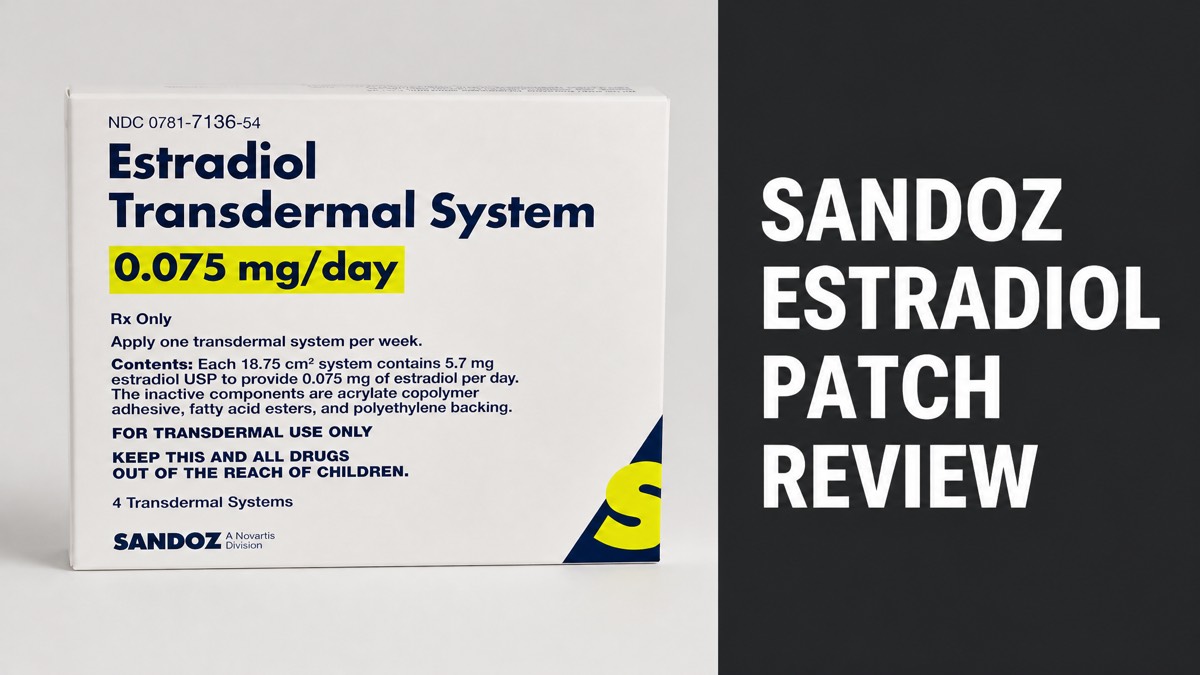
The Sandoz estradiol patch is a prescription skin patch that releases the hormone estradiol through the skin. Doctors prescribe it for menopause symptoms and bone protection. It is sold as a generic in several strengths. This review covers how it works, what users report and what it costs.
Users praise strong relief from hot flashes and night sweats. Many wear the same patch for days without trouble. Others report patches that lift within hours and leave red marks. Pharmacy brand switches drive much of that frustration. Risks follow the usual estrogen warnings and need a doctor's oversight.
Prices run from $25 to about $80 a month with coupons. Read on for application steps, side effects, comparisons with Mylan and Vivelle-Dot, and a clear verdict on who the patch suits best. Every point comes from the official labeling and real user accounts.
What Is the Sandoz Estradiol Patch?
The Sandoz estradiol patch is a prescription skin patch that delivers the hormone estradiol through the skin. Sandoz sells it as a generic estrogen therapy for menopause symptoms. The US box reads Estradiol Transdermal System and carries an Rx Only label.
Estradiol is the main estrogen the ovaries make before menopause. Between ages 45 and 55 the ovaries gradually stop making it. Sandoz Canada lists its patch for menopausal and postmenopausal symptoms and for preventing osteoporosis.
Here's the thing: several strengths exist. The Canadian label lists 50, 75 and 100 mcg per 24 hours. A US box shows 0.075 mg per day, and a US pharmacy listing shows a 0.025 mg version with eight patches per box.
Strengths and Schedules:
| Version | Strength | Schedule |
|---|---|---|
| Sandoz Estradiol Derm (Canada) | 50, 75 or 100 mcg per 24 hours | Twice weekly |
| US box | 0.075 mg per day | Once weekly, 4 patches |
| US pharmacy listing | 0.025 mg per day | Twice weekly, 8 patches |
What Does the Patch Contain?
Each patch holds estradiol in an acrylate copolymer adhesive layer. The 0.075 mg/day US version has an 18.75 cm² surface and 5.7 mg of estradiol USP. Fatty acid esters and a polyethylene backing complete the inactive parts.
Sandoz Canada lists acrylic copolymers and tocopherol on a polyethylene terephthalate film. Sticking problems and skin irritation are the two most common complaints about patches, and both happen where adhesive meets skin.
How Does the Sandoz Estradiol Patch Work?
The patch releases small, steady amounts of estradiol that pass through the skin into the bloodstream. Sandoz Canada describes this as continuous, controlled delivery. Skin absorption skips the digestive tract. Why does that matter? Pills must pass through it, and the patch does not.
The added estrogen replaces what falling ovarian levels no longer supply. Hot flashes, night sweats and brain fog are the symptoms users most often describe easing. The Sandoz label states that estrogen use after menopause slows bone thinning.
To be clear, schedules differ by version. The Canadian patch is worn for 3 to 4 days and changed twice weekly on the same two days. The US 0.075 mg box says to apply one patch per week. A doctor sets the dose and the schedule.
How Do You Apply It?
Apply the patch to clean, dry, intact skin on the trunk, with the buttock as the preferred spot. The lower abdomen, hips, sides and lower back also work. Never apply it to the breast. Avoid skin folds, hairy skin, sun exposure and spots where clothing rubs.
Tear the pouch at the notch instead of cutting it with scissors. Peel off the liner and avoid touching the adhesive. Press the patch firmly with the palm for about 10 seconds. Then run a finger around the edge for full contact.
Steps:
- Tear the pouch open at the notch.
- Peel off the protective liner without touching the adhesive.
- Press the patch onto clean, dry skin for about 10 seconds.
- Run a finger around the edge to seal it.
- Change the patch on the same days each week.
Short answer: rotate sites with every patch. The same spot can be reused, but not twice in a row. Body lotion goes on only after the patch is in place. Contact with a shower or pool does not affect the patch, though very hot water or steam may loosen it.
A patch that falls off in hot water gets shaken dry. The skin is dried and the patch goes on a new area. A patch that still will not stick is replaced with a new one, and the usual schedule continues.
What Are the Benefits of the Sandoz Estradiol Patch?
The main benefit is relief from menopause symptoms such as hot flashes and night sweats. Many users describe better sleep within days. One user with premature ovarian failure reports fast relief and eight comfortable years on the patch.
What's more, a second benefit is bone protection. Sandoz Canada lists osteoporosis prevention as an approved use. The label adds that anyone using the patch only for osteoporosis prevention should discuss other therapies with a doctor.
A patch also replaces a daily pill routine. Users who switched from pills describe better results and simpler dosing. Individual response varies, and the dose matters.
Which Symptoms Does It Treat?
The patch treats the body and mood symptoms that come with falling estrogen. User accounts mention hot flashes, night sweats, mood changes, migraines and brain fog. Sudden surgical menopause after ovary removal triggers the same symptoms faster.
Symptoms Users Mention:
- Hot flashes
- Night sweats
- Mood changes
- Migraines
- Brain fog
Approved uses on the Canadian label are menopausal and postmenopausal symptoms plus osteoporosis prevention. Anyone who still has a uterus needs a progestin alongside estrogen. Users often pair the patch with progesterone pills for this reason.
Why Do Some Users Prefer a Patch Over Pills?
Users who switched from pills often say the patch works better and feels steadier. Several say the patch worked much better than pills had. One long-term user reports good sleep and steady energy on it.
The Women's Health Initiative trial in the Sandoz label tested oral estrogen. The label advises the lowest effective dose for the shortest time. Why so cautious? Estrogen carries real risks, so the aim is the least hormone for the shortest stretch. A doctor weighs the route and the risk for each person.
What Do Sandoz Estradiol Patch Reviews Say?
User opinion splits sharply between loyal long-term users and frustrated ones. Estradiol patches as a whole average 4.8 out of 10 across 186 user ratings. About 36% of those ratings are positive and 52% are negative.
To put it simply, that score covers every estradiol patch brand, not Sandoz alone. Sandoz appears often in the written comments, and opinions on it run to both extremes. Brand switches at the pharmacy trigger many of the strongest reactions.
What Do Happy Users Say?
Happy users praise strong symptom relief and patches that stay put for days. A swimmer reports never losing one in eight years. A 77-year-old applies hers at night, showers in the morning and has never had one fall off.
One user wore it for three years with no issues. Another calls the Sandoz patch thin enough to forget about, with a clear improvement in how she feels. Several name it a favorite next to Vivelle-Dot.
Skin tolerance gets praise as well. One user's skin turned dry and irritated on a patch from another maker. The skin settled after a return to Sandoz.
What Are the Common Complaints?
Poor adhesion is the number one complaint. Some users say patches lifted after 6 to 8 hours instead of lasting the full interval. Why is that a problem? A patch built for days stops working in hours. Sweat made patches bubble off in one account. Another user reports curling even under a hydrocolloid dressing.
The bad news? Skin reactions come next. Reports include red marks that last for weeks and itching under the patch. One user describes a racy, wound-up feeling for a few hours after applying a full patch, followed by nothing.
And supply problems also show up. Some users say pharmacies stopped carrying Sandoz or substituted another maker. One user blames weight gain, leg swelling and headaches on the patch after a switch, though blood work came back normal and no cause was established.
How Does the Sandoz Estradiol Patch Compare to Alternatives?
Sandoz sits among several generic and brand estradiol patches that differ mainly in adhesive and schedule. Alternatives users mention include Vivelle-Dot, Minivelle, Climara, Estradot and a generic from Mylan. Estradiol gel is another route.
Brand differences matter to users because the hormone is the same on paper. So what changes? The adhesive, size and wear time. Many users switch brands when a patch will not stay on, and the pharmacy must then fill the named maker.
How Does Sandoz Stack Up Against Mylan?
Users who compare the two lean toward Sandoz. Several describe Mylan patches that fall off after one to three days and cause burning or lasting red marks. Why do these users go back? The patch will not stay on. Others say Sandoz stayed on for years with no issues.
But not everyone agrees. One user liked how Mylan felt better than Vivelle, though it stuck less well. Another had zero hot flashes after two weeks on Mylan despite skin irritation. Tolerance is individual.
How Does It Compare to Vivelle-Dot?
Users call Sandoz a generic equivalent of Vivelle, and some treat it as a close match. One long-term Vivelle user switched to Sandoz at 0.05 mg after Vivelle was discontinued. She applies it every four days and reports being pleased.
Equivalence is not guaranteed. Why not? Makers use different designs. Another user argues generic patches are not the same product because makers use different designs. Her hot flashes and night sweats returned on a competing generic and cleared after she went back to Vivelle-Dot.
What Are the Side Effects and Risks of the Sandoz Estradiol Patch?
Skin irritation at the application site is the most reported side effect. Redness, itching and adhesive marks appear often in user accounts. Breast tenderness shows up too, and one user judged it minor.
Serious risks come from estrogen therapy as a class. The Sandoz Canada label cites the Women's Health Initiative trial. Oral estrogen raised the risk of stroke and blood clots, and oral estrogen plus progestin also raised breast cancer and heart attack risk.
Estrogen alone raises endometrial cancer risk when the uterus is present. A progestin is added to lower that risk. How do doctors handle the uterus? They pair the estrogen with a progestin. Any unusual vaginal bleeding needs a doctor's attention right away. Five or more years of estrogen therapy is linked to a small rise in ovarian cancer risk.
The label says to use the lowest effective dose for the shortest time possible. Follow-up visits are required, with the first within 3 to 6 months and then at least once a year. A mammogram is advised before starting and at regular intervals.
Who Should Avoid the Sandoz Estradiol Patch?
The label rules out anyone with certain cancers, clotting history or active liver disease. The list covers active liver disease, breast or endometrial cancer, endometrial hyperplasia, undiagnosed genital bleeding, porphyria, pregnancy and breastfeeding.
The list continues with a history of heart attack, stroke or coronary heart disease. Migraine headaches, blood clots, active thrombophlebitis and partial or complete vision loss from eye blood vessel disease also rule the patch out. An allergy to any component does too.
Do Not Use If:
- Active liver disease
- Breast or endometrial cancer
- Pregnancy or breastfeeding
- History of heart attack, stroke or blood clots
- Migraine headaches
- Allergy to any component
Several medicines interact with the patch. The label names barbiturates, phenytoin, carbamazepine, rifampicin, efavirenz and St John's Wort. A full medication list belongs in front of the prescribing doctor.
How Much Does the Sandoz Estradiol Patch Cost?
Reported prices run from $25 to about $80 a month, with coupons doing most of the work. A 77-year-old pays around $78 for three boxes of eight patches with a coupon. Another user pays $65 a month, and a third paid $25 under insurance.
Coupons cut one user's cost by more than 65%, and the pharmacy accepted them. Medicare Part D never covered the 77-year-old's patch. So how does she pay? With a coupon, at around $78 for three boxes. Insurance coverage varies, so a formulary check matters.
Brand alternatives cost more. One user pays $150 for Climara against $25 for Sandoz. Another faced a $450 price for a three-month supply of a different patch after insurance refused to pay.
Reported Prices:
| Item | Reported cost |
|---|---|
| Sandoz, 3 boxes of 8 with coupon | $78 |
| Sandoz, monthly cash price | $65 |
| Sandoz, insured copay | $25 |
| Climara, monthly | $150 |
| Different patch, 3-month supply | $450 |
Where Can You Buy It?
A pharmacy fills it with a prescription, since the box is marked Rx Only. Retail pharmacies, online pharmacies and discount-card pricing all appear in user accounts. Medical supply sites list the box as well.
Bottom line on access: availability is uneven. Some users say pharmacies stopped carrying Sandoz. What happens then? The pharmacy substitutes another maker. A doctor can name the maker on the prescription, and one user advises requiring that the pharmacy fill that specific brand.
What Is the Final Verdict on the Sandoz Estradiol Patch?
The Sandoz estradiol patch works well for many users and fails others on adhesion. The hormone does its job for people who keep the patch on. Skin reactions and pharmacy substitutions cause most of the frustration.
Price is a strength. Why? Coupons keep a month of patches affordable. Coupon pricing keeps a month of patches affordable, and one user paid a sixth of the cost of a brand alternative. Risks follow the usual estrogen warnings and need a doctor's oversight. This review is information, not medical advice.
Pros:
- Strong symptom relief for many users
- Low cost with coupons
- Stays on for days for many users
Cons:
- Adhesion failures for some users
- Skin redness and itching
- Pharmacy substitutions and uneven supply
- Standard estrogen risks
Who Is the Patch Best For?
The patch suits people whose doctor prescribes transdermal estrogen and who have no contraindications. Long-term users with steady supply report the best results. Swimmers and active users describe it staying put when skin prep is right.
Skin prep helps adhesion. What does good prep look like? Clean, dry skin and a firm 10-second press. Users recommend clean, dry skin, an alcohol wipe, a low pass with a hair dryer and a clear film dressing over the patch. A doctor can switch makers if adhesion or irritation persists.
Coffee Loving Card Makers is a reader-supported platform. Purchases made through our links may earn us an affiliate commission at no extra cost to you. Learn more.