
Sancuso Patch Review: Does It Really Prevent Chemo Nausea?
 By Anna Krause November 11, 2026
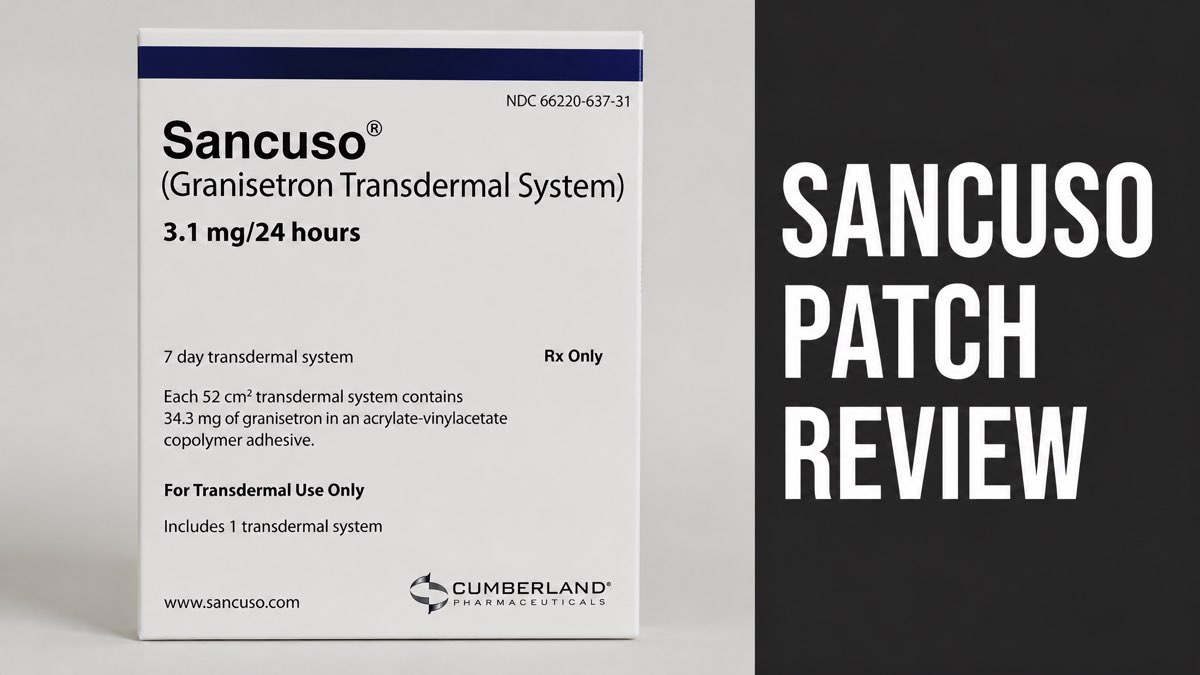
Sancuso is a prescription granisetron patch that prevents nausea and vomiting caused by chemotherapy in adults. The FDA approved it in 2008. Patients wear it on the upper outer arm for up to 7 days instead of swallowing anti-nausea pills.
The patch blocks the serotonin signals that trigger vomiting. Patient ratings run mixed, with adhesion, price and constipation coming up often. A controlled trial against oral granisetron backs the design. Praise centers on convenience, and the loudest criticism targets patches that fall off early.
Below, you'll find how the patch works, how to apply it and which side effects matter. You'll also learn who must avoid it, what it costs and whether it earns a place in a chemo plan.
What Is Sancuso?
Sancuso is a prescription skin patch that delivers granisetron to prevent chemotherapy nausea and vomiting. Granisetron belongs to the antiemetic class, and the FDA first approved this patch in 2008.
The patch covers moderately and highly emetogenic chemo regimens that run up to 5 consecutive days. In plain English: it's a nausea shield you wear instead of a pill you swallow.
Sancuso isn't a controlled drug, and no lower-cost generic exists. Can you grab it off the shelf? No. Pharmacies stock it only on a doctor's prescription, so there's no over-the-counter version.
Who Is Sancuso For?
Sancuso is made for adults receiving chemotherapy. Safety and effectiveness haven't been established in children, so pediatric patients need a different option.
Patients who struggle to keep pills down are the natural fit. A single patch covers days of treatment, so there's no schedule of tablets to track on top of everything else.
How Does Sancuso Work?
Granisetron blocks 5-HT3 serotonin receptors in the brain and the digestive tract. Those receptors trigger the vomiting center, so blocking them stops the nausea signal before it lands.
Why does chemo cause nausea at all? Chemotherapy damages the gut lining and releases serotonin. That serotonin stimulates nerve receptors, and the brain answers with nausea and vomiting.
The patch measures 52 cm2 (8.1 square inches) and holds 34.3 mg of granisetron. It releases 3.1 mg every 24 hours, so the dose arrives slowly through the skin instead of in one hit.
How Do You Apply Sancuso?
Apply one patch to clean, dry, intact skin on the upper outer arm. Red, irritated or damaged skin is off limits, and lotions or creams stop the patch from sticking.
Timing matters. Put the patch on at least 24 hours before chemo, and no earlier than 48 hours before. Remove it at least 24 hours after the last chemo dose.
Open the pouch only when you're ready to apply, and never cut the patch. Clip heavy arm hair close to the skin rather than shaving, because shaving irritates the skin.
Application steps:
- Clip arm hair if needed and choose clean, dry, undamaged skin on the upper outer arm.
- Open the pouch and apply the whole patch right away.
- Press the patch down firmly, and add medical tape to the edges if a corner lifts.
- Remove the patch at least 24 hours after chemo ends by peeling it off gently.
How Long Does One Patch Last?
One patch lasts up to 7 days. Leaving it on longer than that is pointless because the medication runs out.
Showering is fine. Long, hot showers and baths are not, because heat pushes more medication through the skin. How swimming or heavy sweating affects the patch is unknown, so those are best skipped.
Why avoid heat? Heat pushes more medication through the skin. Heat pads stay away from the patch area. Cover the site with clothing against direct sunlight while wearing it and for 10 days after removal, because sun exposure causes skin reactions.
Does Sancuso Actually Work?
Yes. Sancuso prevents chemo nausea in many patients, though results vary from person to person. Patient ratings average 3.3 out of 5 on one site and 6.7 out of 10 on another.
The numbers explain the gap. About 57% of raters on the first site report a positive effect. On the second site, 53% report a positive experience and 20% report a negative one.
Real stories sit behind those percentages. One caregiver says a lung cancer patient had no chemo side effects at all. A parent says nausea vanished, even when a stomach bug went through the family.
The patch also faced a controlled study against oral granisetron in roughly 400 patients per group (404 on the patch, 406 on the pill). That head-to-head design is why doctors treat it as a real option rather than a gimmick.
Is Sancuso FDA Approved?
Yes. The FDA granted initial approval in 2008. The approved use is preventing nausea and vomiting during moderately or highly emetogenic chemotherapy.
The label caps that coverage at regimens of up to 5 consecutive days. Anything outside that window is a conversation for your oncologist, not a guess from a product page.
What Do Sancuso Reviews Say?
Sancuso reviews are mixed and the sample sizes are small. Only a handful of ratings exist on each major site, so a single angry or glowing story swings the average.
Four themes repeat. Patients talk about effectiveness, adhesion, price and the occasional skin reaction. Each theme splits cleanly into fans and critics.
What Do Patients Like?
Patients praise the patch for working and for being convenient. One caregiver calls it worth every dollar, and another reviewer sums it up as effective and convenient.
Cost relief shows up too. A patient reports that a copay discount card can bring four patches down to about $30. Pharmacies often prefer filling generics, so the price quoted at the counter isn't always the final word.
What Are the Common Complaints?
Adhesion is the loudest complaint. One patient says the patch came off in under 24 hours. Another says the last three patches wouldn't stay on past a day, even with tape around the edges.
Why does that matter so much? The patch only works while it's on the skin. A patch that falls off on day one leaves the patient unprotected during chemo.
Price is the second complaint, with one reviewer citing $500 per single-use patch. A third reviewer had an allergic reaction and got no benefit at all.
Sancuso vs Ondansetron: Which Is Better?
Neither wins outright, because the two drugs differ in form and in who can use them. Both prevent chemo nausea and both block serotonin signals, but they reach the body differently.
Sancuso is a patch applied 1 to 2 days before chemo that stays on for up to 7 days. Ondansetron (Zofran) comes as tablets, liquid or melt-on-the-tongue tablets, taken before chemo and then a few times a day for up to 2 days.
Age settles one question quickly. Ondansetron is an option for children, while Sancuso is for adults only.
Sancuso vs ondansetron:
| Feature | Sancuso | Ondansetron |
|---|---|---|
| Form | Skin patch | Tablet, liquid or dissolving tablet |
| Dosing | One patch, up to 7 days | Before chemo, then a few times daily for up to 2 days |
| Age | Adults only | Adults and children |
Sancuso vs Oral Granisetron?
Sancuso and oral granisetron deliver the same drug by different routes. The patch skips the stomach, while the pill has to be swallowed and kept down.
A controlled trial compared the two directly. Constipation hit 5.4% of patch users and 3.0% of pill users. Headache ran the other way, at 0.7% on the patch and 3.0% on the pill.
Adverse events in the trial (events of 3% or more in either group):
| Event | Sancuso (404 patients) | Oral granisetron (406 patients) |
|---|---|---|
| Constipation | 5.4% | 3.0% |
| Headache | 0.7% | 3.0% |
What Are the Side Effects of Sancuso?
Constipation is the most common side effect. Severe constipation needs a call to the prescriber, because it signals a possible blockage.
Granisetron can also hide the signs of a progressing bowel blockage. Why does that matter? A blockage needs treatment right away to avoid damage and infection. Trouble passing gas or stomach pain deserves a call to the oncology team.
The heart gets a mention on the label. 5-HT3 blockers are linked to ECG changes, and QTcF prolongation above 450 milliseconds appeared in 1.9% of patients in one study.
Side effects at a glance:
| Side effect | What to know |
|---|---|
| Constipation | Most common reaction; severe cases need a call to the prescriber |
| Skin reactions | Usually mild; remove the patch if severe or widespread |
| Masked blockage | Can hide a progressing ileus or gastric distention |
| ECG changes | QTcF above 450 ms in 1.9% of patients in one study |
Skin reactions at the patch site stay mild for most people. Redness after removal fades within about 3 days. A severe or spreading rash means the patch comes off and a healthcare professional gets a call.
Who Should Avoid Sancuso?
Anyone with a known allergy to granisetron or to a patch component must avoid Sancuso. The label lists that hypersensitivity as a contraindication.
Serotonin syndrome is the other big risk. It's rare, but some reported cases were fatal. The risk climbs when the patch combines with serotonergic drugs.
Drugs linked to serotonin syndrome risk:
- SSRIs and SNRIs
- MAO inhibitors
- Mirtazapine
- Fentanyl
- Lithium
- Tramadol
- Intravenous methylene blue
- Triptans and St. John's wort
Pregnancy calls for caution. The label says to use the patch only if clearly needed, and nursing mothers need caution too. Children are out, because pediatric safety hasn't been established.
How Much Does Sancuso Cost?
Sancuso is expensive without insurance or a discount card. One reviewer cites $500 for a single-use patch, and no lower-cost generic exists to undercut it.
Discount cards change the math. A patient reports that a copay card can bring four patches down to about $30. Why do cost reviews disagree so sharply? The gap between $500 and $30 is the reason.
Where to Buy Sancuso?
Sancuso is sold only with a prescription, so the oncologist writes the order and a pharmacy fills it. No over-the-counter version exists.
Pharmacies sometimes push generic alternatives, and a patient notes they can exaggerate the patch's cost to steer people away. Ask for the discount card price before accepting the first number you hear.
Is Sancuso Worth It?
Yes. Sancuso is worth it for adults who want chemo nausea protection without a pill schedule. The patch has an FDA approval, a head-to-head trial against oral granisetron and real patient success stories behind it.
The catch? Adhesion and price. A patch that won't stay on defeats its purpose, and an uncovered $500 patch is a hard sell. Check coverage and ask the oncologist before committing.
What Are the Pros and Cons of Sancuso?
Sancuso's strengths are convenience and a proven design, and its weaknesses are cost and stickiness. Both sides come straight from the label and patient experience.
Pros:
- No pills to swallow
- One patch lasts up to 7 days
- FDA approved since 2008
- Tested head-to-head against oral granisetron
Cons:
- Patches can fail to stick
- High price without a discount card
- Constipation is the most common side effect
- Heat and sun limits apply during wear and for 10 days after
- Adults only
Coffee Loving Card Makers is a reader-supported platform. Purchases made through our links may earn us an affiliate commission at no extra cost to you. Learn more.