
Salonpas Patch Review: Is It Worth It in 2026? An Honest Look
 By Anna Krause November 1, 2026
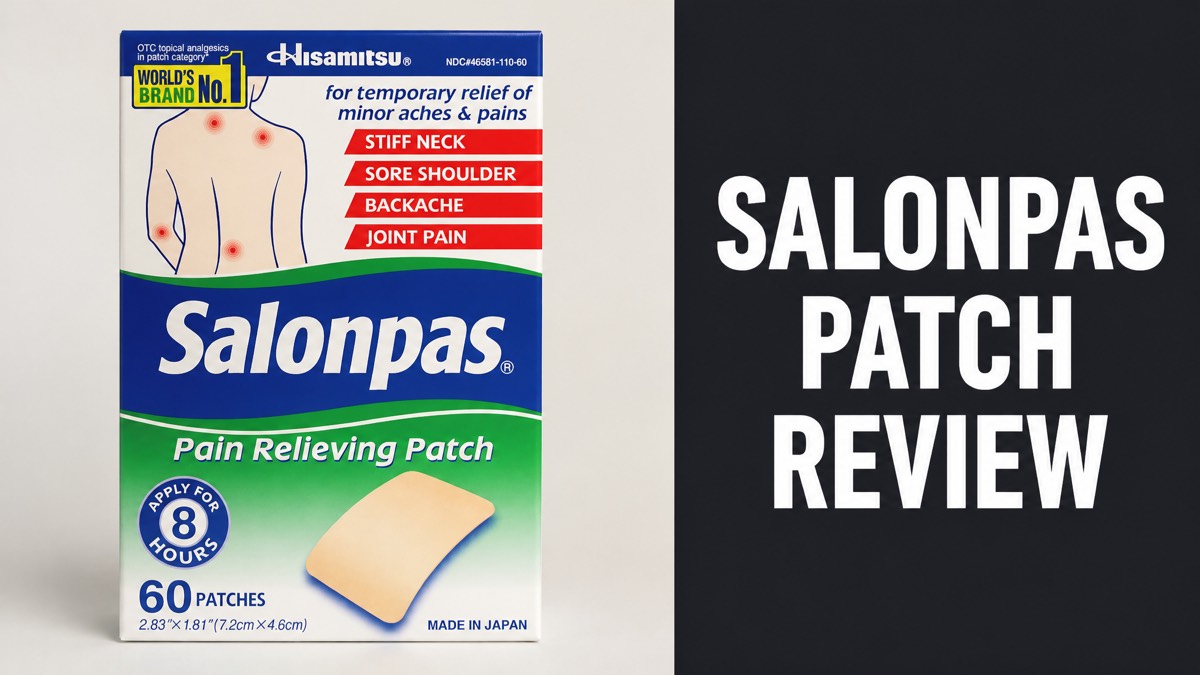
Salonpas Patch is an over-the-counter topical pain patch from Hisamitsu, a Japanese drug maker. The patch treats mild to moderate muscle and joint aches from strains, sprains, bruises and simple backache. The original version wears for up to 12 hours and sells in pharmacies, big-box stores and online.
The patch pairs menthol with methyl salicylate. Together they create a cool then warm feeling and a mild anti-inflammatory action. A placebo-controlled trial showed 40% more relief than placebo. User ratings still split almost evenly between praise and complaints. Adhesion is the loudest gripe, and some users say relief fades sooner than the label promises.
Safety rules matter here, because methyl salicylate is an NSAID. Pregnancy, stomach bleeding risk and daily patch limits all shape who can use it. Read on for the ingredients, how it works, side effects, lidocaine comparison, price and an honest verdict on whether the patch earns its place.
What Is Salonpas Patch?
Salonpas Patch is an over-the-counter topical patch for temporary relief of mild to moderate muscle and joint pain. The label lists strains, sprains, bruises, simple backache and arthritis. Hisamitsu markets the original as the first FDA approved OTC topical pain reliever.
The original patch wears for up to 12 hours. Other patches in the lineup run up to 8 hours. Many oral pain pills need a fresh dose every 4 to 6 hours. So what does a patch change? One patch covers far more time.
The brand also sells gel, spray, cream and roll-on forms. Hisamitsu calls Salonpas the world's number one brand of OTC topical analgesic patches.
Who Makes Salonpas Patch?
Hisamitsu Pharmaceutical Co., Inc. develops and manufactures Salonpas patches in Japan. The company is a Japanese firm with a reputation for topical analgesics. Hisamitsu America, Inc. in Florham Park, New Jersey distributes the products in the United States.
The original patch label states Made in Japan and names a production site in Tosu, Saga. In fact, clinical trials involving over 800 patients support the original patch.
What Is in a Salonpas Patch?
The original Salonpas Pain Relief Patch contains two active ingredients: menthol 3% and methyl salicylate 10%. Each patch holds 31.5 mg of menthol and 105 mg of methyl salicylate. Both ingredients are topical analgesics.
Inactive ingredients include mineral oil, polyisobutylene, a styrene-isoprene-styrene block copolymer and synthetic aluminum silicate. Backing cloth and film hold the medicine against the skin. Menthol gives the patch a minty scent.
The label flags methyl salicylate as an NSAID. Why does that matter? That classification drives the stomach bleeding warning printed on the package.
Which Salonpas Patch Versions Exist?
Salonpas sells at least four patch families with different active ingredients. The Pain Relief Patch uses menthol 3% and methyl salicylate 10%. The Pain Relieving Patch adds camphor 3.1% and raises menthol to 6.0%. Lidocaine and capsaicin versions use entirely different actives.
Salonpas Patch Versions:
| Version | Active Ingredients | Wear Time |
|---|---|---|
| Pain Relief Patch | Menthol 3%, methyl salicylate 10% | Up to 12 hours |
| Pain Relieving Patch | Camphor 3.1%, menthol 6.0%, methyl salicylate 10% | Up to 8 hours |
| Lidocaine Gel-Patch | Lidocaine 4% | Up to 8 hours |
| Salonpas Hot | Capsaicin 0.025% | Up to 8 hours |
Sizes vary by version. The Pain Relief Patch measures 3.94 by 2.75 inches (10 by 7 cm), and the LARGE version measures 3.94 by 5.50 inches (10 by 14 cm). The Pain Relieving Patch comes smaller at 2.83 by 1.81 inches (7.2 by 4.6 cm).
The good news? Unscented choices exist for buyers who dislike the menthol smell. The Lidocaine Gel-Patch and Salonpas Hot carry no scent. Salonpas Hot is the largest patch at 5.12 by 7.09 inches (13 by 18 cm) and relies on capsaicin 0.025%.
How Does Salonpas Patch Work?
Salonpas Patch works as a counterirritant that distracts the nerves from pain. Menthol creates a cooling sensation. Methyl salicylate adds a warming sensation. So why does that help? The alternating cool and warm feelings pull attention away from the sore area.
The skin converts methyl salicylate into salicylic acid. Salicylic acid then blocks prostaglandin production. Prostaglandins drive inflammation, so the block gives the patch a mild anti-inflammatory action in the treated muscle or joint.
Menthol also acts as a mild local anesthetic and widens blood vessels. Wider vessels raise blood flow to the area. Lab tests show menthol lowers inflammatory signals in immune cells.
How Long Does Salonpas Patch Last?
A Salonpas Pain Relief Patch delivers relief for up to 12 hours per application. The label directs 8 to 12 hours of wear. The Pain Relieving Patch and the Lidocaine versions stop at 8 hours.
Short answer: onset varies. Relief generally arrives within one hour. Some users feel tingling after 10 to 15 minutes and relief a few minutes later. Others wait several hours.
An opened pouch loses strength after 14 days. Why? The active ingredients evaporate and the adhesive weakens. Unopened patches keep for 2 to 3 years from the production date, and the expiration date prints on each box.
Does Salonpas Patch Actually Work?
Yes. Salonpas Patch relieves mild to moderate muscle and joint pain for many users. A placebo-controlled trial showed 40% additional relief compared with placebo. In the same study, 58% of patients rated their satisfaction as good, very good or excellent.
Severe pain falls outside the claim. Why? The label covers mild to moderate aches only. Users with deep joint pain or severe flare-ups report little benefit.
Ratings split. One set of 148 ratings averages 5.3 out of 10, with 42% positive and 45% negative. Muscle pain scores 4.8 and osteoarthritis scores 6.3. The 60-count three-pack holds a 4.8 out of 5 average across 1,131 ratings.
What Do Users Like About Salonpas Patches?
Users praise fast, noticeable relief for pulled muscles, sore backs and sciatica. A twisted ankle and a pulled upper-arm muscle both responded within hours. Large muscle areas such as shoulders, upper back and lower back respond best.
Here's the thing: convenience wins repeat buyers. Patches peel off cleanly and let users sleep through the night. A patch applied in the evening keeps working until morning.
Price earns praise as well. Dollar stores have sold five-patch packs for $1. And it gets better: some users say patches replaced part of their oral pain medicine.
What Do Users Complain About?
Adhesion is a leading complaint about current Salonpas patches. What's going wrong? Many long-time users call the redesigned patch flimsy. Patches lift with movement and slip under socks.
Relief can run short and uneven. Patches do little near the elbow or wrist, where little muscle sits under the skin. Severe pain gets no real benefit. Some users report relief lasting only a short time.
And the skin takes a beating. Repeated use on the same spot two days running irritates the skin. Not everyone tolerates the cool then warm sensation. Some users also report a higher price for the newer design.
What Are the Side Effects of Salonpas Patch?
Salonpas Patch causes mild skin reactions in some users. Redness, itching and irritation at the application site are the usual complaints. Many users have none. Users who see these signs remove the patch.
This is important: serious reactions need immediate action. Hives, trouble breathing, or swelling of the face, lips, tongue or throat signal an allergic reaction. Increased pain, blistering or severe burning also require stopping the patch and calling a doctor.
Stop Using the Patch If You See:
- Hives or trouble breathing
- Swelling of the face, lips, tongue or throat
- Increased pain at the application site
- Blistering or severe burning
- Black stools or vomiting blood
Methyl salicylate is an NSAID, so the label carries a stomach bleeding warning. The chance is small but climbs for adults aged 60 and older, people with ulcers or bleeding problems, and people on blood thinners or steroids. Black stools or vomiting blood signal bleeding.
Overuse raises heart risk. How? Using more patches than directed or using them for longer raises the chance of heart attack and stroke. Three or more alcoholic drinks every day also raise the bleeding risk.
Who Should Avoid Salonpas Patch?
Several groups need to skip Salonpas Patch or get a doctor's approval first. Anyone allergic to aspirin or other NSAIDs belongs in the first group. Adults only use the original patch, because it has not been shown to work in children under 18.
Pregnancy is a firm limit. Why? Methyl salicylate stays off the table at 20 weeks or later unless a doctor directs it, because it can cause problems for the unborn child or complications during delivery. Breastfeeding mothers ask a health professional first and avoid the nipple area.
A doctor visit comes first for anyone with high blood pressure, heart disease, kidney disease, or a diuretic prescription. The patch stays off the face, rashes, wounds and damaged skin. Heart surgery patients skip it right before and after the operation.
Who Skips or Asks First:
- People allergic to aspirin or other NSAIDs
- Anyone under 18 using the original patch
- Pregnant women at 20 weeks or later
- People with high blood pressure, heart disease or kidney disease
- People taking a diuretic
How Do You Use Salonpas Patch?
Apply one patch to clean, dry skin over the sore muscle or joint. Remove the film from the backing, press the patch down and leave it for 8 to 12 hours. Adults aged 18 and older use the original patch. One patch at a time is the rule.
Steps:
- Clean and dry the sore area.
- Remove the patch from the backing film.
- Press the patch onto the skin.
- Leave the patch in place for 8 to 12 hours.
- Remove the old patch before applying a new one.
Bottom line on dosing: daily limits are strict. Two patches per day is the cap, and three days in a row is the longest course. A fresh patch replaces the old one, and the old one comes off first. Pain lasting past three days calls for a doctor.
Certain conditions rule out application. Sweating and heating pads both work against the patch. Hands get washed after applying or removing it, and eye contact calls for a thorough water rinse. Used patches get folded sticky ends together before disposal.
Why Do Some Salonpas Patches Not Stick?
Movement, sweat and clothing friction pull Salonpas patches off the skin. Patches lift at the edges under socks or over bending joints. The label also bars use while sweating.
Application technique matters. The label steps are to peel the center film, place the patch, then slide one half of the film away and the other half the opposite way. Muscle-heavy spots away from bone hold the patch better.
Patch age plays a role. How? Expired patches lose adhesiveness, and pouches open for 14 days or more lose active ingredients. Long-time users also tie the problem to a redesign that swapped white backing for a skin-colored one.
How Does Salonpas Compare to Lidocaine Patches?
Salonpas original and lidocaine patches relieve pain through two different mechanisms. The original uses menthol and methyl salicylate as counterirritants with a cool then warm feel. Lidocaine 4% is a local anesthetic that numbs the area by blocking pain signals from skin nerves.
Wear rules differ. Lidocaine patches run up to 8 hours and allow 3 to 4 applications per day, for adults and children aged 12 and older. The original Salonpas patch runs up to 12 hours but caps at 2 patches per day for adults aged 18 and older.
Salonpas Original vs Lidocaine:
| Feature | Original Patch | Lidocaine Patch |
|---|---|---|
| Active ingredient | Menthol and methyl salicylate | Lidocaine 4% |
| Feeling | Cool then warm | Numbing |
| Wear time | Up to 12 hours | Up to 8 hours |
| Minimum age | 18 | 12 |
| Main warning | Stomach bleeding (NSAID) | Methemoglobinemia (rare) |
Risk profiles differ too. How? Methyl salicylate brings the NSAID stomach bleeding warning. Lidocaine carries a rare risk of methemoglobinemia, a blood condition. Icy Hot also sells products built on methyl salicylate, so the NSAID caution applies there as well.
Can You Mix Salonpas With Other Pain Products?
No. Salonpas does not belong with other external pain products at the same time. Patches, gels and creams from other brands stay off the area while a Salonpas patch is on. Even within the Salonpas line, only one patch goes on at a time.
And oral pain pills? They need a doctor's input. Aspirin, ibuprofen and naproxen are NSAIDs, so stacking them with methyl salicylate raises the chance of stomach bleeding. Anyone on a diuretic also checks with a doctor first.
How Much Does Salonpas Patch Cost?
Salonpas Patch costs roughly 17 cents per patch in a standard 60-count box. A 60-count box listed at $10.14 works out to about $0.17 each. Prices change by retailer and date.
For example, bargain packs exist. Dollar stores have sold five-patch packs for $1, which works out to 20 cents each.
Long-time users report that the redesigned version costs more than the older one while holding less grip.
Where Can You Buy Salonpas Patches?
Salonpas patches sell over the counter without a prescription. Pharmacies, big-box stores and warehouse clubs stock them. Amazon lists multi-packs such as a 180-count set of three 60-count boxes, and dollar stores carry small packs.
Buyers check the package before paying. The pouch seal, the expiration date and the exact version all matter. The Pain Relief Patch (menthol and methyl salicylate) and the Pain Relieving Patch (adds camphor) share a brand but not a formula.
Is Salonpas Patch Worth It?
Yes. Salonpas Patch earns a place in the medicine cabinet for mild to moderate muscle and joint aches. Low cost per patch, easy application and clinical backing all count in its favor.
Quick Verdict:
| Factor | Result |
|---|---|
| Cost | About $0.17 per patch |
| Wear time | Up to 12 hours |
| Adhesion | Inconsistent for many users |
| Safety | NSAID warnings apply |
Drawbacks are real. Adhesion fails for many users, relief sometimes fades fast, and ratings split almost evenly between positive and negative. The methyl salicylate NSAID warnings add caution for older adults and anyone on blood thinners.
Bottom line: severe pain, chronic conditions and long-term use fall outside what the patch handles. Symptoms lasting beyond three days call for a doctor. Anyone wanting a numbing effect looks at lidocaine patches instead.
Who Is Salonpas Patch Best For?
Salonpas Patch fits healthy adults with strains, simple backache and sore muscles. Large muscle areas such as the lower back, upper back and shoulders respond best. Evening application suits users who want relief overnight.
Other buyers need a different product. Adults over 60, people on blood thinners and anyone with NSAID allergies ask a doctor first. Users who want numbing rather than warming relief look at lidocaine versions. Severe or lasting pain needs medical care, not a patch.
Coffee Loving Card Makers is a reader-supported platform. Purchases made through our links may earn us an affiliate commission at no extra cost to you. Learn more.