
Qutenza Patch Review: Is the 8% Capsaicin Patch Worth It?
 By Anna Krause November 5, 2026
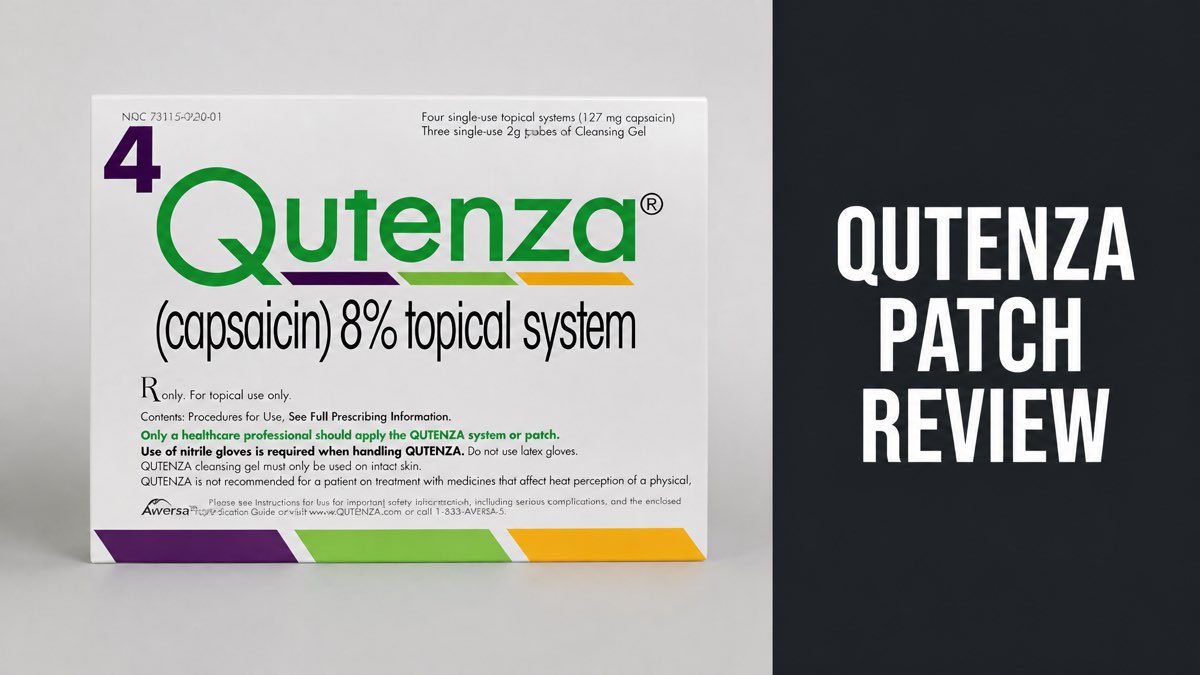
Qutenza is a prescription patch that delivers 8% capsaicin through the skin to calm nerve pain. A trained clinician applies it in the office, and one treatment can last about three months. It is approved for pain after shingles and used for diabetic nerve pain in the feet.
The patch quiets pain receptors, and trials show it beats a low-dose control patch by a modest margin. Burning at the patch site is the main downside. Patient ratings split between big relief and no relief. Costs run from hundreds to thousands of dollars per treatment.
Insurance often covers it, but only after oral medicines fail. Lidocaine patches offer a faster, gentler alternative. Read on to learn who benefits most, what the application feels like, what it costs, and whether the burn and the bill are worth the relief.
What Is Qutenza Patch?
Qutenza is a prescription patch that delivers 8% capsaicin to the skin to treat nerve pain. A clinician applies it in the office. Nobody takes it home or wears it alone.
The US approved it in 2009 for nerve pain after shingles, known as postherpetic neuralgia (PHN). Clinical policies now also list diabetic peripheral neuropathy of the feet as a treated condition. So the patch targets two specific kinds of nerve pain.
Qutenza is not an over-the-counter product. It is also brand-name only. Can you buy a generic version? No, a generic is not available yet, so no cheaper copy exists to shop for.
What Is in the Qutenza Patch?
Each Qutenza patch contains 8% capsaicin, which equals 640 mcg per square centimeter. One patch holds 179 mg of capsaicin in total. Capsaicin is the compound that makes chili peppers hot.
The patch measures 14 cm by 20 cm (5.5 in by 7.9 in). Clinicians can cut it to match the painful area. The outer layer is printed with the words capsaicin 8%.
The capsaicin sits in a silicone adhesive. Inactive ingredients include diethylene glycol monoethyl ether, dimethicone, and ethyl cellulose. Nothing in the formula is a narcotic.
How Does Qutenza Work?
Qutenza works by activating TRPV1, a pain receptor on skin nerve fibers. Capsaicin binds that receptor at a very high dose. The nerve fiber then stops sending pain signals for a while.
Doctors call this desensitizing. Why do treatments need repeating? The nerve fibers regenerate, and the quieting effect fades. The patch doesn't repair the nerve. It simply mutes it for a few months.
The action stays local. Oral nerve pain pills circulate through the whole body, but a patch acts on the treated skin. Sedation and kidney strain from daily pills don't come into play.
How Is Qutenza Applied?
A trained clinician prepares the skin, numbs it, and then applies the patch. The painful area gets marked and any hair is clipped, not shaved. Then the skin is washed with mild soap and water and dried.
Next comes a topical anesthetic, such as lidocaine cream. It covers the whole treatment area plus 1 to 2 cm (0.4 to 0.8 in) around it. Once the skin is numb, the clinician wipes it off, washes the area again, and places the patch.
Wear time depends on the body part. Foot treatment runs 30 minutes, and other areas run up to 60 minutes. Staff wear nitrile gloves because loose capsaicin burns eyes and airways. The clinician rolls the patch inward to remove it, then applies a cleansing gel.
Steps:
- The clinician marks the painful area and clips the hair.
- The skin is washed and dried.
- A topical anesthetic numbs the area.
- The patch goes on for 30 to 60 minutes.
- The clinician removes the patch slowly and applies cleansing gel.
How Long Does Qutenza Pain Relief Last?
Qutenza relief typically lasts about three months after one application. Some patients get longer relief. Others get far less.
Relief doesn't arrive right away. Does it start within days? Pain can begin easing within one to two weeks. The peak benefit usually lands between weeks two and eight.
The label sets the repeat schedule. Retreatment can happen every three months or when pain returns, but never more often. And results vary. One patient reported relief for a single day before a sharper pain came back.
Does Qutenza Actually Work?
Yes. Qutenza beats a low-dose control patch in controlled trials. A pooled analysis of seven studies covered 1,458 people. Qutenza won on the main pain measure.
The margin is modest. The pooled difference in pain reduction between groups was 8.0 percentage points, with a statistical range of 4.6 to 11.5 points. Is that enough to matter? For stubborn nerve pain, it can be.
The trials used a 0.04% low-dose patch as the control, a tougher comparison than a dummy patch. One separate trial reported pain reductions of 29.6% and 32% with Qutenza between weeks 2 and 8. The control group reported 19.9% and 24.4%.
Does Qutenza Work for Postherpetic Neuralgia?
Yes. Qutenza is FDA-approved for PHN, the nerve pain that lingers after shingles. The 2009 approval rested on this condition.
The pooled analysis included 1,120 people with PHN. Qutenza beat the control patch on pain intensity. It also beat the control on the share of patients who cut their pain by 30%.
The analysis also reported superiority on the stricter 50% pain reduction measure for PHN patients specifically. That is the result clinicians point to most often. Fewer treatments clear that bar.
Does Qutenza Work for Diabetic Foot Neuropathy?
Yes. Qutenza reduces diabetic nerve pain in the feet for many patients. Clinical policies now list diabetic peripheral neuropathy of the feet alongside PHN as a covered diagnosis.
A clinical guide that reviewed topical therapies found high evidence and strong consensus for capsaicin 8% in diabetic neuropathy. Lidocaine patches earned similar support. Both sit at the top of the topical options.
Specialists usually consider the patch after first-line oral drugs. Pregabalin, gabapentin, duloxetine, and tricyclic antidepressants come first. Qutenza fills the gap when those fail or cause problems.
What Do Qutenza Patch Reviews Say?
Patient ratings for Qutenza land in the middle and split sharply. Average scores sit near 5.3 out of 10 and 2.7 out of 5. Roughly a third to 40% of raters call the experience positive.
The samples are tiny, at 15 and 10 ratings. A handful of strong opinions swings the average. What's the pattern? People either get real relief or get little and pay a lot.
The clinical picture looks kinder than these scores. Trials show a measurable edge over control patches. Ratings also reflect pain, cost, and expectations, not just the drug itself.
What Do Patients Like About Qutenza?
The happiest patients report real relief from nerve pain without daily pills. One shingles patient called it the best pain treatment they ever had.
Another patient treated foot pain two years in a row. The patch helped both times. They plan to repeat it every three months, and cold packs for a day handled the heat afterward.
The no-sedation angle also appeals. The patch is not a narcotic, and it is unlikely to interact with other prescription drugs. Patients who dislike daily pills count that as a real plus.
What Are the Common Complaints?
The loudest complaint is intense burning in the first days. One patient called the first three days horrible without pain medication. Ice packs became the only relief, even at night.
Some patients felt nothing. One said the patch never even got warm and brought no relief after 60 minutes. Another got one day of relief before a sharper pain returned.
Cost stings too. One patient paid almost $400 even with insurance, plus a separate clinic bill. Another went a full year without coverage. A third never learned how to use the cleansing gel they took home.
What Are the Side Effects of Qutenza?
Qutenza side effects are mostly local reactions at the patch site. Redness, pain, itching, and small bumps top the list. Nausea shows up in some patients too.
Common Application Site Reactions:
| Reaction | Qutenza | Control Patch |
|---|---|---|
| Redness | 63% | 54% |
| Pain | 42% | 21% |
| Itching | 6% | 4% |
| Small bumps | 6% | 3% |
| Swelling (edema) | 4% | 1% |
Burning is the main event. Even with numbing cream first, patients can feel substantial pain during and after application. Does the burning fade? Usually within days, though it can last 2 to 4 weeks.
Blood pressure can rise too. Increases averaged under 10 mm Hg in trials, and some patients saw bigger jumps. The rise lasted about two hours after removal. The treated skin stays sensitive to heat, sun, and hard exercise for a few days.
Who Should Avoid Qutenza?
Few people are formally barred, but some patients are poor candidates. The label lists no contraindications. Still, clinicians skip the patch on broken skin, open wounds, and ulcers.
Heart health matters. The blood pressure rise during treatment makes severe cardiovascular instability a red flag. An allergy to capsaicin or any patch component rules the patch out as well.
Location matters too. The patch never goes on the face, scalp, eyes, mouth, or nose. Why is the face off limits? Capsaicin irritates mucous membranes badly. Patients who can't tolerate the application burn also make a poor fit.
Poor Candidates:
- Patients with broken skin, wounds, or ulcers in the treatment area
- Patients with severe cardiovascular instability
- Patients allergic to capsaicin or a patch component
- Patients who can't tolerate the application procedure
Qutenza vs Lidocaine Patches: Which Is Better?
Neither patch wins outright. Qutenza offers longer relief, and lidocaine offers faster, gentler relief. Experts rate both as the topical options with the strongest support for nerve pain.
Lidocaine patches get changed every 12 hours, while Qutenza goes on about every three months. How big is the schedule gap? One clinic visit replaces roughly 180 patch changes. Patients who want daily on-demand control lean toward lidocaine.
Qutenza vs Lidocaine Patch:
| Feature | Qutenza | Lidocaine Patch |
|---|---|---|
| Change frequency | About every 3 months | Every 12 hours |
| Speed of relief | 1 to 2 weeks | Faster |
| Initial discomfort | Burning phase | Low |
| Fragile skin | Poorer fit | Better fit |
Skin matters. Lidocaine suits fragile or reaction-prone skin better. Qutenza demands a burning phase first. Patients who can handle that phase get the longer payoff.
How Does Qutenza Compare to Oral Nerve Pain Pills?
Qutenza acts locally and skips the side effects of daily pills. No sedation and no kidney risk come with a patch on the skin. No daily pill burden either.
Doctors don't use it first, though. Pregabalin, gabapentin, duloxetine, and tricyclic antidepressants lead the treatment order. Qutenza steps in when those fail or cause problems. Insurers often require that same history.
The two approaches can combine. Patients can keep their oral medicine and add the patch. The patch also suits people who can't tolerate oral options at all.
How Much Does Qutenza Cost?
Qutenza costs hundreds to thousands of dollars per treatment without insurance. Cash quotes for one 8% kit run from $940 to $3,737. List-price figures climb higher.
The average wholesale price for four patches is $4,244. Retail listings show about $4,500, and coupons trim that to around $3,740. Clinics set their own fees on top. Quotes of $600 to $1,200 per session appear for uninsured visits.
Qutenza Cost Figures:
| Item | Price |
|---|---|
| Cash price, one 8% kit | $940 to $3,737 |
| Average wholesale price, four patches | $4,244 |
| Retail listing with coupon | About $3,740 |
| Clinic session, uninsured | $600 to $1,200 |
The wide range comes from pharmacy, location, and provider. Why does the spread matter? A kit at $940 and a kit at $3,737 are the same product, so price comparison pays off.
Does Insurance Cover Qutenza?
Yes. Many plans cover Qutenza when strict criteria are met. Typical rules require an adult patient with PHN or diabetic neuropathy of the feet. A pain specialist, neurologist, or endocrinologist must prescribe it or consult.
Coverage policies also ask for a baseline pain score of 4 or higher on a 10-point scale. Patients must show an inadequate response to prior oral medications. Missing any one criterion can mean a denial.
A manufacturer savings program helps commercially insured patients. Eligible patients can pay as little as $0 per treatment. It covers up to $5,000 a year for medication and $1,500 for administration. Coverage still fails sometimes, as one patient who went a full year without it learned.
Where Can You Get Qutenza?
Qutenza is available only through a clinic that administers it. No pharmacy hands it over for home use. The label bars dispensing it to patients for self-administration.
Pain clinics, hospital pain units, and podiatry and endocrinology practices list the service. The prescriber usually sits in one of those specialties. A pain specialist, neurologist, or endocrinologist typically makes the call.
Staff need special training. Handlers wear nitrile gloves and work in a well-ventilated room. Why does that matter? Latex gloves don't protect against capsaicin, which is why home use is off the table.
Is Qutenza Worth It?
Yes. Qutenza is worth it for a narrow group of patients. Those are people with PHN or diabetic foot neuropathy whose oral medicines failed or caused problems. For everyone else, the value case weakens.
The upside is real. One application can bring about three months of relief with no daily pills. The trial edge over control is modest but statistically solid. The downside is real too. Burning, steep cost, and uneven results all come with it.
The math is personal. Good insurance or a savings program changes the picture a lot. Paying $3,000 out of pocket for results that vary widely is a much harder sell.
Pros:
- Up to about three months of relief per application
- No daily pills, sedation, or kidney risk
- Strong evidence for PHN and diabetic foot neuropathy
Cons:
- Intense burning during and after application
- High cost without insurance
- Results vary widely between patients
Who Is Qutenza Best For?
Qutenza suits patients who want pill-free, long-lasting local relief. Ideal candidates have localized nerve pain in a well-defined skin area. Their oral drugs have failed or cause side effects.
The patch also suits patients who tolerate a short burning phase. Ice packs and pain medication make that phase manageable. Patients with intact skin and stable blood pressure fit the profile.
Bottom line: ask a pain specialist or endocrinologist whether it fits your case. Check coverage first. And go in expecting some burning, because most patients get it.
Coffee Loving Card Makers is a reader-supported platform. Purchases made through our links may earn us an affiliate commission at no extra cost to you. Learn more.