
Primal Kitchen Collagen Review: Is It Worth It in 2026?
 By Anna Krause October 20, 2026
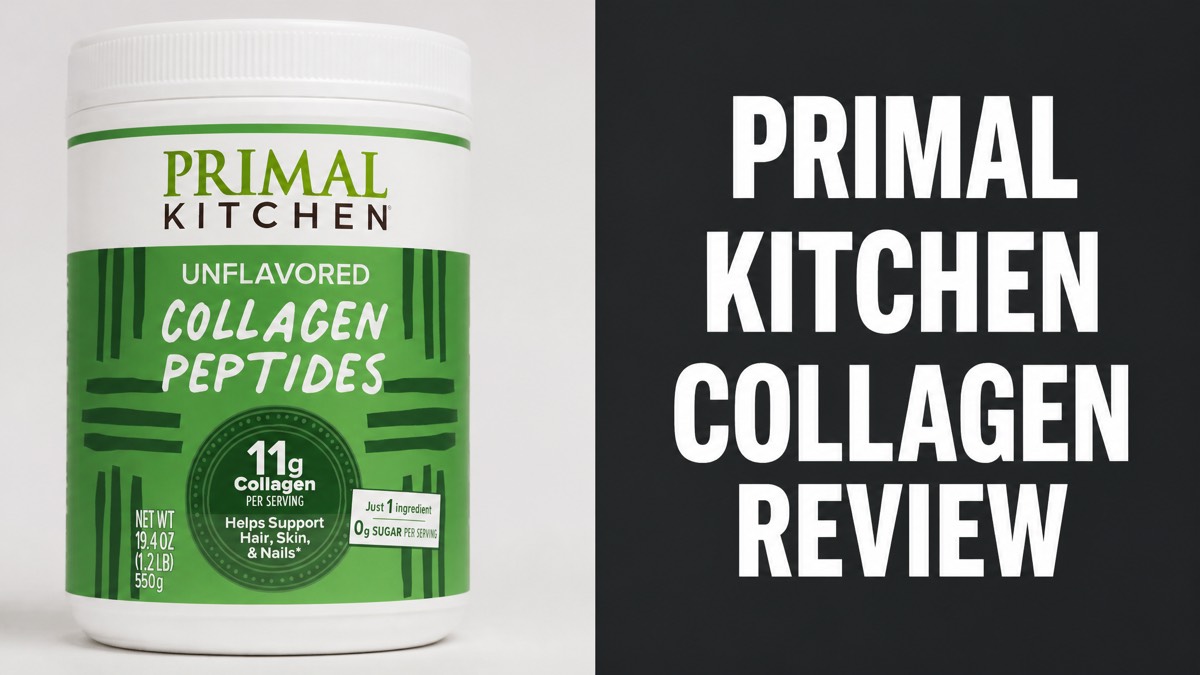
Primal Kitchen Collagen is a bovine collagen peptide powder from the brand behind avocado oil mayo. Each scoop delivers 11 grams of collagen, and the line spans an unflavored tub plus five flavors.
The review covers the short ingredient list, the types I and III collagen, and how the powder mixes. It also weighs side effects, who should skip it, and how it stacks up against Vital Proteins on dose and price per serving.
The picture is mostly positive, with a few catches around grit, flavored pricing, and missing certification. Read on for the full cost breakdown and a clear verdict on whether this collagen earns a spot in your routine.
What Is Primal Kitchen Collagen?
Primal Kitchen Collagen is a powder of bovine collagen peptides that delivers 11 grams of collagen in every scoop. You stir it into coffee, smoothies, or overnight oats. The brand sells it as a daily way to support hair, skin, and nails.
The range is wider than most people expect. Besides the unflavored tub, there are Chocolate Coconut, Vanilla Coconut, Matcha, Chai Tea, and Peanut Butter versions. Primal Kitchen built its name on avocado oil mayo and dressings, so collagen is a stretch for the brand.
Who Makes Primal Kitchen Collagen?
Mark Sisson founded Primal Kitchen after a career as an elite endurance athlete. Health problems pushed him out of the Olympic marathon trials. He then turned to performance nutrition, and a blog grew into a food brand built on the primal lifestyle.
Co-founder Morgan Buehler Zanotti, a former PepsiCo strategist, helped launch avocado oil mayo and dressings. The brand later joined the Kraft Heinz Springboard platform. That backing explains why the collagen is easy to find in stores and online.
What Is in Primal Kitchen Collagen?
The unflavored tub contains one ingredient, which is bovine collagen peptides. It has no added sugar, dairy, soy, or whey. The label also carries gluten-free and keto-certified claims. Why does that matter? Fewer ingredients leave fewer places for sugar or fillers to hide.
Flavored versions add a few extras. The Chocolate Coconut mix lists coconut milk powder, fair-trade cocoa, monk fruit extract, konjac root gum, and sea salt. Monk fruit sweetens the powder. Konjac root gum thickens it. The flavored mixes stay free of added sugar.
Main Ingredients (Chocolate Coconut):
- Bovine collagen peptides
- Coconut milk powder
- Organic fair-trade cocoa powder
- Monk fruit extract
- Konjac root gum
- Sea salt
How Much Collagen Is in Each Serving?
Each serving provides 11 grams of hydrolyzed bovine collagen peptides and 10 grams of protein. Unflavored powder has 40 calories per serving. Flavored versions run 70 to 90 calories because of the added ingredients.
Is 11 grams enough? The research-backed daily range runs from 2.5 to 15 grams. This dose sits comfortably inside it. Still, some rivals pack more. Vital Proteins delivers 20 grams per serving, which is nearly double.
How Does Primal Kitchen Collagen Work?
Collagen peptides are small protein fragments that the body absorbs more easily than whole collagen. Bovine and fish peptides rank among the best absorbed forms. Once absorbed, the amino acids feed the same tissues the body builds collagen for.
The powder is rich in types I and III collagen. Type I supports skin, bones, ligaments, and organs. Type III supports muscles, skin, and blood vessels. Type II is missing, and that is the type most tied to cartilage and joint health.
How Do You Mix Primal Kitchen Collagen?
The powder mixes into hot or cold drinks, though warm liquids dissolve it best. In plain English, the unflavored version disappears quickly in coffee, soup, and protein shakes. A scooper comes in the tub, so measuring takes no extra tools.
Why do some people struggle? Cold water is less forgiving than warm. Vanilla Coconut leaves slight grit and some foam on top in a shaker. Chocolate Coconut can clump in plain water. Blending into a smoothie solves most of this.
What Are the Benefits of Primal Kitchen Collagen?
The main benefit is a clean, well-dosed collagen that supports skin, hair, nails, and connective tissue. Types I and III do that work. The short ingredient list also keeps added sugar out of your morning routine.
To be clear, variety is the second benefit. Six flavors let you match the powder to your drink. Keto and gluten-free labels widen the audience. And the unflavored tub stays neutral enough to hide in nearly anything.
Main Benefits:
- 11 grams of collagen per serving
- Types I and III collagen
- No added sugar, dairy, soy, or whey
- Six flavor options
- Mixes into hot or cold drinks
Does Primal Kitchen Collagen Support Skin, Hair, and Nails?
Yes. Collagen peptides support skin, hair, and nails, and types I and III are the ones that matter most for this. A human study found improved skin hydration, elasticity, and density. That drink also contained vitamin C, zinc, and biotin, so the collagen did not work alone.
The good news? Real-world feedback points the same direction. One user who has taken it for over ten years says a hair stylist keeps noticing new baby hair. Others report better hair, nails, and skin. Results vary, and they take weeks of daily use.
What Do Primal Kitchen Collagen Reviews Say?
Scores land high across the board. The product holds a 4.5-star average on Amazon across thousands of ratings. Garage Gym Reviews scores it 3.93 out of 5. The Nutrition Insider grades the Collagen Fuel line A-. The brand site claims over 52,000 five-star reviews.
The pattern is consistent. Taste and tolerance earn praise. What do people complain about most? Price, grit, and missing third-party proof draw the criticism. The two sections below split those points apart.
What Do Users Like?
Users praise the unflavored version for tasting like nothing. One person stirs a scoop into coffee every morning and notices no change in flavor. Another says it dissolves fast with no clumping, even in protein drinks.
Flavored versions earn credit too. The Chocolate Coconut and Vanilla Coconut mixes taste above average, with no chemical aftertaste. And stomach comfort is a common theme. A tester reported no rumbling and no bloat.
What Are the Common Complaints?
Mixing is the top complaint. Some powders clump or leave grit in plain water. Chocolate Coconut did not fully dissolve in water. Vanilla Coconut left a light residue and foam. Warm drinks avoid the problem.
The tub is the next gripe. The jar is large, and one user cannot get a good grip on the lid. Then there is price. Flavored mixes cost far more per serving than the unflavored tub, and some competitors cost less per ounce.
How Does Primal Kitchen Collagen Compare to Vital Proteins?
Vital Proteins wins on dose, while Primal Kitchen wins on simplicity. Vital Proteins delivers 20 grams of collagen and 18 grams of protein per serving. Primal Kitchen delivers 11 grams and 10 grams. Both use bovine collagen peptides.
Does more collagen mean a better product? Not automatically. Extras split them further. Select Vital Proteins formulas add vitamin C and hyaluronic acid. Primal Kitchen stays collagen-only. Vital Proteins sweetens with stevia, Primal Kitchen with monk fruit. Vital Proteins also sells stick packs, while Primal Kitchen sells tubs.
Primal Kitchen vs. Vital Proteins:
| Feature | Primal Kitchen | Vital Proteins |
|---|---|---|
| Collagen per serving | 11 g | 20 g |
| Protein per serving | 10 g | 18 g |
| Sweetener | Monk fruit extract | Stevia |
| Added extras | None | Vitamin C, hyaluronic acid (select formulas) |
| Format | Tubs | Tubs and stick packs |
Is Primal Kitchen Cheaper Than Vital Proteins?
Yes. The unflavored Primal Kitchen tub costs about $0.70 to $0.78 per serving, against roughly $1.68 to $1.82 for Vital Proteins. That is less than half the price per scoop.
The picture changes with flavored mixes. Flavored Collagen Fuel costs about $2.87 per ounce, while unflavored Vital Proteins runs about $2.70 per ounce. Orgain collagen peptides come in at $1.42 per ounce. But Vital Proteins gives you nearly twice the collagen per scoop.
What Are the Side Effects of Primal Kitchen Collagen?
Side effects are rare and mild. So is the powder safe? Collagen itself rarely causes problems, and the open questions sit with the sweetener and thickener. In studies, bloating and an unpleasant taste affect fewer than 5 percent of users. A tester noticed no stomach issues at all. Every body reacts differently, though.
The flavored mixes bring two extra notes. Monk fruit and konjac root gum both need more long-term safety research. Konjac gum at 3,000 milligrams daily for 12 weeks caused abdominal discomfort in some adults. And the Matcha and Chai flavors carry a little caffeine. Does that matter? Only for people who are sensitive to stimulants.
Who Should Avoid Primal Kitchen Collagen?
Vegetarians and vegans should skip it, because the collagen comes from cattle. Anyone who wants an NSF, Informed Sport, or BSCG certification should look elsewhere too. Is the product tested? The brand claims heavy metal and purity testing, but no certification mark appears on the product.
People sensitive to stimulants should avoid Matcha and Chai late in the day. Anyone chasing joint and cartilage support may want a blend that includes type II collagen.
Who Should Skip It:
- Vegetarians and vegans
- Shoppers who require NSF, Informed Sport, or BSCG certification
- Caffeine-sensitive people (Matcha and Chai flavors)
- Anyone wanting type II collagen for joints
How Much Does Primal Kitchen Collagen Cost?
The unflavored tub costs $34.95 for 50 servings, which works out to about $0.70 per serving. That is the cheapest way into the line. Flavored options cost far more, ranging from about $1.60 to $2.80 per serving. Why the gap? Flavored tubs add coconut milk, cocoa, and monk fruit, and they hold fewer servings.
Flavored tubs hold only 12 to 25 servings. One 13.89-ounce flavored container costs $39.99. Bundles of two, three, or four units and recurring delivery discounts bring the price down.
Primal Kitchen Collagen Pricing:
| Version | Price per serving | Calories |
|---|---|---|
| Unflavored | $0.70 | 40 |
| Flavored (chocolate, vanilla, matcha, chai, peanut butter) | $1.60-$2.80 | 70-90 |
Is Primal Kitchen Collagen Worth the Price?
Yes. The unflavored tub is a clear bargain, while flavored mixes are a harder sell. At $0.70 per serving, it delivers a clean 11-gram dose for less than most rivals. Flavored mixes carry a steep premium for taste.
The value scores agree. Price per serving earns a 3 out of 5 because of the gap between versions. Value earns a B, since the simple ingredient list leaves little to justify a premium.
Where to Buy Primal Kitchen Collagen?
The brand site sells every flavor and offers free shipping over $50. Creating an account drops the free-shipping threshold to $25. Primal Perks, the free rewards program, earns points toward discounts.
Returns are accepted within 30 days on website purchases, minus the original shipping. Amazon and Walmart also stock the tubs, but those retailers set their own return rules. Primal Kitchen does not manage them.
Is Primal Kitchen Collagen Worth It?
Yes. Primal Kitchen Collagen is worth it as a clean, simple collagen if you buy the unflavored tub. The 11-gram dose sits inside the research range. The ingredient list is short, and most people tolerate it well.
Here's the catch. The weak spots are real, though. The dose is lower than some rivals, no certification mark backs the testing claims, and flavored tubs cost a lot. Bottom line: it is great for simple daily use, less great for maximum collagen per dollar.
Who Is Primal Kitchen Collagen Best For?
It suits people who want 10 or more grams of collagen peptides per serving. Keto eaters also fit well, since there is no added sugar. And anyone building a skin and hair routine gets a neutral powder that disappears in coffee.
It does not suit vegans, shoppers who need third-party certification, or people wanting an all-in-one formula. Those buyers will do better with a plant-based product or a fortified collagen with vitamin C.
Coffee Loving Card Makers is a reader-supported platform. Purchases made through our links may earn us an affiliate commission at no extra cost to you. Learn more.