
Ledisa Patches Review: Do They Actually Work in 2026?
 By Anna Krause November 3, 2026
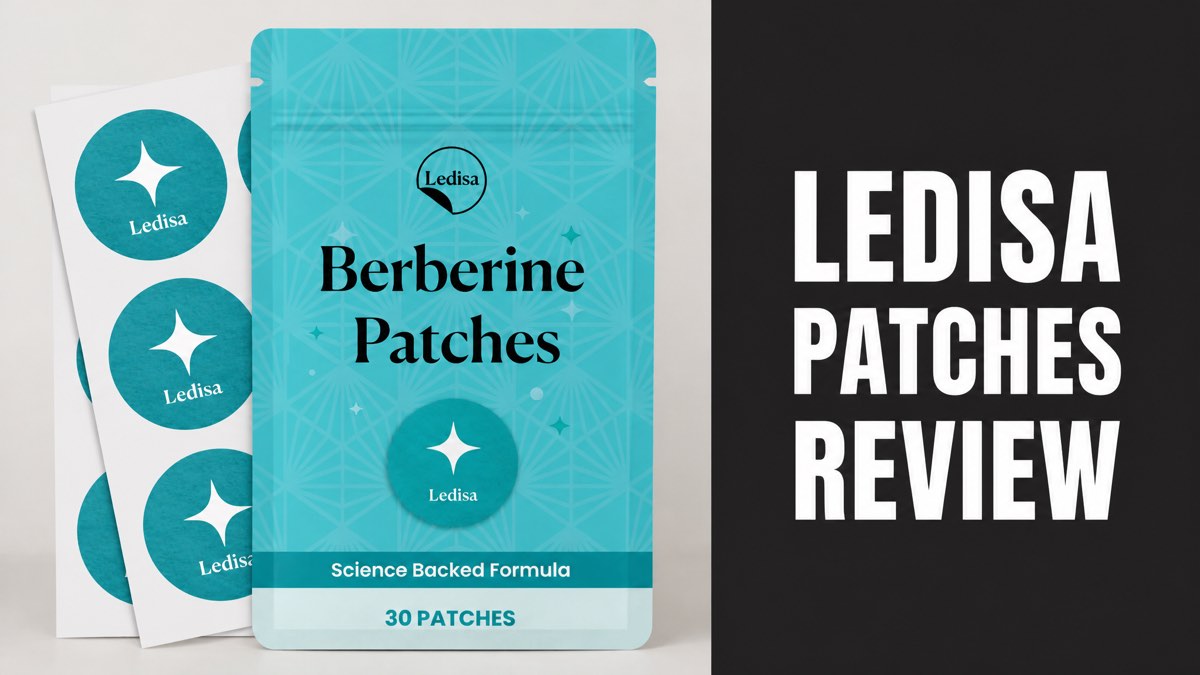
Ledisa patches are adhesive wellness patches sold by a Florida supplement brand, led by a berberine patch once marketed as a GLP-1 patch. Each 30-count pack costs about $28 to $40 and is worn for up to 8 hours.
The review below covers what the patches contain, how the claimed skin delivery holds up, and what buyers report. It also looks at the 2026 class action, the side effects, the pricing and how the patches compare with approved options.
The picture is mixed. Some buyers feel quieter cravings, while others notice nothing, and billing complaints stand out. Read on to see whether Ledisa earns a place in your routine or your cart.
What Are Ledisa Patches?
Ledisa patches are adhesive wellness patches that carry plant-based ingredients meant to be absorbed through the skin. The brand sells berberine, NAD+, mood, energy and sleep versions. The berberine patch is the best known, and it was originally sold under a GLP-1 name.
Each berberine pack holds 30 patches for a 30-day supply. One patch is worn at a time for up to 8 hours. So the pitch is simple: peel, stick and skip the pills. Why does that appeal? Pills are easy to forget, and a patch stays put all day. The label also says plainly that the product is a supplement and not a treatment for any disease.
Who Makes Ledisa Patches?
Ledisa is a wellness supplement company based in Aventura, Florida. Sales began in 2025 through its own website and other online channels, Amazon included. A 2026 court filing describes the company as Ledisa LLC, a Delaware entity.
The company backs the patches with a 90-day money-back guarantee. Think of that as the main trust signal on offer. The guarantee matters, because the product itself has no published human trial behind it.
What Is in Ledisa Berberine Patches?
The berberine patch combines berberine HCl with a long list of plant extracts, minerals and B vitamins. The label names alpha-lipoic acid, chromium picolinate, cinnamon, resveratrol, apple cider vinegar, garcinia cambogia, L-glutamine, hops, pomegranate, magnesium citrate, B2, B6, B9 and TMG.
What the list leaves out is just as telling. The patch contains no semaglutide and no other GLP-1 drug. Does that matter? Yes, because the original product name pointed buyers toward exactly that comparison.
How Much of Each Ingredient Is Inside?
Ledisa publishes amounts for only a few ingredients. Each patch holds 10 mg of berberine HCl, 2 mg of chromium picolinate and 5 mg of alpha-lipoic acid. The remaining ingredients appear on the label without a confirmed per-patch dose.
Here is the kicker: oral berberine supplements commonly list 500 mg per serving. Is 10 mg a meaningful dose? Short answer: no, it is a small fraction of a capsule dose before skin absorption even enters the picture.
Disclosed Ledisa Berberine Patch Amounts:
| Ingredient | Amount per Patch | Stated Role |
|---|---|---|
| Berberine HCl | 10 mg | Blood sugar and metabolic support |
| Chromium picolinate | 2 mg | Insulin sensitivity support |
| Alpha-lipoic acid | 5 mg | Glucose metabolism support |
| Cinnamon, resveratrol, apple cider vinegar | Not confirmed | Antioxidant and craving support |
How Do Ledisa Patches Work?
Ledisa claims its patches deliver ingredients through the skin and bypass digestion. Berberine is described as a compound that supports AMPK activity and the body's own GLP-1 hormone. The patch is positioned as a gentler route than a capsule.
Such is the marketing story. The brand points to the logic that pills lose potency in the stomach. So does the evidence back it up? Not yet. No published human data shows these patches move berberine into the bloodstream.
Can a GLP-1 Patch Cross the Skin?
No. No GLP-1 drug is approved as a skin patch, and the molecules are too large to cross intact skin. Semaglutide weighs 4,113.58 g/mol. The widely cited 500 Dalton rule in Experimental Dermatology puts the practical ceiling for passive skin penetration far below that.
C. Michael White, head of pharmacy practice at the University of Connecticut, has said that no GLP-1 medications can currently be absorbed through the skin. The drugs have large molecules, which makes it very difficult, if not impossible.
One 2025 mouse study did show transdermal semaglutide lowering body weight. But it used a purpose-built delivery system, not a consumer adhesive patch. Berberine is smaller than semaglutide, so the size objection is weaker there. Still, size is not proof of absorption.
What Do Ledisa Patches Reviews Say?
Customer feedback is sharply split between appetite help, no effect at all, and billing frustration. The 30-count berberine listing on Amazon sits at 3.3 out of 5 across 934 ratings. Trustpilot holds more than 5,800 reviews for the brand.
Volume is high, so patterns are easy to see. Why does the split matter? A product that truly worked would show one dominant story. Ledisa shows three, and the middle one is nothing happening.
Ledisa Review Themes at a Glance:
| Theme | What Buyers Report | How Common |
|---|---|---|
| Craving reduction | Quieter sugar urges after a few weeks | Common in positive reviews |
| Weight loss with diet | Modest results alongside food changes | Present, not universal |
| No effect | No change after 3 to 8 weeks | Consistent in negative reviews |
| Skin irritation | Redness, itching, loose patches | Recurring |
| Billing problems | Unexpected charges and refund disputes | Significant pattern |
What Do Happy Customers Report?
Satisfied buyers most often describe quieter cravings, especially for sugar. The effect shows up after a few weeks of daily use. Some say portions feel easier to control without a constant fight against snacking. Why does that story sound credible? The details are specific, such as sugar urges fading after a few weeks.
The most credible positive story involves a 25 lb loss over three months. The same buyer changed their diet and said so. Honest attribution like that fits how supplements realistically behave: as a small support inside a bigger habit change.
Ease of use gets steady praise too. A discreet once-daily patch beats a handful of capsules for people who forget doses. But a pleasant routine is not the same as a proven mechanism.
What Are the Common Complaints?
The top complaint is no noticeable effect after weeks of consistent use. One buyer wore the patches for three weeks, passed them to a spouse for three more, and neither felt any change. How often does nothing happen? Results of three to eight weeks with zero difference are common.
Skin trouble comes next. Redness, itching and discomfort at the application site appear repeatedly. Some patches also fail to stay on for the full 8 hours, which defeats the point of the format.
The billing complaints are the most serious category. Buyers report unexpected charges, partial refunds and billing after cancellation. Many also describe smooth orders and cancellations, so the experience varies. But the pattern is too steady to ignore.
Are Ledisa Patches Legit?
Yes, the product is real, but the marketing around it drew serious legal challenge. Patches ship, the ingredients are listed, and a refund policy exists. The legitimacy problem sits in the GLP-1 branding, not in whether a box arrives. Why does the name matter? Because the ingredient list contains no GLP-1 at all.
The name told shoppers they were buying a GLP-1 product. The ingredient list contains none. Bottom line: the product is a berberine supplement, and any expectation of a prescription-style effect has no support behind it.
What Is the Class Action Lawsuit About?
A federal complaint alleges that Ledisa sold GLP-1 patches that contained no GLP-1. Alicyn Cathey filed it on August 13, 2026 in the Eastern District of California, Case No. 1:26-cv-06456-EPG. Her lawyers at KalielGold seek class status and plead claims above $5 million.
The complaint quotes site copy such as triggering GLP-1 release and keeping GLP-1 levels steady all day. The filing also cites a doctor-approved claim and consumer posts calling the name misleading. The patches have since been relabelled as berberine patches.
To be clear, these are allegations. No court has ruled on them. But the filing explains why the branding drew so much criticism.
What Are the Side Effects of Ledisa Patches?
The most reported side effect is skin irritation at the patch site. Buyers describe redness, itching and general discomfort. Why does irritation end trials so early? Adhesive sensitivity is the likely cause, and it can stop a trial after a few days.
No published safety data covers the patch format. Silence is not the same as proof of safety. It means nobody has measured. The label itself tells wearers to stop if irritation or an allergic reaction appears.
Label Precautions:
- Do not apply to wounds, broken or sensitive skin
- Use one patch at a time for up to 8 hours
- Rotate the application site with each use
- Do not reuse a patch
- Avoid heating pads over the patch
- Stop use if irritation or an allergic reaction occurs
Who Should Avoid Ledisa Patches?
Ledisa advises that pregnant or nursing women and anyone taking medication should consult a healthcare professional first. Berberine acts on blood sugar pathways, so a clinician check makes sense before combining it with diabetes drugs.
People with sensitive skin or adhesive allergies should also skip the format. Anyone hoping for the effect of a prescription GLP-1 should look elsewhere. So what does that mean for you? A patch is not a substitute for medical weight care.
How Much Do Ledisa Patches Cost?
A single 30-day pack of the berberine patches lists at $39.95. Bundles cut the per-pack price to $33.95 for two months and $27.95 for three months. A subscribe option ships every 30 days and saves 30%.
Ledisa's own comparison puts monthly cost at $18 to $38, against $900 to $1,500 or more for prescription drugs. Does the sale price hold? Pricing moves with frequent sales, so the figure at checkout can differ. Now here is the thing: the cheapest plans lean on subscriptions.
Ledisa Berberine Patch Pricing:
| Plan | Price per Pack | Notes |
|---|---|---|
| 1 month | $39.95 | 30 patches |
| 2 months | $33.95 | Bundle discount |
| 3 months | $27.95 | Best bundle rate |
| Subscribe and save | 30% off | Ships every 30 days |
Where Can You Buy Ledisa Patches?
Buyers can order directly from ledisa.com or from the brand's Amazon listing. The direct site carries the subscribe option and the 90-day guarantee. The Amazon listing sells a 30-count pack and ranks near 7,700 in Health and Household.
One Trustpilot buyer paid $79.95 for a buy-two-get-one-free bundle. Reordering without a subscription would have cost $39.95 for one pack, which that buyer called far too expensive. Keep every order confirmation and cancellation record.
How Do Ledisa Patches Compare With Alternatives?
The real alternative to Ledisa is an approved GLP-1 medication, and the two are not in the same category. Semaglutide and tirzepatide are FDA approved as injections, and oral semaglutide exists as a tablet. No patch is approved.
The trial gap is huge. In a head-to-head phase 3 study, tirzepatide produced a mean weight reduction of 20.2 percent against 13.7 percent for semaglutide at week 72. No comparable human trial exists for Ledisa.
Why is a drug label a plus? A label lists documented risks, and the medications come with labs. A patch carries none of that. Absence of data is not safety.
How Do Ledisa Patches Compare With Oral Berberine?
Oral berberine has randomized trial evidence, but those trials tested capsules. A JAMA Network Open trial studied berberine in adults with obesity and fatty liver disease. A meta-analysis in Clinical Nutrition ESPEN reviewed obesity and liver outcomes.
Evidence for a swallowed compound does not transfer to the same compound on the skin. A patch borrows credibility from research on a different route. Worth repeating: 10 mg on skin is not 500 mg by mouth.
Ledisa Patch vs Other Routes:
| Factor | Ledisa Patch | Oral Berberine | Prescription GLP-1 |
|---|---|---|---|
| FDA approved for weight | No | No | Yes |
| Prescription needed | No | No | Yes |
| Human weight trials | None | Some, on capsules | Large phase 3 trials |
| Typical monthly cost | About $28 to $40 | Low | High |
Is Ledisa Worth It?
No. Ledisa patches are not worth buying as a stand-in for a GLP-1 drug. Absorption through the skin is unproven, results are mixed, and billing complaints plus a pending class action add risk. At best the patch is a low-dose berberine experiment.
Here is the fair summary. The routine is easy and the guarantee is real. But is the main claim proven? No, it has no human evidence behind it. And the cheapest deals push subscriptions.
Pros:
- Simple once-daily routine
- 90-day money-back guarantee
- Mild, plant-based ingredient list
- Lower price than prescription drugs
Cons:
- No human data on skin absorption
- Low per-patch doses
- Mixed reviews and frequent no-effect reports
- Billing and subscription complaints
- Pending class action over GLP-1 marketing
Who Might Still Try Ledisa Patches?
A curious buyer who accepts placebo-level uncertainty and wants a low-effort routine might still try one pack. The refund window softens the downside. Skip the subscription, buy once, and save every order record.
Anyone with a real weight or blood sugar goal should talk to a clinician first. A doctor can compare options with actual trial data behind them. A doctor visit costs less than months of patches that may do nothing.
Coffee Loving Card Makers is a reader-supported platform. Purchases made through our links may earn us an affiliate commission at no extra cost to you. Learn more.