
Karma Kitchen Matcha Collagen Review: Is It Worth It in 2026?
 By Anna Krause October 8, 2026
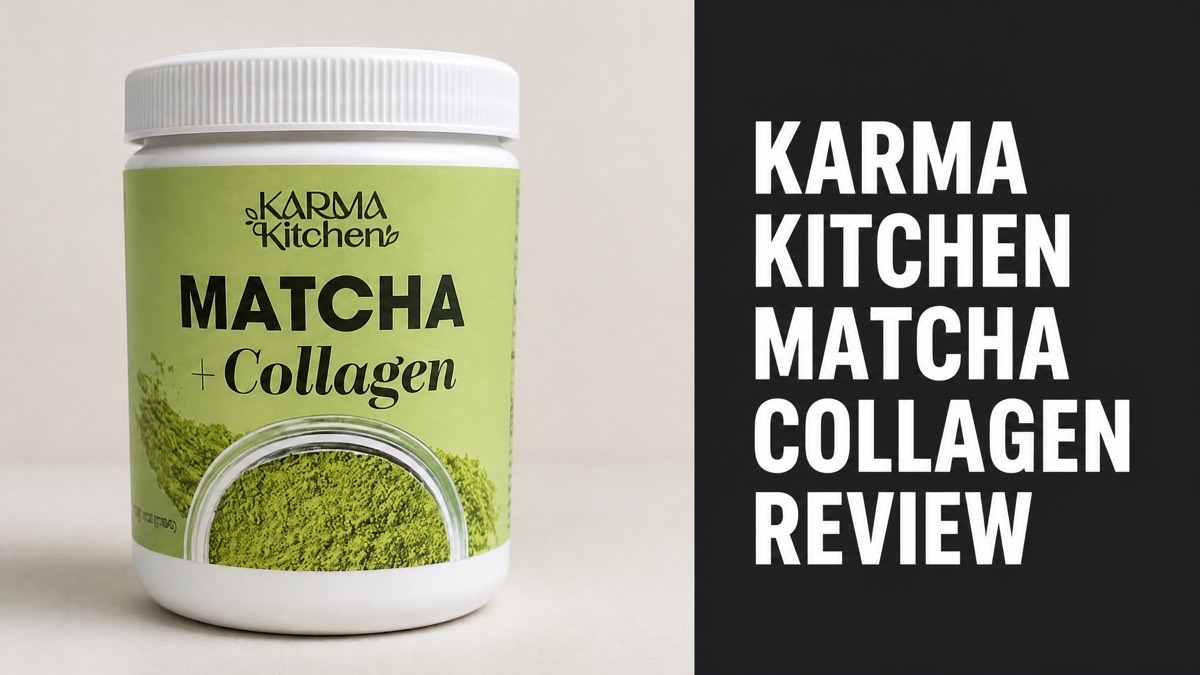
Karma Kitchen Matcha Collagen is a powder that mixes collagen peptides with matcha green tea. The 6 oz tub holds 12 servings of 14 g each, at 50 calories per serving. Buyers stir it into hot water or milk for a quick latte that promises steady energy and skin, hair, and nail support.
The formula lists six ingredients, led by collagen and followed by starch and matcha. Preparation takes under a minute, and milk gives a fuller drink than water. Buyers praise the smooth, unbitter taste. Estimated collagen lands near 8 g per serving, below Primal Kitchen at 11 g.
Evidence for skin and nail results stays anecdotal, so the verdict rests on convenience, taste, and value rather than proven results. Read on for the ingredients, the dose, side effects, and who needs to skip it. Each section ends with a clear takeaway before the final call.
What Is Karma Kitchen Matcha Collagen?
Karma Kitchen Matcha Collagen is a powdered mix of collagen peptides and matcha green tea. The original tub holds 6 oz (170 g) and 12 servings. Each serving is 2 tablespoons (14 g) and carries 50 calories.
The line also includes a Vanilla Matcha Collagen Latte Mix in a 7.5 oz (213 g) size. Both versions follow the same routine. Stir the powder into hot water or milk, and drink it as a latte.
The brand pitches the mix around three claims. Those claims are steady energy, skin, hair, and nail support, and antioxidants from matcha. The sections below test each claim against the label and the evidence.
Who Is Karma Kitchen Matcha Collagen For?
Karma Kitchen Matcha Collagen suits people who want a matcha latte with the fewest steps possible. The routine needs only powder and a liquid. No sifter, no separate collagen scoop, and no tin of matcha enter the process.
Anyone avoiding animal products falls outside the audience. Collagen peptides come from animal tissue, so the mix is neither vegan nor vegetarian. Buyers with strict ingredient rules need a different product.
What Is in Karma Kitchen Matcha Collagen?
The ingredient list names collagen peptides, modified tapioca starch, matcha green tea powder, silicon dioxide, natural flavor, and stevia leaf extract. Six items make up the whole formula. No added sugar appears on the list.
Collagen leads the list. Why does that matter? Ingredient lists run from the largest share to the smallest, so collagen is the biggest component. Open Food Facts estimates collagen at 58.3 percent, modified starch at 20.8 percent, and matcha at 10.4 percent.
Matcha sits near the bottom. What does that mean for the energy claim? An estimated 1.5 g of matcha per serving gives only a gentle lift. Stevia leaf extract supplies the sweetness, and silicon dioxide keeps the powder flowing in the tub.
Ingredient Breakdown (Open Food Facts estimates):
| Ingredient | Role | Estimated Share |
|---|---|---|
| Collagen peptides | Main active ingredient | 58.3% |
| Modified tapioca starch | Body and dissolving | 20.8% |
| Matcha green tea powder | Caffeine and flavor | 10.4% |
| Silicon dioxide | Flow agent | 5.2% |
| Stevia leaf extract | Sweetener | 2.7% |
| Natural flavor | Taste | 2.5% |
What Do the Nutrition Facts and Allergens Show?
Each 14 g serving delivers 50 calories. The tub supplies 12 servings, which adds up to about 168 g of powder. Collagen is a protein, so an estimated 8 g of each serving is protein.
The label warns that the powder is made in a facility that also processes milk derivatives and tree nut (coconut) derivatives. Cross-contact is therefore possible for allergic buyers. The formula itself lists neither ingredient.
How Does Karma Kitchen Matcha Collagen Work?
Karma Kitchen Matcha Collagen works as two supplements in one scoop. Collagen peptides supply amino acids for connective tissue. Matcha supplies caffeine and plant compounds from the whole ground tea leaf.
Matcha differs from steeped tea because the drinker consumes the leaf itself. Whole-leaf powder delivers caffeine alongside L-theanine, an amino acid linked to smoother alertness. L-theanine softens the lift but does not cancel the caffeine.
The rest of the mix plays a support role. Starch gives the drink body, stevia sweetens it, and silicon dioxide keeps the powder loose. None of these ingredients adds a functional claim of its own.
How Do You Make Karma Kitchen Matcha Collagen?
Preparation takes one or two scoops stirred into 8 to 10 oz (240 to 300 ml) of hot water or milk. Oat, almond, and coconut milk all work as well as dairy. A touch of maple syrup is optional.
A two-step method gives better results. Whisk the powder into about a quarter cup (60 ml) of warm water first, then add milk. A bamboo whisk breaks up clumps best.
Water alone gives a weaker drink. Why? The mix tastes lighter and a bit thin without milk. So a splash of oat or whole milk is the better default.
Steps:
- Add one or two scoops to a mug.
- Whisk the powder with a quarter cup (60 ml) of warm water until smooth.
- Pour in 8 to 10 oz (240 to 300 ml) of hot or cold milk.
- Stir again and add sweetener only if the stevia is not enough.
What Are the Benefits of Karma Kitchen Matcha Collagen?
The brand advertises three benefits: energy, skin, hair, and nail support, and antioxidants. Each benefit maps to one half of the formula. Matcha carries the energy and antioxidant claims, and collagen carries the beauty claim.
Convenience adds a fourth benefit. The mix replaces a separate matcha tin and a separate collagen tub with one scoop. For a daily habit, fewer steps decide whether the habit survives.
Main Benefits:
- Calm energy from matcha
- Skin, hair, and nail support from collagen
- Antioxidants from matcha
- One-scoop convenience
How Well Does Karma Kitchen Matcha Collagen Support Skin, Hair, and Nails?
The mix supplies a modest collagen dose with no product-specific trial behind it. Nutrition guidance puts daily collagen for skin at 2.5 to 10 g. An estimated 8 g per serving lands inside that range.
Evidence for this exact product stays anecdotal. Buyers report stronger nails and a bit more glow after regular use. Anecdotes cannot separate the collagen from other habits, so results vary and remain unproven.
Joint support asks for more. Guidance for joints runs 10 to 15 g daily, and one serving does not reach it. Does that rule the mix out? For joints, yes. For skin, the dose fits.
How Much Energy Does Karma Kitchen Matcha Collagen Give?
The mix delivers energy through the caffeine in matcha. Matcha is often described as a steadier source of energy than coffee. L-theanine explains the smoother feel, but the caffeine still counts.
One gap limits the verdict. The product pages do not state caffeine per serving. With an estimated 1.5 g of matcha in each scoop, the lift is likely milder than a strong coffee.
What Do Karma Kitchen Matcha Collagen Reviews Say?
Karma Kitchen Matcha Collagen earns a perfect 5.0 star rating on the Walmart vanilla latte listing. Social posts echo the praise, and fans call it a favorite way to start the morning. Does a perfect score prove results? No. The rating measures taste and satisfaction, not collagen outcomes.
Three themes repeat across the feedback. Buyers praise the smooth taste, the calm energy, and the speed of making a cup. Complaints center on a thin body when the powder meets water.
What Do Buyers Like?
Buyers praise the smooth, unbitter taste. Instant matcha often tastes grassy or harsh, and this blend avoids that edge. The vanilla version adds a soft vanilla note on top.
Speed is the second win. The only required steps are powder and milk or water, which suits a busy morning. Fans describe it as the one morning ritual they actually keep.
Calm focus is the third win. Buyers describe calm energy and focus without bitterness. The small matcha dose supports that gentle effect.
What Are the Common Complaints?
The main complaint is that the drink turns out thin when mixed with water. A water-only test found it drinkable but lighter than expected. Milk solves most of the problem.
Ingredient purists raise a second concern. Modified starch makes up an estimated 20.8 percent. Why does that matter? Roughly one fifth of the powder is filler rather than collagen or matcha.
The allergen note and the animal-derived collagen narrow the audience further. Milk and coconut share the same facility. Vegans and vegetarians cannot use the mix at all.
How Does Karma Kitchen Compare to Primal Kitchen and Vital Proteins?
Karma Kitchen competes with Primal Kitchen Matcha Collagen Keto Latte and Vital Proteins Matcha Collagen, two familiar alternatives. Each takes a different approach to sweetness and dose. Price and label details decide the winner for most buyers.
Primal Kitchen delivers 11 g of collagen and 0 g of sugar per serving in a 9.3 oz (264 g) bag. The formula uses coconut milk powder, inulin, and monk fruit instead of starch and stevia. Amazon shows 4.2 stars across 447 ratings, and the brand site shows 4.8 stars across 148 reviews.
Vital Proteins matcha collagen is described as free of gluten and dairy. Cloud Cafe sells a marine collagen matcha powder for about 20 dollars. Karma Kitchen's listed starting price of 6.49 dollars undercuts that tub.
Which Matcha Collagen Mix Gives More Collagen?
Primal Kitchen delivers more collagen per serving. Its 11 g beats Karma Kitchen's estimated 8 g by about 3 g. Is more always better? For skin, guidance tops out at 10 g, so the extra grams matter mostly for joints.
Dose is not the whole story. Karma Kitchen costs less and lists no added sugar among its ingredients. Primal Kitchen suits buyers who want 0 g of sugar and accept coconut in the formula.
Karma Kitchen vs Primal Kitchen:
| Detail | Karma Kitchen | Primal Kitchen |
|---|---|---|
| Size | 6 oz (170 g) | 9.3 oz (264 g) |
| Collagen per serving | 8 g (estimated) | 11 g |
| Sweetener | Stevia leaf extract | Monk fruit extract |
| Contains coconut | Facility only | Yes |
| Starting price | $6.49 (vanilla mix) | Not listed |
What Are the Side Effects of Karma Kitchen Matcha Collagen?
Karma Kitchen Matcha Collagen carries mild side effects that come mostly from caffeine. Sensitive drinkers report jitters, restlessness, and a faster heartbeat from matcha. Heavy intake raises the odds of those effects.
Matcha contains caffeine. Does the collagen blunt it? No. L-theanine smooths the lift but does not cancel the caffeine.
No product-specific reports of digestive trouble or reactions turned up. The absence is not proof of safety, but it fits a simple formula of six ingredients. Anyone with a reaction history still needs to read the allergen note.
Who Should Avoid Karma Kitchen Matcha Collagen?
Vegans and vegetarians need a different product, because collagen peptides are animal-derived. The same applies to buyers who avoid milk or coconut traces. The facility processes both.
Caffeine-sensitive drinkers need to track the matcha. A food-scanner check also flags one ingredient as possibly not pregnancy friendly. Pregnant buyers need to ask a clinician before starting.
Avoid or Check First:
- Vegans and vegetarians
- People with milk or coconut allergies
- Caffeine-sensitive drinkers
- Pregnant buyers (ask a clinician first)
How Much Does Karma Kitchen Matcha Collagen Cost, and Where Can You Buy It?
Karma Kitchen Matcha Collagen starts at 6.49 dollars on Instacart for the vanilla latte mix. The listed figure reflects regular online pricing and varies by store. Walmart also lists the 7.5 oz vanilla mix.
Resellers on eBay list the original 6 oz tub as well. Several listings show expiry dates, such as 09/27, so check the date before buying. A major retailer avoids that risk.
Availability changes by store and flavor. The original and vanilla versions come in different sizes (6 oz and 7.5 oz). Compare per-ounce prices before choosing.
Where to Buy:
- Instacart, from 6.49 dollars for the vanilla mix
- Walmart, 7.5 oz vanilla latte mix
- eBay, resale of the original 6 oz tub (check expiry dates)
How Good Is the Value for the Price?
The value is strong for a daily drink. If the vanilla serving matches the original 14 g, a 7.5 oz (213 g) tub yields about 15 servings. At 6.49 dollars, that works out to roughly 43 cents per serving.
Cafe matcha costs far more. A single cafe matcha runs about 10 dollars. How fast does a tub pay off? Within a couple of drinks, the 43 cents per serving wins.
The weaker point is collagen per dollar. A mix with a lower collagen dose than rivals buys less of the active ingredient. Buyers who care most about collagen grams do better with a higher-dose product.
Karma Kitchen Matcha Collagen: Final Verdict
Karma Kitchen Matcha Collagen is a convenient, fairly priced matcha latte mix with unproven beauty benefits. Short answer: the formula is short, the taste earns praise, and the price is low. The collagen dose is modest and the evidence stays anecdotal.
Buyers who want an easy morning matcha get what the tub promises. The formula is simple. Is that a strength? Yes, because six ingredients leave little to hide, though the starch and flow agent still count. Buyers chasing measurable skin or joint results need a higher dose and clinical backing this product does not offer.
What Are the Pros and Cons?
The strengths are speed, smooth flavor, and low cost. Bottom line: the drink takes under a minute and avoids bitterness. Stevia keeps the sweetness free of added sugar.
The weaknesses are practical. Starch and a flow agent fill part of the tub, the water version tastes thin, and the facility handles milk and coconut. Vegans, vegetarians, and caffeine-sensitive drinkers need another option.
Pros:
- Fast, low-step preparation
- Smooth taste without bitterness
- 50 calories per serving
- Low listed starting price
Cons:
- Modest collagen dose compared with rivals
- Modified starch and flow agent in the formula
- Not vegan or vegetarian
- Thin body when mixed with water
Coffee Loving Card Makers is a reader-supported platform. Purchases made through our links may earn us an affiliate commission at no extra cost to you. Learn more.