
Is Hanpo Japanese Herbal Patch Worth It? An Honest Review
 By Anna Krause November 18, 2026
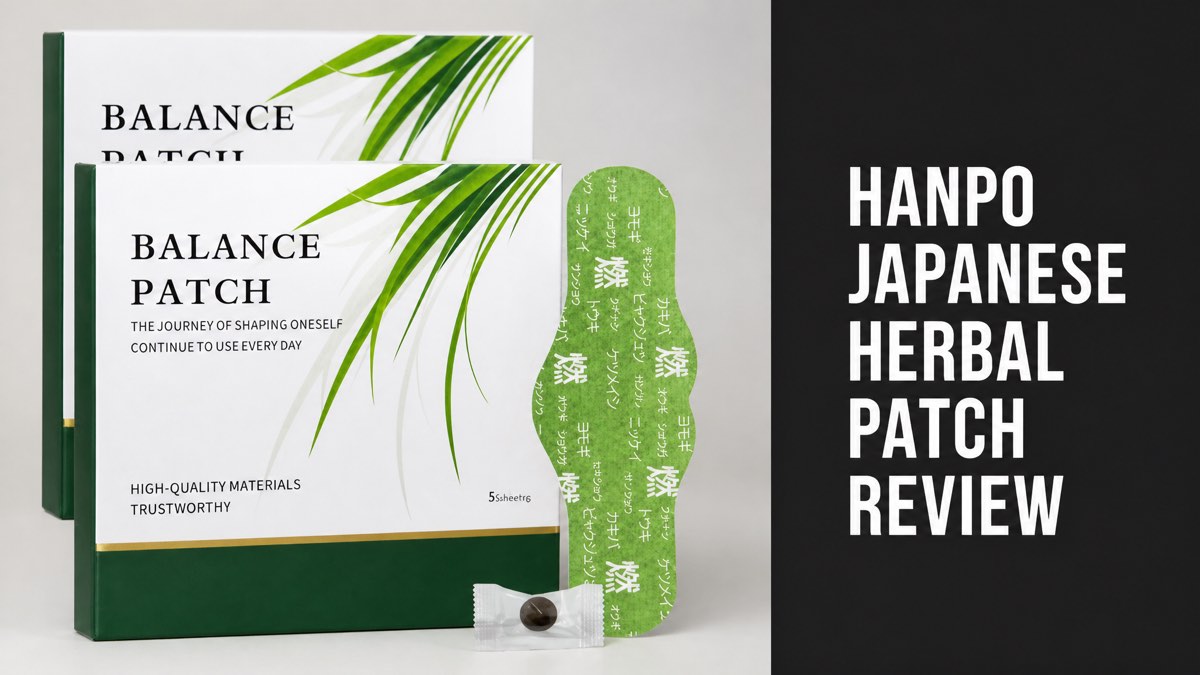
Hanpo Japanese Herbal Patch is a plant-based adhesive patch sold for belly comfort. Wearers place a small herbal core in the navel and press an adhesive ring over it. Sellers promise less bloating and calmer digestion on Amazon, TikTok Shop, and eBay.
No single manufacturer stands behind the patches, and ingredient lists change from seller to seller. Mugwort is the herb named most often, yet modern research does not confirm it works as a medicine. Wearers report mixed results, from a gentle warm feel to itching and weak adhesion. Prices run from $9.99 to $34.99.
Hanpo patches are real products with unproven claims. The sections below weigh the cost, the side effects, and who carries the most risk. Read on to learn what the patch can and cannot do before spending money on a box.
What Is Hanpo Japanese Herbal Patch?
Hanpo Japanese Herbal Patch is a plant-based adhesive patch marketed for abdominal and waist comfort. Sellers pitch it as a daily wellness product for bloating, digestion, and menstrual cramps. The patch sticks over the navel and carries a small herbal core.
The name Hanpo is a marketing label, not a single regulated brand. Many sellers list near-identical patches under names like FTKV, CRIVERY, and ZENMORIA. Packs come in 5, 7, or 10 pieces, usually sold as two boxes.
Hanpo patches differ from Honpo leg sheets, a separate Japanese brand of foot patches. To be clear, the spelling is close, so shoppers confuse the two. Hanpo sits on the belly, while Honpo goes on the soles of the feet or the calves.
Who Makes Hanpo Patches?
No single manufacturer stands behind Hanpo patches. One marketplace listing in the weight loss category shows the brand and manufacturer as Generic, with a botanical herbal patch as the special ingredient. Other pages sell the same style of patch under store brands such as Orynel.
No seller page found names a lab, a factory, or a Japanese company. Here's the thing: the Japanese label describes the style of the product. Buyers have no way to verify where a given box was made.
How Does Hanpo Patch Work?
The patch is designed to work through the navel while worn. A small herbal core sits in the belly button, and an adhesive ring holds it in place. Sellers describe the idea as gentle herbal contact that supports digestion and balance.
No clinical test backs the navel mechanism. So why do sellers sound so sure? Their wording stays soft: support, balance, and comfort. Those words avoid specific medical claims, and no trial data appears on any seller page found.
Warmth is the one effect users describe most. Some wearers report a gentle warming sensation after several days of use. Does that prove anything? Not quite. Warmth on the belly can feel soothing, but warmth alone doesn't prove a digestive effect.
How Do You Use a Hanpo Patch?
Using a Hanpo patch takes three quick steps. Place the herbal core into the navel. Peel the paper backing off the adhesive, then press the ring over the core so the circle sits on the navel.
Steps:
- Place the herbal core into the navel.
- Peel the paper backing off the adhesive.
- Press the ring over the core so the circle sits on the navel.
Wearers apply the patch at night or in the morning. The used patch goes in the trash when the wear period ends. One seller says to apply it on a clean, dry area of the abdomen or waist with no prep.
Routine fit is the main selling point. Sellers say the patch needs no diet change, no mixing, and no timing rules. And that convenience attracts buyers who forget pills and powders.
What Ingredients Are in Hanpo Patch?
Ingredient lists vary by seller, so no single formula defines a Hanpo patch. Several listings name mugwort, ginger, angelica, astragalus, and lotus leaf. Another listing names six traditional herbal ingredients such as ginger, alisma, and jiu zhi.
Commonly Named Ingredients:
- Mugwort
- Ginger
- Angelica
- Astragalus
- Lotus leaf
Mugwort is the herb most often named. Its plant name is Artemisia vulgaris, and the plant has a long history in Chinese and European folk medicine. Sellers pair it with ginger, angelica, astragalus, and lotus leaf.
Concentrations are never listed. Sellers state plant-based and 100% botanical but give no milligram amounts. Why does that matter? Without amounts, buyers can't compare one box with another.
Does Mugwort Have Proven Benefits?
No. Healthline states there is no scientific evidence that mugwort benefits health in a medicinal role. WebMD agrees that the benefits of mugwort for any use are not well defined. Both sources describe a plant with a long folk history and thin modern proof.
Mugwort belongs to the daisy family and is related to ragweed. Healthline notes that it may cause allergies similar to ragweed. WebMD adds that mugwort may cause itching or other skin reactions when applied to the skin.
Here's why that matters: WebMD lists digestive problems and menstrual cramps as common reasons people use mugwort. RxList rates the evidence for stomach problems and irregular periods as insufficient. Most of that research covers mugwort taken by mouth, not worn on the skin.
What Are the Benefits of Hanpo Patch?
Sellers of Hanpo patches promise relief from bloating, menstrual cramps, and general abdominal discomfort. Listings also mention digestive support, a smoother belly appearance, and waist comfort. None of those benefits has published proof behind it.
The claimed benefits fall into four groups: bloating relief, cramp relief, digestive balance, and waist comfort. Each claim uses soft wording such as help reduce or support. In plain English: soft wording keeps the claims short of a medical promise.
Claimed Benefits:
- Bloating relief
- Menstrual cramp relief
- Digestive balance
- Waist and abdominal comfort
One seller cites a figure of 94% of customers feeling less bloated. Is that an independent result? No. The number comes from the seller's own post-purchase feedback, not a trial. The same page shows 19,977 verified reviews and a 4.8 score.
How Well Does Hanpo Patch Reduce Bloating?
Results on bloating vary from noticeable to nothing. Some wearers report less bloating and a flatter look after several days. Others notice no change at all.
No test separates the patch from a placebo or from simple warmth. Why does that matter? Bloating changes day to day with meals and routine, so one good week proves little. A fair trial compares several weeks with the patch and several weeks without it.
Seller wording stays careful: help reduce that heavy, bloated feeling. The claim targets how the belly feels and looks, not a measured drop in gas or waist size. So shoppers expecting a visible slimming effect meet that gap.
Does Hanpo Patch Help With Weight Loss?
No. Hanpo patches are not weight loss products. One tester of a similar herbal abdominal patch called it helpful for debloating but not for losing weight. Some buyers report no change in appetite or weight.
But a flatter look after debloating differs from fat loss. Water and gas shift quickly, while body fat does not. One generic marketplace listing tags a botanical herbal patch for weight loss anyway, so category labels mislead.
What Do Hanpo Patch Reviews Say?
Hanpo patch reviews split into a happy camp and a disappointed camp. Fans praise the easy routine and a gentle warm feel. Critics report itching, weak adhesion, and no visible result.
Rating scores show the split. One two-box marketplace listing sits at 2.9 out of 5 stars. A five-piece listing of a similar patch holds 4.2 stars across 77 ratings.
Rating Snapshot:
| Listing | Rating | Review Count |
|---|---|---|
| Orynel store page | 4.8 out of 5 | 19,977 |
| Amazon two-box listing | 2.9 out of 5 | Not shown |
| Amazon five-piece similar patch | 4.2 out of 5 | 77 |
Scores on seller-run pages run higher than scores on open marketplaces. Orynel shows 4.8 stars from 19,977 reviews, and the two-box marketplace listing sits at 2.9. Which score deserves trust? Neither one alone. A gap that wide calls for caution about any single score.
What Are the Positive Experiences?
Positive wearers describe a calmer, lighter belly feel. Some report reduced bloating and a gentle warming sensation after several days of use. Others like the nightly routine and the fact that the patch is easy to add.
Ease of use earns the most praise. The patch needs no swallowing, no mixing, and no timing rules. And a sticker is simpler to keep up with than a daily pill.
Several fans put the patch on at night. Evening wear fits a wind-down routine, and the patch stays out of sight under clothes.
What Are the Common Complaints?
Common complaints center on adhesion, skin reactions, and missing results. One wearer reports the patch lost its stickiness after about 3 hours. Is that a problem? For overnight wear, yes. Others mention itching, skin irritation, or poor adhesion overall.
Skin marks appear in some reports. One wearer with sensitive skin saw a dark outline where the patch sat. Sensitive skin reacts more strongly to adhesives and plant extracts alike.
Others report no effect on appetite or weight, and a few call the product a scam. Sellers frame the patch around comfort, not weight loss. Unmet weight loss hopes drive many of the harshest verdicts.
What Are the Side Effects of Hanpo Patch?
Side effects of Hanpo patches are mostly skin reactions at the patch site. Itching, redness, and rash top the list. And adhesive and plant extracts can each trigger them.
Reported Skin Reactions:
- Itching
- Redness
- Rash
- General skin irritation
- Dark outline where the patch sat
Mugwort carries a specific allergy risk. Healthline links mugwort to ragweed, so ragweed allergy sufferers can react. Anyone who reacts removes the patch right away and speaks to a health professional.
WebMD notes that mugwort contains thujone, a chemical that may be harmful in large amounts. Does that apply to a patch? That warning comes from research on mugwort taken by mouth. No seller page found says how much thujone a patch holds.
Who Should Avoid Hanpo Patch?
Pregnant women face the clearest warning. RxList calls mugwort likely unsafe during pregnancy. To be clear, the warning covers mugwort in general, and no patch-specific safety data exists.
People with ragweed or daisy-family allergies also take care. Mugwort belongs to that plant family, which makes allergic reactions possible. Those with very sensitive skin or past adhesive reactions face the same risk.
Anyone on medication or living with a digestive condition checks with a health provider first. WebMD advises telling a provider about health conditions and medicines before using mugwort. Persistent belly pain needs a medical check, not a patch.
Is Hanpo Patch Legit?
Yes. Hanpo patches are real, physically shipped products, but the health claims lack proof. Sellers list them openly on Amazon, TikTok Shop, eBay, and standalone stores. Legit as a product does not mean legit as a treatment.
Quality control is the open question. Many near-identical listings use different brand names. So who stands behind the product? No listing names a manufacturer. Two boxes from two sellers can list different herbs.
No seller page found shows a drug approval or a clinical trial. The reason is simple: claims stay vague on purpose. Buyers who need medical results look elsewhere.
Is Hanpo Patch a Scam?
No. A total scam label overstates the case for a product sold openly through major marketplaces. Buyers receive a physical patch with a herbal core. Some buyers call the patches a scam when appetite or weight stays unchanged.
Red flags still exist. Sale-ending-at-midnight banners and low stock warnings appear on one seller page. Pressure tactics like those justify a slow, careful purchase.
How Much Does Hanpo Patch Cost and Where Can You Buy It?
Hanpo patches cost between $9.99 and $24.99 on Amazon. A 5-piece box of a similar patch lists at $9.99. A two-box set of 10 patches lists at $24.99, down from a $29.99 list price.
Price Snapshot:
| Seller | Pack | Price |
|---|---|---|
| Amazon two-box set | 10 patches | $24.99 |
| Amazon single box | 5 patches | $9.99 |
| Orynel store | Not stated | $34.99 |
The Orynel store lists its patch at $34.99. Free shipping starts after an extra $20 of spend, and delivery takes 5 to 12 business days. A banner on the page advertises 50% off.
Amazon, TikTok Shop, eBay, and seller stores all carry Hanpo-style patches. Marketplace sales route disputes through the marketplace. A seller store relies on its own money-back promise.
Is Hanpo Patch Worth the Price?
No. The patch costs little per unit but returns unproven benefit. At $2 to $2.50 per patch, a month of daily use costs roughly $60 to $75. Is that cheap? Per patch, yes. For unproven benefit, no.
Cheap doesn't equal good value. Value comes from results, and the evidence for bloating relief is anecdotal. Buyers with chronic bloating get more from a doctor visit than from a month of patches.
Is Hanpo Patch Worth It?
No. Hanpo patches are a low-cost purchase with low proof. Buyers get an easy nightly ritual and a warm belly feel. Short answer: the evidence confirms little beyond that ritual.
Pros:
- Easy to use
- Low cost per patch
- Gentle warm feel
Cons:
- No clinical proof
- Mixed adhesion
- Skin reactions in some wearers
- Unnamed manufacturer
Bottom line: the cons outweigh the pros for anyone seeking a measurable result. Buyers seeking weight loss or a medical fix skip the patch. Curious buyers try one small box for the comfort ritual, after a patch test on the skin.
Who Is Hanpo Patch Best For?
Hanpo patches suit curious buyers who want a low-cost comfort ritual. Buyers with healthy skin and no pregnancy or allergy flags carry the least risk.
Buyers who want measurable bloating relief, weight loss, or cramp treatment gain little. Persistent symptoms call for a health professional. A herbal sticker works as a side routine, not a care plan.
Coffee Loving Card Makers is a reader-supported platform. Purchases made through our links may earn us an affiliate commission at no extra cost to you. Learn more.