
Habitrol Nicotine Transdermal System Patch Review: Is It Worth It?
 By Anna Krause November 18, 2026
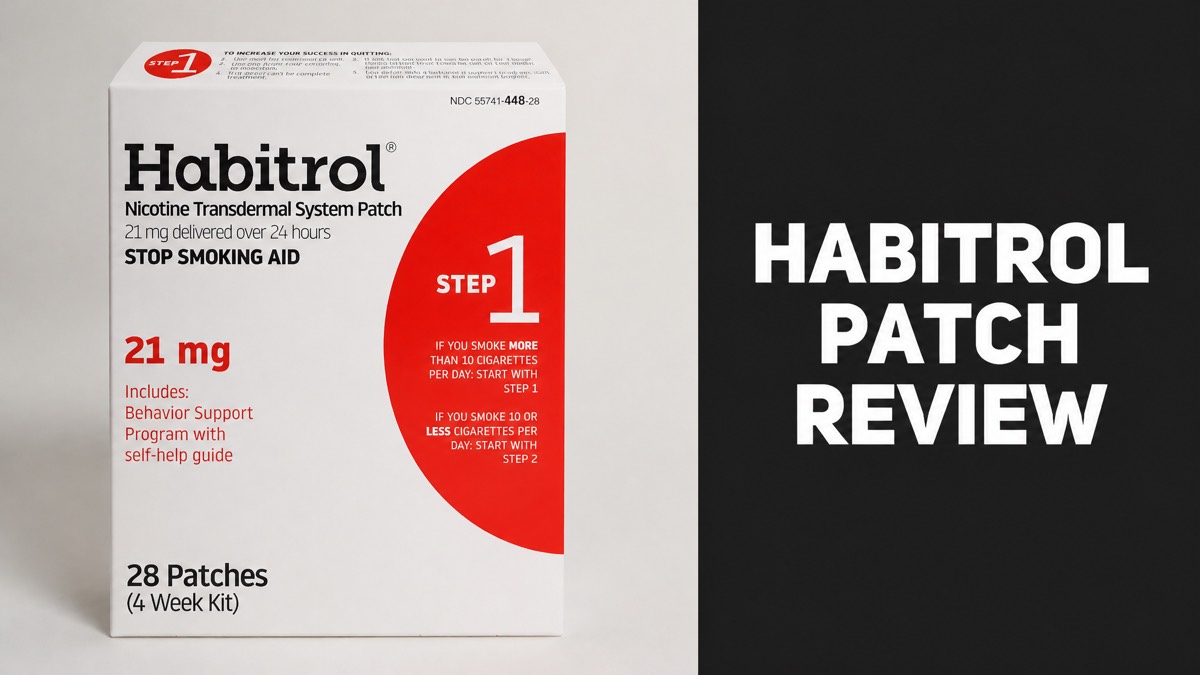
Habitrol is an over-the-counter nicotine patch that helps adults quit smoking. Dr. Reddy's Laboratories markets the brand in the United States. Each patch releases nicotine through the skin for 24 hours. The three-step plan lowers the dose from 21 mg to 14 mg to 7 mg over several weeks.
The patch works through steady nicotine delivery, and users apply one every 24 hours. Nicotine replacement raises quit odds by about 55 percent in pooled trials. Users praise the price and the steady relief. Complaints focus on adhesion in heat. Habitrol costs less than NicoDerm CQ, and side effects stay mostly mild skin reactions.
Some people need a doctor's approval first, including those with heart conditions. The sections below cover dosing, safety, price, and where to buy. An honest pros and cons list closes the review. Read on to see whether Habitrol fits your budget, your skin, and your quit plan.
What Is Habitrol Nicotine Patch?
Habitrol is an over-the-counter nicotine replacement patch that helps adults quit smoking. The patch delivers a steady dose of nicotine through the skin over 24 hours.
Each patch carries one of three strengths: 21 mg, 14 mg, or 7 mg. The strengths form a step-down program labeled Step 1, Step 2, and Step 3. Smokers move to a lower strength every few weeks.
The label lists one purpose. The patch reduces withdrawal symptoms, including nicotine craving, associated with quitting smoking. The package also includes a self-help guide with a behavior support program.
Who Makes Habitrol?
Dr. Reddy's Laboratories markets Habitrol in the United States. The Indian generics manufacturer took over the brand after Novartis sold it.
Novartis once owned Habitrol. The 2014 merger of the Novartis and GSK consumer healthcare units forced the sale to protect competition in the US patch market. GSK's NicoDerm CQ remained the main rival.
Distribution changed with the new owner. Why does that matter? Habitrol now sells mostly through online retailers, clinical quit programs, and the manufacturer's own site, so fewer drugstore shelves stock it than NicoDerm CQ.
How Does Habitrol Work?
Habitrol delivers nicotine through the skin at a steady rate for 24 hours. The nicotine enters the bloodstream and replaces part of the nicotine a smoker normally takes from cigarettes.
A puff of smoke sends nicotine to the brain in about 7 to 10 seconds. A patch needs roughly 2 to 3 hours to build the same effect. Why does the slow rise matter? It removes the sharp spikes that make smoking addictive.
Here's the good news: withdrawal symptoms fade as the blood nicotine level stays steady. Sudden cravings still break through, though. Preventive cardiologist Quinn Pack, MD, pairs a patch with gum, lozenges, or nasal spray for those moments.
What Is in Habitrol?
Each Habitrol patch contains nicotine as its only active ingredient. The three strengths release 21 mg, 14 mg, or 7 mg over 24 hours.
The patch body uses acrylate adhesive, aluminized polyester, cellulose paper, and a methacrylic acid copolymer. These inactive layers hold the nicotine against the skin.
To be clear, the adhesive deserves attention. The label warns that people with an allergy to adhesive tape or with skin problems are more likely to get rashes.
How Do You Use Habitrol?
One new patch goes on every 24 hours to dry, clean, hairless skin. The user removes the backing and presses the patch on immediately. A 10 second hold keeps it in place.
Steps:
- Remove the backing from the patch.
- Press the patch onto dry, clean, hairless skin immediately.
- Hold the patch in place for 10 seconds.
- Wash your hands after applying or removing a patch.
- Fold the sticky ends of the used patch together and place it in the pouch.
Hands get washed after applying or removing a patch. The user folds the sticky ends of a used patch together and drops it in the pouch. Used patches still hold enough nicotine to poison children and pets.
Smoking stops completely once the patch goes on. The nicotine keeps entering the bloodstream for several hours after the patch comes off. So what happens if a cigarette follows? The smoker stacks extra nicotine on top of what the skin still delivers.
Here's the simple fix for sleep trouble. The label says to remove the patch at bedtime when vivid dreams or other sleep disturbances appear.
What Are the Habitrol Steps and Doses?
Habitrol runs in three steps that lower the nicotine dose over time. Step 1 uses a 21 mg patch, Step 2 uses a 14 mg patch, and Step 3 uses a 7 mg patch.
Habitrol Step Plan:
| Step | Dose | Weeks |
|---|---|---|
| Step 1 | 21 mg per 24 hours | 1 to 4 |
| Step 2 | 14 mg per 24 hours | 5 and 6 |
| Step 3 | 7 mg per 24 hours | 7 and 8 |
The Habitrol directions run weeks 1 through 4 on Step 1, weeks 5 and 6 on Step 2, and weeks 7 and 8 on Step 3. One patch covers each day.
Now, lighter smokers skip Step 1. Anyone who smokes 10 or fewer cigarettes a day starts with Step 2 for 6 weeks, then moves to Step 3 for 2 weeks.
A 56-count kit holds all three steps in one box. Smokers can also buy each step alone in 14-count or 28-count boxes.
Does Habitrol Actually Work?
Yes. Habitrol uses the same nicotine replacement method that raises the odds of quitting. A 2024 Cochrane review of nicotine replacement trials found a relative risk of 1.55 for abstinence compared with placebo.
That figure means nicotine replacement raises the chance of a successful quit by about 55 percent. Trials of Habitrol-based and NicoDerm-based patches showed no meaningful difference in quit rates. So what separates one brand from another? Adhesion, comfort, and compliance, not the drug.
Look, success also depends on behavior. The label sets four requirements: motivation to quit, one patch daily, a completed program, and a behavioral support program.
Reported failures usually trace to comfort and adhesion, not the drug. Users who say one brand worked when another failed often describe differences in how well the patch stayed on.
Does Habitrol Reduce Cravings?
Yes. Habitrol reduces nicotine withdrawal symptoms, including craving, which is its labeled use.
Many users report that the patch quiets the constant urge to smoke. Occasional urges still show up. The bottom line: those users wait them out until the feeling passes.
Sudden cravings break through the steady dose. Patches release nicotine slowly, so pairing the patch with gum or lozenges covers those moments.
What Do Habitrol Reviews Say?
Habitrol earns mostly positive ratings with a clear split on adhesion. Where does it lose points? Mostly on adhesion. Retail ratings land between 3.6 and 4.7 out of 5 stars, depending on the store and the box size.
Praise centers on price and results. Users report that the patches help a family member quit, work without burning, and stay on through a shower.
Complaints center on the patch coming off, stiffness, and bulk. Delivery problems also appear in some feedback.
What Do Users Like?
Users like the price, the steady relief, and the lack of skin burning. Positive feedback also mentions quick delivery.
Several users report that patches stay in place after a shower. A user who switched to Habitrol describes relief that holds up, with only an occasional urge.
Family members also use the patches to help a parent quit. Good value comes up often in positive feedback.
What Are the Common Complaints?
The top complaint is that the patch comes off the skin. Why? Heat, sweat, and a stiff, bulky body make it lift. Some users say the first patch would not stay on the arm at all.
Stiffness and bulk draw comments next. Users who compare Habitrol with competing patches call it bulkier and stiffer. Heat makes peeling worse. One user quit wearing the patch in 114 degree Fahrenheit (46 degree Celsius) weather.
A few users call the patch not strong enough. The strength complaints stay rare next to the adhesion complaints.
And the fix is cheap. Medical tape over the edges fixes most peeling. The small daily ritual solves edge lifting for users in humid climates.
Habitrol vs NicoDerm CQ?
Habitrol and NicoDerm CQ deliver the same nicotine doses on the same step-down plan. Both use 21 mg, 14 mg, and 7 mg patches.
Habitrol vs NicoDerm CQ:
| Factor | Habitrol | NicoDerm CQ |
|---|---|---|
| Doses | 21, 14, 7 mg | 21, 14, 7 mg |
| Program price | $155 to $220 | $260 to $345 |
| Adhesion | Good, lifts in humid weather | Stronger for 24-hour wear |
| Availability | Online and quit programs | Nearly every drugstore |
Three differences separate them: price, adhesive, and availability. Habitrol costs less per program. NicoDerm CQ stays on better and sits on nearly every drugstore shelf. So what does the lower price cost you? A slightly weaker grip and fewer places to buy.
Quit rates match. Trials of both patches show no significant gap in abstinence. Skin comfort and compliance decide which patch works better for a given person.
Which Costs Less?
Habitrol costs less per full program than NicoDerm CQ. A program runs roughly $155 to $220 for Habitrol and $260 to $345 for NicoDerm CQ, based on May 2026 retail pricing.
Per patch, Habitrol runs about $1.70 to $2.50 and NicoDerm CQ runs about $2.80 to $3.80. The gap saves $100 or more over a full program.
But insurance can flip the math. Many health plans cover over-the-counter nicotine replacement with a prescription, and some formularies prefer one brand. A call to the plan before buying saves money.
What Are Habitrol Side Effects?
Habitrol side effects are mostly mild skin reactions at the patch site. Itching, burning, or tingling can appear when the patch first goes on.
Sleep disturbances and vivid dreams occur in some users. What fixes it? Removing the patch at bedtime, as the label says.
Skin redness that lasts beyond four days needs a doctor. Swelling or a rash also calls for stopping the patch and calling a doctor.
Nicotine overdose shows up as nausea, vomiting, dizziness, weakness, and a rapid heartbeat. Irregular heartbeat or palpitations also mean stop use and call a doctor.
Stop use and call a doctor if:
- Skin redness lasts beyond four days
- Skin swells or a rash appears
- Irregular heartbeat or palpitations occur
- Nausea, vomiting, dizziness, or weakness appears
Who Should Avoid Habitrol?
People with certain conditions need a doctor's approval before using Habitrol. Those conditions include heart disease, a recent heart attack, irregular heartbeat, and high blood pressure not controlled with medication.
Pregnant and breast-feeding women use the patch only on a health care provider's advice. Smoking harms a child. The label calls the medicine safer than smoking but says the risks to a child are not fully known.
Adults under 18 ask a doctor first. People who take a prescription medicine for depression or asthma ask a doctor or pharmacist too, because the dose of that medicine may need adjusting.
Ask a doctor first if you have:
- Heart disease or a recent heart attack
- Irregular heartbeat
- High blood pressure not controlled with medication
- An allergy to adhesive tape or skin problems
- A prescription for depression or asthma
Children and pets face the sharpest danger. Used patches hold enough nicotine to poison them. What happens after removal? Fold the sticky ends together and seal the patch in the pouch. A swallowed patch calls for poison control right away.
How Much Does Habitrol Cost?
Habitrol costs about $48 to $70 for a 28-count Step 1 box at online retailers. HealthWarehouse lists that box at $47.53.
The kit format changes the purchase. The 56-count kit packs all three steps in one box, so a smoker buys the whole plan at once. Separate boxes let a smoker buy one step at a time.
Where to Buy Habitrol?
Habitrol is sold online and through quit programs more than on drugstore shelves. The manufacturer's own site, Amazon, Walmart, Target, and online pharmacies carry it.
Who finds NicoDerm CQ easier? Anyone who needs a patch tonight. Nearly every US drugstore stocks that brand, and Habitrol needs shipping time.
Missed deliveries appear in some feedback. Choosing a seller with tracking protects the daily schedule.
Is Habitrol Worth It?
Yes. Habitrol is worth it for smokers who want a lower-cost patch and can handle the adhesion.
The pros are clear: the same nicotine doses as the top brand, a lower price, and a full kit.
The cons are practical: peeling in heat, a stiff feel, and fewer store shelves.
Pros:
- Same nicotine doses as the top brand
- Lower price per patch
- Full kit covers all three steps
Cons:
- Peels in heat and humidity
- Feels stiff and bulky to some users
- Fewer drugstore shelves
Bottom line: heavy sweaters and daily exercisers do better with NicoDerm CQ. Everyone else saves money with Habitrol, and a doctor can confirm the fit.
Coffee Loving Card Makers is a reader-supported platform. Purchases made through our links may earn us an affiliate commission at no extra cost to you. Learn more.