
Great Lakes Gelatin Collagen Hydrolysate Review: Is It Worth It?
 By Anna Krause October 6, 2026
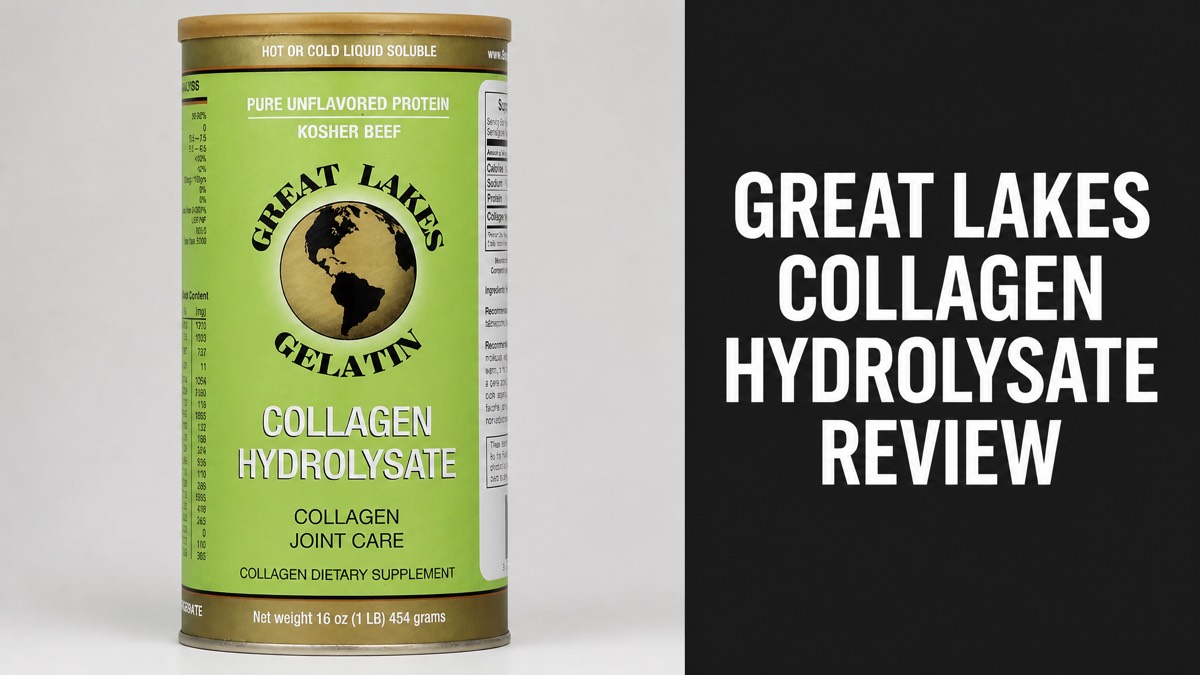
Great Lakes Gelatin Collagen Hydrolysate is a single-ingredient bovine collagen powder from a company that has made collagen products since 1922. The brand now sells it as Great Lakes Wellness Collagen Peptides. Shoppers stir it into coffee and smoothies for skin and joint support.
The powder differs from gelatin, and the orange can is the one that dissolves in drinks. The serving matches the dose used in skin and joint trials. Reviews run high across retail sites, and the price sits mid-range. Collagen still lacks tryptophan, so whey or plant protein stays the muscle base.
An FDA warning letter from 2021 targeted past marketing claims, and public testing detail stays thin. The sections below cover cost, safety and the best way to take the powder. By the end, the question of who should buy it and who should skip it has a clear, practical answer.
What Is Great Lakes Gelatin Collagen Hydrolysate?
Great Lakes Gelatin Collagen Hydrolysate is a single-ingredient powder made from hydrolyzed bovine collagen peptides. The unflavored version has no fillers, flavors, sweeteners or additives. Great Lakes Gelatin Company has sold collagen products since 1922.
The company now sells under the Great Lakes Wellness name. So if you search for either name, you land on the same collagen line.
The powder supplies mostly Type I and Type III collagen. Those types are abundant in human skin, bones, tendons and ligaments. Type II, the cartilage type, isn't the focus here.
The serving size changed over time. Why does that matter? The classic can used 2 tablespoons (about 11-12 g, or 0.4 oz) and held 43 calories, while the current tub uses 2 scoops for 20 g (0.7 oz), up from 12 g per serving.
Is Collagen Hydrolysate the Same as Gelatin?
No. Collagen hydrolysate and gelatin share the same bovine source and amino acid profile but differ in processing. Hydrolysate is broken into short peptides. Gelatin keeps longer chains.
Here's why that matters: gelatin absorbs water and sets into a gel in cold liquid. Cooks use it for gummies, soups and set desserts. Stir the same powder into iced coffee and the drink turns solid.
Great Lakes sells both products, and the cans look different. The orange can holds hydrolysate that dissolves in drinks. The green can holds beef gelatin. In fact, most shopper confusion with the brand comes from mixing up these two cans.
How Does Great Lakes Collagen Hydrolysate Work?
Great Lakes Collagen Hydrolysate works by supplying collagen that enzymes have already broken into short peptides. Short di- and tri-peptides dissolve in cold water. They also digest more easily than whole collagen.
The gut digests these peptides into amino acids and small peptides. Glycine, proline and hydroxyproline dominate the mix. The body can also make these amino acids, so the powder adds raw material instead of a unique nutrient.
Now here is the thing: vitamin C controls how well the body builds collagen from that raw material. Prolyl and lysyl hydroxylase enzymes need it as a co-factor. Why does a tiny amount matter so much? The enzymes slow down without it, and 50-100 mg is enough, about half a kiwi or a few orange wedges.
How Should You Take It?
The standard daily serving is 2 tablespoons of the classic powder or 2 scoops of the current tub. Those amounts equal 11-12 g (0.4 oz) or 20 g (0.7 oz) of collagen. Coffee, smoothies and water all work as a base.
The powder dissolves in hot and cold liquids, but hot drinks dissolve it faster. Here's a simple trick for iced drinks: stir the scoops into a little hot liquid first, then add the cold drink.
Plain black coffee contains no vitamin C. So what's the fix? Pair the powder with citrus, kiwi, strawberries or a small vitamin C tablet. A smoothie with fruit handles both jobs at once.
Steps:
- Stir the scoops into a little hot liquid first.
- Add the cold drink or ice to the mixture.
- Pair the drink with 50-100 mg of vitamin C.
- Repeat daily for at least 4 to 12 weeks.
Results need patience. Trials ran for 4 to 12 weeks of daily use or longer. And a shopper who judges the powder after one week hasn't given it a fair test.
What Is in Great Lakes Collagen Hydrolysate?
The ingredient list contains one item: bovine collagen peptides. The current 20 g serving comes from cattle hides. Nothing else appears on the label.
The amino acid panel per 20 g shows glycine at 2,652 mg, proline at 1,512 mg and hydroxyproline at 1,428 mg. Glutamic acid reaches 1,224 mg and alanine 1,032 mg. Arginine adds 876 mg.
The classic 2-tablespoon serving carried 43 calories, 0 g carbs, 0 g sugar, 0 g fat and 20 mg sodium. The label counted about 11 g of protein. In other words, the entire calorie load comes from protein.
Several certifications back the product. The brand lists iGen Non-GMO, kosher, gluten-free, certified keto, paleo friendly and verified glyphosate free. Every batch goes to an independent lab, and the maker is FDA-registered and follows cGMP. The powder is not organic and not vegan.
Certifications:
- iGen Non-GMO tested
- Kosher
- Gluten-free
- Certified keto
- Paleo friendly
- Verified glyphosate free
Is It a Complete Protein?
No. Collagen lacks tryptophan, an essential amino acid the body cannot make. The amino acid panel lists tryptophan at 0 mg. The label still counts the grams as protein.
The bad news? Eleven grams of collagen don't stimulate muscle protein synthesis the way 11 g of whey does. Collagen grams shouldn't count toward a muscle-protein target. Buyers cutting calories feel this gap most.
So collagen works best as an add-on for connective tissue. Complete protein from whey, soy, pea-rice blends, chicken or eggs stays the base. The powder sits on top of that foundation.
What Are the Benefits of Great Lakes Collagen Hydrolysate?
Great Lakes markets the powder for skin, hair, nails, joints and digestion. The brand calls these the five signs of aging well. Each claim carries a different level of proof.
Skin elasticity and joint comfort carry moderate evidence at this serving size. General connective tissue support carries limited evidence. The claim rests on the amino acid mechanism, not on a primary clinical result.
Evidence by Benefit:
| Benefit | Evidence | Studied Dose |
|---|---|---|
| Skin elasticity | Moderate | 2.5-10 g daily |
| Joint comfort | Moderate | 10-15 g daily |
| Connective tissue support | Limited | Mechanism only |
The dose matches the research. Is under-dosing a worry? Not here, because a serving of 11-12 g meets or exceeds the 2.5-10 g used in the most cited trials.
Hair, nails and digestion claims rest mostly on customer reports. The strongest trial data covers skin and joints. So weigh the claims in that order.
Does It Improve Skin Elasticity?
Yes. Trials show hydrolyzed collagen improves skin elasticity in a measurable way. Proksch and colleagues tested women aged 35-55 in 2014. A daily 2.5 g (0.09 oz) dose of Verisol collagen beat placebo after 8 weeks.
A follow-up study confirmed the effect and added gains in skin hydration. Great Lakes delivers more than four times the 2.5 g trial dose. Does a bigger dose mean a bigger effect? No, a bigger dose doesn't guarantee one.
Rapid weight loss gives the skin a use case. Skin can lag behind fat loss. At 40-45 calories per serving, the powder adds little energy. To be clear, no study has tested it in GLP-1 users specifically.
Does It Ease Joint Pain?
Yes, modestly. Clark and colleagues gave athletes 10 g (0.35 oz) of hydrolyzed collagen daily for 24 weeks and found less activity-related joint pain. The Great Lakes serving sits inside that studied range.
Shaw and colleagues tested 15 g (0.5 oz) of gelatin with vitamin C before exercise in 2017. Collagen synthesis markers rose. The result supports the vitamin C pairing for active people.
Effect sizes stay modest. Collagen isn't a painkiller. Connective tissue remodels over weeks to months, so any comfort gain arrives slowly.
What Do Great Lakes Collagen Reviews Say?
Ratings for the brand run high across every major retail channel. Amazon shows 4.6 out of 5 from 38,121 ratings and ranks the 16 oz tub number 9 in collagen supplements. The brand site shows 4.88 out of 5 from 4,322 reviews.
Do the ratings hold up at scale? A tally of roughly 12,000 reviews gathered from retail sites counts about 93% as positive. Negative reviews make up the remaining 7%. The pattern holds across sellers.
Praise centers on a few themes. Buyers like how the powder dissolves, the lack of taste or texture change, the price and fast shipping. Many report stronger nails, thicker hair and easier joints after months of daily use.
Third-party review sites hold little data. The Great Lakes Gelatin Trustpilot profile shows 3.2 stars from a single review and no claim by the company. And one review proves nothing in either direction.
What Are the Common Complaints?
Solubility in cold drinks draws the most complaints. Why does cold water cause trouble? The powder dissolves faster in hot water than in cold, so cold drinks need a pre-dissolve step. A marine variant tested as not very soluble in one roundup.
The packaging change drew attention as well. The brand moved from a composite tin to a recyclable HDPE tub. The serving also grew from 12 g to 20 g, so older scoop habits and old listings no longer match.
Some disappointment comes from expectations. The label counts 11-12 g of protein, yet the powder has no tryptophan. Effects stay modest and slow. So buyers who expect fast results or muscle gain feel let down.
How Does It Compare With Vital Proteins and Sports Research?
Great Lakes sits in the middle of the price range and matches rivals on collagen type. One price check found NOW Sports at $0.48 per 10 g. Great Lakes 16 oz cost $25, or $0.55 per 10 g. Vital Proteins cost $0.71 and Sports Research $1.00.
Great Lakes matches Sports Research on collagen type, dose and sourcing. The cost per gram runs lower. Both are single-ingredient hydrolyzed bovine collagen powders.
Price per 10 g of Collagen:
| Brand | Size | Price | Per 10 g |
|---|---|---|---|
| NOW Sports | 1 lb (454 g) | $22.00 | $0.48 |
| Great Lakes Wellness | 16 oz (454 g) | $25.00 | $0.55 |
| Vital Proteins | 20 oz (567 g) | $40.00 | $0.71 |
| Sports Research | 10 oz (280 g) | $28.00 | $1.00 |
Vital Proteins wins on brand recognition. Some of its products add vitamin C, and the line includes marine options. One scoop delivers 20 g, while Great Lakes needs 2 scoops for the same amount.
Multi-source blends such as Ancient Nutrition cost significantly more. Great Lakes follows a simpler single-source approach. Buyers who want one clean ingredient at a lower price fit that approach.
Which Brand Has Better Third-Party Testing?
Sports Research holds the more prominent third-party testing certification. Great Lakes leans on batch testing instead.
Great Lakes states that an independent lab tests every batch. The brand also carries iGen Non-GMO testing and reports no glyphosate detected. The research found no NSF Certified for Sport label on the powder.
ConsumerLab included the unflavored Great Lakes Collagen Hydrolysate in a test of 13 collagen supplements. The full pass or fail results sit behind a membership. So no public verdict is available for this review.
Is Great Lakes Collagen Hydrolysate Safe?
Yes. Great Lakes Collagen Hydrolysate is generally very well tolerated. Do side effects show up? Mild digestive discomfort can appear at higher doses. No serious adverse effects are well documented at collagen peptide doses.
Beef allergy is the clear exclusion. The powder comes from bovine hides. The Amazon listing names beef as the allergen.
Pregnancy and childhood need a professional opinion. The brand advises asking a doctor before use during pregnancy or breastfeeding. Parents should ask a pediatrician before giving it to children.
No interaction is known with semaglutide or tirzepatide. Collagen digests into amino acids and small peptides. Even so, anyone on medication should confirm details with a clinician.
Did the FDA Warn Great Lakes Gelatin?
Yes. The FDA sent Great Lakes Gelatin Company a warning letter on May 10, 2021. The agency reviewed the company website and social pages. The agency ruled that the claims made the products unapproved drugs.
What did the letter object to? The letter quoted claims about reduced joint pain, anti-inflammatory action, bone density, stomach ulcers and liver regeneration. The letter also cited customer testimonials about knee pain. The letter focused on marketing claims.
Current labeling is more cautious. The Amazon listing carries the standard disclaimer. Statements are not evaluated by the FDA, and the product does not treat or cure disease.
How Much Does It Cost?
The 10 oz tub costs $26.99 on the brand site. The tub holds 14 servings. The line also comes in 16 oz, 32 oz, 4 lb and 8 lb sizes, plus 20-count stick packs.
Does the price drop with size? Yes, cost per serving falls on larger tubs. The brand advertises prices as low as $1.34 per 20 g serving. And the 16 oz tub at about $25 works out near $0.55 per 10 g.
Several habits cut the bill. Large bags carry the biggest savings. Subscription orders ship free in the lower 48 states. The brand also runs frequent sales and a rewards program.
Ways to Save:
- Buy the larger bags
- Subscribe for free shipping in the lower 48 states
- Wait for the frequent brand sales
- Use the rewards program
Where Can You Buy It?
Buyers can order from Amazon, the brand site and iHerb. The Amazon 16 oz tub carries ASIN B005KG7EDU and 22 servings. Thrive Market lists the marine version.
The brand site offers a 60-day satisfaction guarantee. Great Lakes replaces or refunds an unsatisfying purchase within that window.
Label checks prevent mistakes. Confirm the product says collagen hydrolysate, not gelatin. Older orange can listings show an 11-12 g serving, while new tubs show 20 g.
Is Great Lakes Collagen Hydrolysate Worth It?
Yes, for the right buyer. Great Lakes Collagen Hydrolysate delivers a clean, well-dosed collagen at a mid-range price. The product has one ingredient, dissolves in drinks and adds few calories.
The weak points are real. Collagen is an incomplete protein. Evidence for skin and joints is moderate, not strong. The company received an FDA warning for past marketing claims. Public testing detail is thin, and the powder is not organic.
Pros:
- One clean ingredient
- Dose that matches the research
- Dissolves in hot and cold drinks
- Few calories per serving
- Mid-range price per gram
Cons:
- Incomplete protein with no tryptophan
- Moderate evidence only
- Past FDA warning over marketing claims
- Thin public testing detail
- Not organic
Bottom line: the verdict is positive with limits. The powder works as a cost-effective add-on for skin and joint support. The powder doesn't replace muscle protein, and the product isn't a weight-loss product.
Who Should Skip It?
Buyers with a beef allergy should skip the powder. Vegans and vegetarians should skip it as well. The collagen comes from cattle hides.
Anyone who counts collagen as a main protein source should look elsewhere. Whey, soy or a pea-rice blend protects muscle better. Collagen belongs on top of those foods.
Skip It If:
- A beef allergy applies
- A vegan or vegetarian diet applies
- Collagen is the main protein source
- A certified-for-sport supplement is required
Athletes who need a certified-for-sport supplement should verify current certification first. The research found no such label on this powder. A tested alternative removes the risk.
Coffee Loving Card Makers is a reader-supported platform. Purchases made through our links may earn us an affiliate commission at no extra cost to you. Learn more.