
Great Lakes Collagen Review: Is It Worth It?
 By Anna Krause October 6, 2026
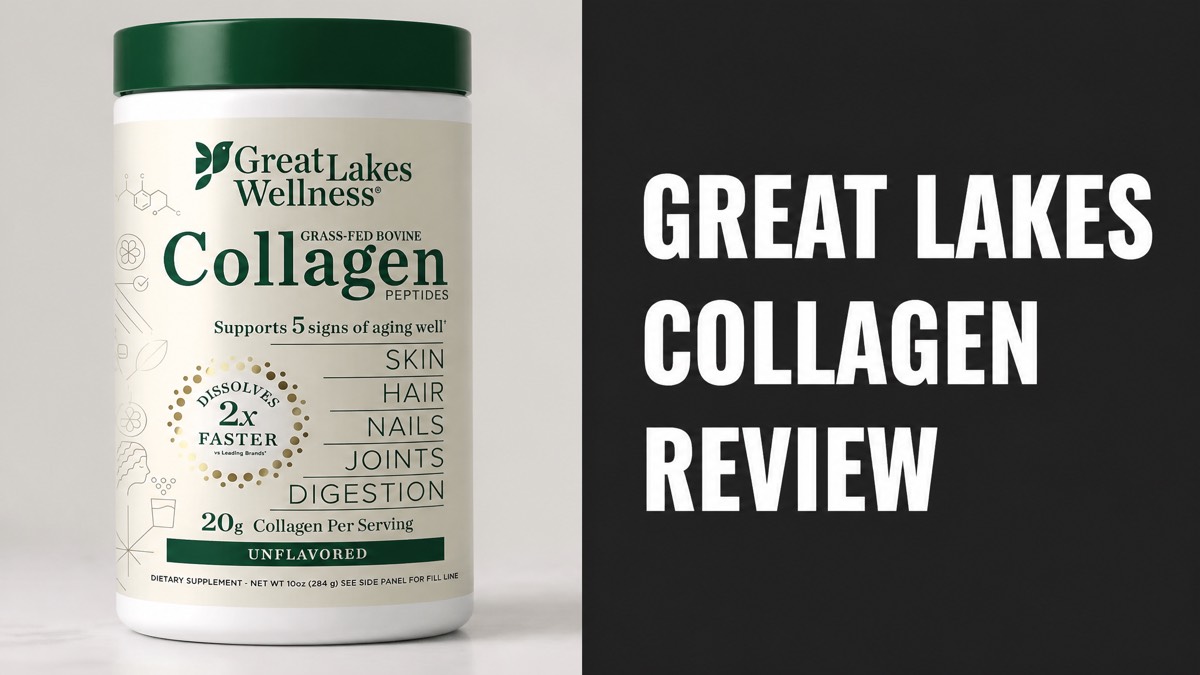
Great Lakes collagen is an unflavored bovine collagen peptide powder from Great Lakes Wellness, a brand that has made collagen and gelatin since 1922. The current 16 oz (454 g) tub holds 22 servings of 20 g each. The powder mixes into hot or cold drinks without changing their taste.
Buyers rate the powder highly across the major stores. The powder dissolves without clumps, carries no taste, and costs about 7 cents per gram. Clinical trials on collagen peptides back modest gains in skin elasticity and joint comfort. A formula change and rising prices draw the main complaints from long-time buyers.
The protein is incomplete, so collagen cannot replace whey or plant protein. The review below covers the versions, ingredients, evidence, safety, cost and ideal buyer. Read on to decide whether the tub earns a permanent spot in your daily coffee routine or whether a different supplement suits your goals better.
What Is Great Lakes Collagen?
Great Lakes collagen is an unflavored powder made from hydrolyzed bovine collagen peptides. The Wellness brand sources it from grass-fed cattle hides and sells it as Types I and III collagen.
The company has made collagen and gelatin products since 1922. A history that long gives the brand more staying power than most newer supplement labels.
The collagen comes from Korea. The average peptide size sits between 3,000 and 5,000 daltons, which is typical for cowhide collagen.
Shoppers have noticed. The 16 oz tub holds 4.6 stars from 38,121 Amazon ratings and ranks number 9 in collagen supplements.
Which Great Lakes Collagen Do You Need?
Buyers who want a drinkable supplement need the collagen hydrolysate or the current Collagen Peptides tub. The older orange can held cold-soluble hydrolysate at 11 to 12 g per two tablespoons.
The green can holds beef gelatin. Why does the difference matter? Gelatin gels in cold liquid. So the green can suits gummies, soups and set desserts, and a cup of coffee with it turns into a lump.
Great Lakes Collagen Versions:
| Product | Form | Best For |
|---|---|---|
| Orange can | Collagen hydrolysate | Coffee, smoothies, cold drinks |
| Green can | Beef gelatin | Gummies, soups, set desserts |
| Current tub | Collagen peptides | Daily drinkable supplement |
The current product ships in a white HDPE tub with 20 g of collagen per two scoops. The brand moved from 12 g to 20 g per serving and dropped the old tin for recyclability.
How Does Great Lakes Collagen Work?
Hydrolysis breaks collagen into short peptide chains. Short chains dissolve in hot and cold liquid, so the powder disappears into coffee, tea and smoothies.
Gelatin skips that final step. Its longer chains set into a gel once the liquid cools. So why doesn't hydrolyzed collagen do the same? Its chains are far shorter, so it never sets.
Collagen supplies glycine, proline and hydroxyproline. Those amino acids show up throughout skin, tendons and ligaments, and the body makes them on its own too.
Here's the part most people miss: plain black coffee delivers no vitamin C. Why does that matter? The enzymes that build new collagen need 50 to 100 mg of it.
How Do You Take Great Lakes Collagen?
A daily serving is two scoops, or 20 g, stirred into a drink or recipe. Brand directions say to use it every day for best results.
Coffee, tea, smoothies, oatmeal, yogurt, orange juice and soup all work. For most people, the powder carries no taste or smell.
Ways to Mix It:
- Hot coffee or tea
- Smoothies
- Oatmeal or yogurt
- Orange juice
- Soup
Results need patience. Trials ran from 4 to 24 weeks, so a month of daily use is the earliest fair check. And that's a minimum, not a finish line.
What Is in Great Lakes Collagen?
The ingredient list contains one item: bovine collagen peptides. No flavors, sweeteners or fillers appear in the unflavored tub.
The label lists kosher, keto certified and paleo friendly status. The label adds iGen non-GMO testing, no glyphosate and no preservatives.
The brand states that an independent third-party lab tests its products. The powder is not organic and not vegan, since cattle hides supply the collagen.
How Much Protein Does Great Lakes Collagen Provide?
A 20 g serving provides 18 g of protein, 70 calories and 100 mg of sodium. The older can listed 11 g of protein, about 40 to 45 calories and 20 mg of sodium per two tablespoons.
Per Serving Compared:
| Nutrient | Current Tub | Older Can |
|---|---|---|
| Calories | 70 | 40 to 45 |
| Protein | 18 g | 11 g |
| Sodium | 100 mg | 20 mg |
| Collagen | 20 g | 11 to 12 g |
Those grams carry a catch. Collagen holds almost no tryptophan, an essential amino acid. So what does that mean for muscle? The protein counts as incomplete.
To put it simply: it isn't a muscle-building protein. Whey, soy or pea blends handle that job, and collagen sits on top as a connective tissue add-on.
What Are the Benefits of Great Lakes Collagen?
The brand claims support for skin, hair, nails, joints and digestion. Each claim rests on collagen peptide research in general, not on a trial of this exact tub.
The brand also says the powder dissolves twice as fast as leading brands. Clump-free mixing is the most consistent praise in buyer feedback.
The evidence is moderate for skin and joints. Support for general connective tissue rests on the amino acid profile, so that benefit stays limited.
Does Great Lakes Collagen Improve Skin?
Yes. Hydrolyzed collagen improved skin elasticity in a 2014 trial by Proksch and colleagues. Women aged 35 to 55 took 2.5 g daily for 8 weeks and beat the placebo group.
Great Lakes delivers 20 g per serving, far above the trial amount. Does a bigger dose mean a bigger effect? Not necessarily, because a bigger dose does not guarantee a bigger effect.
To be clear, the effect is modest. Collagen supports skin gradually, and it doesn't replace sunscreen or skincare.
Does Great Lakes Collagen Help Joints?
Yes, modestly. Athletes who took 10 g of hydrolyzed collagen daily for 24 weeks reported less activity-related joint pain. Clark and colleagues published that trial in 2008.
A 2017 study by Shaw and colleagues used 15 g of gelatin with vitamin C before exercise. Markers of collagen synthesis rose.
Collagen isn't a painkiller. So when do joints feel better? Slowly, over weeks to months of steady use.
What Do Great Lakes Collagen Reviews Say?
Ratings run high across every major store. Amazon shows 4.6 out of 5 from 38,121 ratings, and the brand site shows 4.88 from 4,309 reviews.
A Vitacost split of 492 reviews shows 79 percent at five stars. Only 3 percent gave one star. So what do the unhappy few complain about? The next section answers that.
And loyalty stands out. Many reviewers describe using the powder for years, and some for over a decade.
What Do Buyers Like?
Buyers praise how fast the powder dissolves. The powder vanishes into hot coffee without clumps and leaves no taste behind.
Many credit stronger nails, better hair and smoother skin. A few even say their knees stopped clicking after months of use.
Value earns frequent mentions. Large bags cut the cost per serving, and the powder froths nicely in milk drinks with a frother stick.
What Buyers Like:
- Quick, clump-free dissolving
- No taste or smell
- Stronger nails and better hair
- Savings on large bags
What Are the Common Complaints?
The loudest complaint is a formula change that raised sodium. One buyer found nearly twice the sodium per gram, while the online listing still showed the old numbers.
Taste draws mixed notes. A few buyers detect a faint meaty flavor, and others describe a slight bitterness and filmy residue in the current version.
Price creeps upward. Do long-time buyers walk away? Most don't. They say the tub costs more each year, though most keep buying it.
Common Complaints:
- Higher sodium after the formula change
- Faint meaty taste
- Slight bitterness and film in the cup
- Rising price
How Does Great Lakes Collagen Compare to Alternatives?
Great Lakes matches Sports Research in collagen type, dose and sourcing. Great Lakes usually costs less per gram of collagen.
Ancient Nutrition sells a multi-source blend at a higher price. Great Lakes keeps a simpler single-source formula.
Marine collagen forms a separate category. The brand's own marine line scored lower on solubility in one comparison, while the bovine powder dissolves in cold liquid.
Great Lakes vs Vital Proteins: Which Is Better?
Neither brand wins outright. Vital Proteins offers stronger brand recognition and some SKUs with added vitamin C. The brand also sells marine options.
Great Lakes counters with a lower price and a single-ingredient formula. Its decades of history count for something too.
Both draw collagen from cowhide. So what decides the choice? The core ingredient is similar, so price, taste and packaging do.
Is Great Lakes Collagen Safe?
Yes. Most people tolerate collagen peptides well. Mild stomach discomfort can appear at higher doses.
No known interaction exists with GLP-1 medications such as semaglutide or tirzepatide. Collagen breaks down into amino acids and small peptides in the gut.
The label advises a physician check for anyone who is pregnant, nursing or managing a medical condition. The label also states the product is not for weight reduction.
Who Should Avoid Great Lakes Collagen?
People with a beef allergy need to skip it because the collagen is bovine. Vegans and vegetarians need to skip it as well, since cattle hides supply the powder.
Anyone who relies on collagen as a main protein source need to look elsewhere. The missing tryptophan makes it a poor muscle-building tool.
Buyers who watch sodium need to read the current label. The formula change raised the sodium content.
How Much Does Great Lakes Collagen Cost?
The 16 oz (454 g) tub costs $32.49 on the brand site and holds 22 servings. Vitacost lists the same tub at $33.49.
That works out to about $1.48 per serving, or roughly 7 cents per gram of collagen.
Bigger sizes lower the price per gram. The 4 lb and 8 lb bags exist for heavy users, and subscription orders ship free.
Where Can You Buy Great Lakes Collagen?
Shoppers find it at the brand site, Amazon, Vitacost, Walmart, The Feed and Muscle and Strength. Prices shift between stores, so compare before buying.
Where It Sells:
- Great Lakes Wellness brand site
- Amazon
- Vitacost
- Walmart
- The Feed
- Muscle and Strength
The brand site offers a 60-day money-back guarantee. Short answer: that window is long enough to judge the powder.
Subscriptions come with free shipping and cancel anytime. Casual buyers can skip the subscription and order a single tub.
Is Great Lakes Collagen Worth It?
Yes, for the right buyer. Great Lakes collagen is a well-dosed, single-ingredient add-in at a fair price per gram. The powder dissolves cleanly and carries a long track record.
The downsides are real. The protein is incomplete, the effects are modest, and the formula and price have both changed over time. Does that sink the product? No, because it works as an add-in and not as a protein source.
Bottom line: a solid skin and joint supplement, and a poor protein source.
Pros:
- Well-dosed at 20 g per serving
- Single-ingredient formula
- Dissolves in hot and cold drinks
- Fair price per gram
Cons:
- Incomplete protein
- Modest effects in trials
- Formula and price changes over time
Who Should Buy Great Lakes Collagen?
Coffee drinkers who want a tasteless add-in fit the product best. Anyone chasing skin or joint support over several months fits too.
Muscle builders and beef-allergic buyers? Those two groups fit poorly. Whey or plant protein serves the first group, and the second needs a different supplement.
One tip stretches the value. Pair the powder with a vitamin C source and commit to 12 weeks before judging the results.
Coffee Loving Card Makers is a reader-supported platform. Purchases made through our links may earn us an affiliate commission at no extra cost to you. Learn more.