
Foodology Collagen Centella Jelly Review: Is It Worth It?
 By Anna Krause October 4, 2026
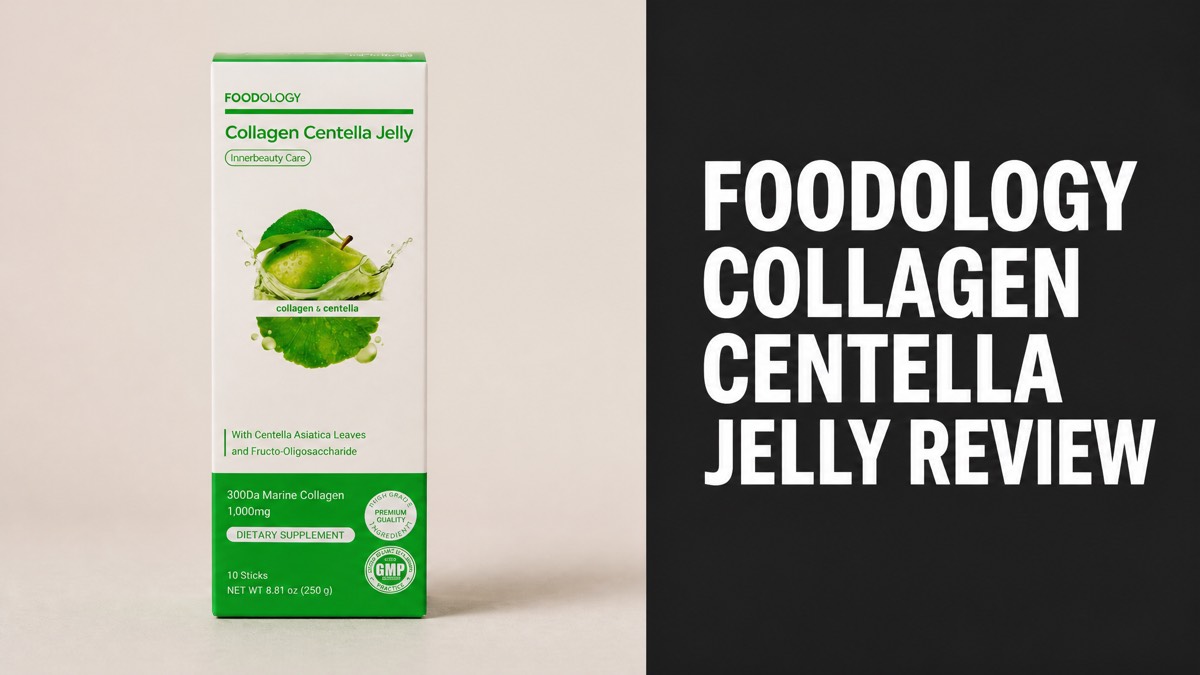
Foodology Collagen Centella Jelly is a Korean green apple jelly stick that packs 1,000 mg of fish collagen and 300 mg of centella extract into one daily serving. A 10-stick box costs about $22 to $25.70 at major US retailers, and each stick needs no water, no mixing and no prep.
The formula adds PDRN, hyaluronic acid, elastin and vitamins to the collagen base. Users praise the sweet green apple taste and the lack of fishy odor. The brand claims its 300 Da peptides absorb far faster than regular collagen. Complaints stay mild and center on price, texture and the lack of proof that skin results arrive.
The skin claims lack trial data, and the formula contains fish, milk and wheat allergens. The review below covers the ingredients, benefits, side effects, pricing and a final verdict. Readers get the facts needed to decide whether one 10-day box deserves a test run before spending more.
What Is Foodology Collagen Centella Jelly?
Foodology Collagen Centella Jelly is a Korean collagen supplement sold as a chewy green apple jelly stick. Each 25 g (0.88 oz) stick packs fish collagen, centella extract and skin vitamins into a tear-and-eat format. A box holds 10 sticks, which covers 10 days at one stick daily.
The jelly belongs to the Coleology range from the Korean wellness brand Foodology. Siblings in the range include a cutting jelly, a bowel movement jelly and an apple cider vinegar jelly. The collagen version targets skin, hair and nails instead of weight or digestion.
The jelly base blends water, coconut water and nata de coco with green apple concentrate. A stick needs no water, no mixing and no prep. So how does anyone eat it? Tear the pouch open and swallow the contents straight.
Who Makes Foodology?
Foodology is a Korean diet and inner beauty brand that sells functional foods in stick formats. The brand states that it has sold more than 44.5 million pouches. Amazon and Olive Young drive most of that global volume.
Foodology also states it won first place at the Olive Young Awards three years in a row, backed by more than 360,000 reviews. The brand rates its own official store at 4.9. Does that settle the question? Not quite, since these figures are brand claims, not independent audits.
Amazon shows a 4.1-star average across more than 1,000 customer ratings for the Foodology brand. Shoppers placed over 50,000 orders for the brand in a three-month window. The order volume signals real demand for the product range.
How Does Foodology Collagen Centella Jelly Work?
The jelly delivers collagen peptides, centella extract and vitamins through one daily stick. Small collagen peptides aim for quick absorption. Centella adds soothing support. Vitamins and hyaluronic acid round out the skin-focused formula.
PDRN, a salmon-derived ingredient popular in Korean skincare, joins the formula for cellular repair. Vitamin A and vitamin E add antioxidant protection. Hyaluronic acid locks in moisture, and elastin extract targets firmness and suppleness.
The jelly format solves a common supplement problem, which is forgetting to take capsules or powders. A dessert-like stick gets eaten because the taste is pleasant. Consistent daily use matters more than any single dose, and the brand frames results as patience, not magic.
What Does 300 Da Collagen Mean?
Da stands for daltons, a unit of molecular weight, and 300 Da marks a very small collagen peptide. Foodology says each particle measures about 1/20,000 the width of a human hair. Whole collagen protein is far larger.
The brand claims absorption up to 200 times higher than regular high-molecular-weight collagen. Is that proven? To be clear, the figure is a marketing claim from the maker, and no independent study backing the number turned up in the available product material.
Each stick carries 1,000 mg of this fish-derived collagen. And the fish source explains why the jelly carries a fish allergen warning. Dose and source both matter when comparing collagen products.
How Do You Take Foodology Collagen Centella Jelly?
The jelly takes one stick per day with no water and no preparation. Tear the pouch open and eat the contents directly. The 25 g stick fits in a bag or desk drawer, so timing stays flexible.
Foodology suggests eating the jelly as is or chilled for a refreshing treat. Freezing turns the stick into an ice dessert without damaging the jelly. A stay in the refrigerator firms the texture compared with room temperature.
A 10-stick box lasts 10 days, so a full month needs three boxes at one stick daily. Brand materials describe the skin results as building with every single bite. So what does one box tell anyone? A single box works as a short trial, not a full course.
What Is in Foodology Collagen Centella Jelly?
Each stick combines 1,000 mg of fish collagen with 300 mg of centella asiatica extract. PDRN, vitamin A, vitamin E, hyaluronic acid and elastin extract complete the active list. Biotin and vitamin C also appear in the ingredient panel.
Key Actives:
- Fish collagen (1,000 mg)
- Centella asiatica extract (300 mg)
- PDRN
- Vitamin A
- Vitamin E
- Hyaluronic acid
- Elastin extract
- Biotin
- Vitamin C
The jelly base starts with water, fructo-oligosaccharides, coconut water and green apple concentrate. Xylitol and enzymatically modified stevia provide sweetness. Locust bean gum, carrageenan and citric acid shape the texture and the tang.
The flavor system includes an artificial green apple flavor next to the real concentrate. Milk concentrate, dried yeasts and salmon roe extract powder also appear. A long run of B vitamins, zinc and iron rounds out the panel.
One listing names the PDRN source as salmon milt extract, while another panel lists salmon roe extract powder. Which one is right? Both point to a salmon-derived ingredient, and the label on the actual box is the final reference.
How Much Centella Is in Each Stick?
Each stick contains 300 mg of centella asiatica, also called gotu kola leaf extract. Foodology says the leaves are freeze-dried to protect their natural nutrients. The panel lists the extract as gotu kola leaf extract powder.
Centella carries the soothing, hydrating and skin-protecting role in the formula. Foodology states that it also promotes optimal collagen absorption. The second role remains a brand claim.
What Are the Benefits of Foodology Collagen Centella Jelly?
Foodology markets the jelly for skin hydration, firmness, hair strength and nail support. The claims trace back to the collagen, centella, hyaluronic acid and elastin in each stick. No benefit is guaranteed, and results vary by person.
Collagen is framed as the support for skin elasticity, firmness and moisture. Hyaluronic acid is framed as the moisture lock. Elastin extract is framed as the suppleness booster. Does that mean the jelly works? Each role is a stated purpose, not a measured outcome.
Biotin sits in the formula for hair and nail support. Vitamin E and vitamin A supply antioxidant protection. Vitamin C also appears on the panel. A single chewy stick delivers all of these nutrients at once.
Main Benefits Claimed:
- Skin hydration
- Skin firmness and elasticity
- Hair strength support
- Nail support
- Antioxidant protection
How Does It Affect Skin Hydration?
Hydration is the headline claim, and it rests on centella, hyaluronic acid and collagen working together. Foodology describes centella as hydrating and soothing, and hyaluronic acid as the moisture lock. Water is also the first ingredient in the jelly base.
Here's the thing: fans of the jelly link it to a glowy, hydrated look. These accounts are personal impressions, not measured results. A glow from a snack-like stick is easy to enjoy but hard to verify.
A 10-day box gives a short window to judge. Why does that matter? Brand commentary stresses patient, daily use rather than a quick transformation. No clinical trial data accompanies the product material.
What Do Foodology Collagen Centella Jelly Reviews Say?
Customer feedback leans positive, with taste and convenience earning the most praise. Ratings across major retailers land between 4.1 and 4.9 stars, though some come from small samples. Few ratings come with detailed written notes.
The bad news? Hard evidence on results is thin. Most feedback covers taste, texture and convenience rather than measured skin changes. In plain English: that pattern fits a supplement where skin outcomes build slowly and are hard to self-assess.
What Do Users Like?
Users like the green apple taste, the easy tear-and-eat format and the absence of fishy odor. The flavor lands as sweet, tangy and refreshing. One description calls it candy-like while still delivering collagen and centella.
And convenience ranks next. No water, mixing or prep is needed, and a stick travels easily. Collagen is hard to take consistently, and a jelly removes that friction.
What's more, chilling or lightly freezing the stick earns praise for texture. A frozen stick eats like an ice dessert. Fans often repeat the habit after the first box.
What Are the Common Complaints?
Complaints are sparse and mostly practical, centered on price, texture and unproven results. No serious safety complaint appears in the available material. To put it simply, the drawbacks read as trade-offs, not red flags.
Cost per stick sits between about $2.20 and $2.57 at US retailers. A month of daily use needs three boxes. Why does that sting? The recurring spend is the main drawback for a supplement with brand-claimed results.
Texture shifts with temperature. A stay in the refrigerator makes the jelly firmer, and not every fan wants that. The formula also lists an artificial green apple flavor and several sweeteners, which suit some palates better than others.
Foodology Collagen Centella Jelly vs Other Collagen Jellies?
Foodology's jelly competes with Korean stick jellies such as Mizon Innersbit Collagen Jelly 3300 and Kwangdong Vita500 Marine Collagen Stick Jelly. Retail listings group all three as similar collagen jelly products. Foodology offers 10 sticks per box, versus 14 for Mizon and 15 for Vita500.
Sticks Per Box:
| Product | Sticks |
|---|---|
| Foodology Collagen Centella Jelly | 10 |
| Mizon Innersbit Collagen Jelly 3300 | 14 |
| Kwangdong Vita500 Marine Collagen Stick Jelly | 15 |
Inside the brand, the Collagen Centella Jelly differs from siblings by purpose. The cutting jelly targets weight management with chia seeds and garcinia cambogia. The collagen version targets skin, hair and nails.
How Does It Compare With Mizon and Vita500?
On paper, stick count favors the rivals. Mizon packs 14 sticks and Vita500 packs 15, while Foodology packs 10. A fair comparison needs per-stick price, and the research did not capture that figure for the rivals.
Foodology's distinct pairing is 300 Da fish collagen with 300 mg of centella and PDRN. The rivals were not compared on formula depth here because their ingredient panels fell outside the research. Anyone choosing between them should compare labels side by side.
What Are the Side Effects of Foodology Collagen Centella Jelly?
No side effects are listed in the product material, but the formula contains several allergens. The jelly contains fish, milk and wheat, and one listing adds crustacean shellfish. Sensitive people need to read the label first.
Allergens Listed:
- Fish
- Milk
- Wheat
- Crustacean shellfish (one listing)
The listing carries a California Proposition 65 warning. The warning names lead and cadmium as chemicals known to the state to cause cancer and birth defects. The warning says consuming the product can expose people to them.
The jelly also contains fructo-oligosaccharides and xylitol, a fiber and a sugar alcohol. Why does that matter? Some people find such ingredients hard on digestion. One stick daily is the stated serving.
Who Should Avoid It?
Anyone with a fish, milk or wheat allergy needs a different product. Shellfish allergy matters too because one listing flags crustacean shellfish. Fish collagen and salmon-derived PDRN both rule the jelly out for strict fish-free diets.
At the same time, vegans and vegetarians fall outside the audience. The formula uses animal-derived collagen, elastin, milk concentrate and salmon extract. A person with a medical condition or on medication needs a clinician's input before starting any new supplement.
How Much Does Foodology Collagen Centella Jelly Cost?
A 10-stick box costs roughly $22 to $25.70 at major US retailers. Sentisenti lists $22.00, Nordstrom lists $24.00 and Walmart lists $25.70. The box price works out to about $2.20 to $2.57 per stick.
Price Per Box:
| Seller | Box Price | Per Stick |
|---|---|---|
| Sentisenti | $22.00 | $2.20 |
| Nordstrom | $24.00 | $2.40 |
| Walmart | $25.70 | $2.57 |
Sale pricing swings widely. How widely? One K-beauty retailer listed the box at $43.00 and then at $15.00 during a 65% promotion before the sale ended. Waiting for a promotion can cut the per-stick cost sharply.
A full month at one stick daily needs three boxes, or about $66 to $77. The recurring cost frames the buying decision more than a single box does.
Where to Buy Foodology Collagen Centella Jelly?
The jelly sells through Amazon, Walmart, Nordstrom and several Korean beauty stores. Wooltari, Sentisenti and StyleKorean all list the 10-stick box. An eBay listing also exists.
Where It Sells:
- Amazon
- Walmart
- Nordstrom
- Wooltari
- Sentisenti
- StyleKorean
- eBay
But packaging differs by seller. Sentisenti notes that the Korean and translated packaging hold the exact same formula. A StyleKorean listing showed a 2027 expiration date with no exchange or refund, so the date deserves a check.
Shipping thresholds vary by store. For example, Wooltari offers free ground shipping over $99, and Sentisenti offers free US shipping over $65. One box rarely reaches either threshold alone.
Is Foodology Collagen Centella Jelly Worth It?
Yes. The jelly is worth trying as a pleasant daily habit at a modest price, but not as a proven skin treatment. The taste is good, the format needs no prep and the formula looks solid on paper. The skin claims, though, remain brand statements without trial data.
Strengths include the green apple taste, no fishy aftertaste, tear-and-eat convenience, 1,000 mg of collagen and 300 mg of centella. Weaknesses include the recurring cost, the allergens and the unverified results.
Pros:
- Green apple taste
- No fishy aftertaste
- Tear-and-eat convenience
- 1,000 mg of collagen
- 300 mg of centella
Cons:
- Recurring cost
- Allergens
- Unverified results
Bottom line: a single 10-day box is the sensible test. Skin, hair and nails change slowly, so ten days has limits as a verdict. Anyone with fish, milk or wheat allergies needs to pass.
Who Is It Best For?
The jelly suits people who dislike capsules and powders and want a tasty skincare supplement. The green apple flavor and stick format reduce the friction of daily use. A busy routine benefits from the no-water design.
The jelly suits poorly for buyers on a tight budget, buyers avoiding animal ingredients and buyers who need proof of results. Cost, allergens and brand-only claims are the decision points. Those buyers need to weigh the three trade-offs before ordering.
Coffee Loving Card Makers is a reader-supported platform. Purchases made through our links may earn us an affiliate commission at no extra cost to you. Learn more.