
DuoDERM Patch Review: Is This Hydrocolloid Dressing Worth It?
 By Anna Krause November 11, 2026
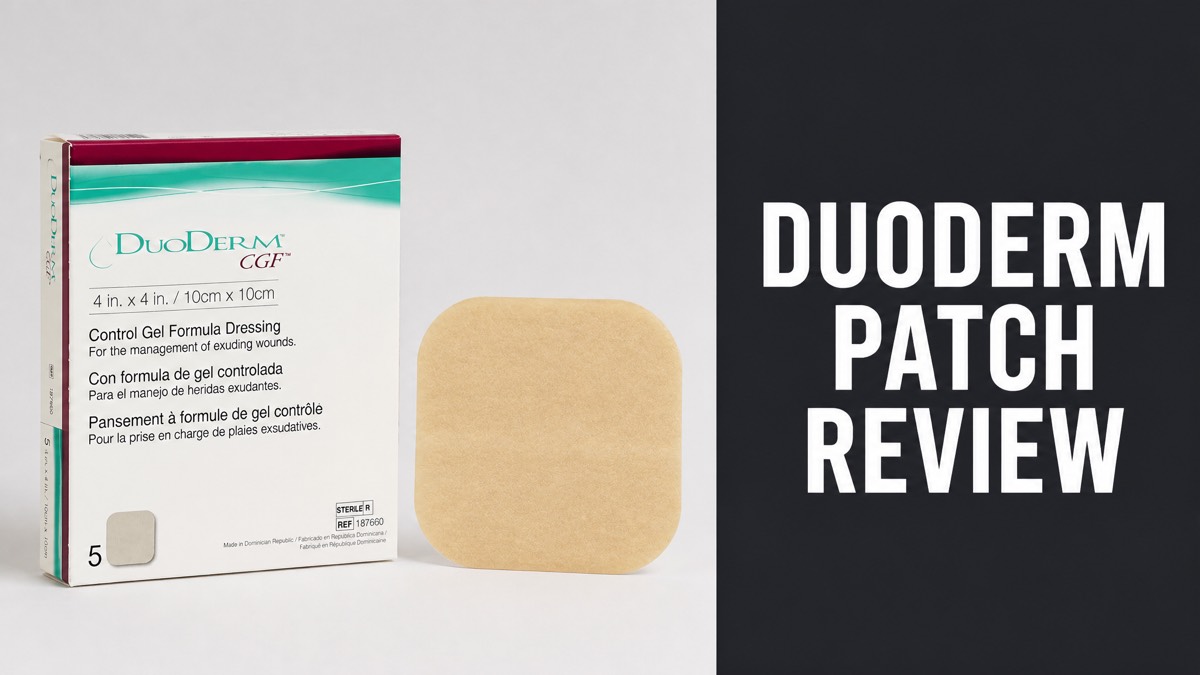
The DuoDERM patch is a hydrocolloid wound dressing from ConvaTec. It covers burns, scrapes and popped pimples. People buy it for wound care and for skin care.
This review covers what the dressing contains and how it works. It also covers how long to wear it, what buyers praise and what they complain about. The 4.6 star score is strong, but edges and heavy drainage cause trouble.
Price, side effects and the best places to buy follow next. By the end, the answer is clear on who should use DuoDERM and who should pick something else.
What Is a DuoDERM Patch?
A DuoDERM patch is a hydrocolloid wound dressing made by ConvaTec. The brand was the first to build dressings around hydrocolloid technology. People also use the name for any thick hydrocolloid sheet, including the ones they cut into pimple covers.
The CGF line (Control Gel Formula) is the standard sterile version. A popular box holds five 4x4 inch (10 x 10 cm) dressings for partial and full thickness wounds. The dressing handles wounds that leak light to moderate fluid.
The Extra Thin line works differently. The thin version is slimmer and more flexible. ConvaTec positions it as a primary or secondary dressing, so it also sits over another dressing.
What Is in a DuoDERM Patch?
The dressing combines pectin, gelatin and sodium carboxymethylcellulose with adhesive polymers. A polyurethane film forms the outer layer. The gel-forming trio does the real work against fluid.
The film outside makes the dressing waterproof. The listing also calls it latex-free. Latex-free status matters for anyone who reacts to latex in standard adhesive bandages.
Wondering whether that short ingredient list means a simple product? It does. Hydrocolloid is a material, not a medicine. Does that mean a drug sits inside? No. No active drug sits inside the patch.
How Does DuoDERM Work?
DuoDERM forms a soft gel when it touches a moist wound surface. The gel keeps the wound damp. A damp wound is the goal, because moist healing improves the healing rate and supports new skin growth.
The dressing blocks water vapor, oxygen and bacteria. So what happens to the wound fluid? The same barrier traps it under the patch, and outside germs stay out.
Here is the clever part. The dressing grips wet skin around a wound, which is called wet tact. The dressing does not stick to the wound bed itself, so removal does not tear the new tissue underneath.
How Do You Apply DuoDERM?
Application starts with a clean wound and dry surrounding skin. Rinse with saline. Pick a size that extends about 3 cm (1.2 inches) past every edge of the wound.
Peel the backing, roll the dressing over the wound and mold it into place. Hold a hand on top for a few minutes. Body warmth helps the adhesive grab.
Removal needs care too. Press down on the skin, lift one corner and stretch each edge until it frees itself. Pulling straight up risks a skin tear. The fix is simple: stretch the edge sideways.
Steps:
- Rinse the wound with saline and dry the skin around it.
- Choose a dressing that extends 3 cm (1.2 inches) past the wound edges.
- Peel the backing and roll the dressing over the wound.
- Mold the dressing and hold a hand on it for a few minutes.
How Long Can You Leave DuoDERM On?
Under normal conditions DuoDERM stays on for three to four days. The CGF version lasts up to seven days. Wound fluid decides the schedule, so a leaking edge means a fresh dressing.
Dermatology after-care sheets often ask for a change every two to three days. Burn blisters sit in the three to seven day range. Longer than seven days is never advised.
Wear Time Guide:
| Use | Typical wear |
|---|---|
| Normal wound | 3-4 days |
| Post-surgery care | 2-3 days |
| Burn blister | 3-7 days |
| Maximum | 7 days |
What Are the Benefits of DuoDERM?
DuoDERM protects a wound while keeping it moist, which is the main healing benefit. The moist setting improves healing speed, supports collagen growth and lowers infection risk. ConvaTec states these gains directly.
Comfort is the second win. And it counts. The dressing molds to awkward body parts and comes off without ripping the wound. Thin versions are waterproof enough for limited bathing.
The benefits stack up like this:
- Moist healing environment
- Gentle removal without tearing new tissue
- Waterproof outer film
- Several days of wear per dressing
- Flexible fit on joints and curved areas
Does DuoDERM Help Wounds Heal?
Yes. DuoDERM promotes granulation and helps the body clear dead tissue on its own. ConvaTec also says the Extra Thin version heals faster than plain gauze. Gauze dries out and sticks. Why does that hurt healing? It is the opposite of the moist method.
Which wounds respond best? Light to medium leaking wounds do. Burns, scrapes, skin abrasions and early pressure sores all fit that profile.
Does DuoDERM Work on Pimples?
Yes, with limits. DuoDERM uses the same hydrocolloid as pimple patches. The sheet works best on pimples that already show a white head or that were popped. The patch draws out fluid and pus.
Deep cystic pimples are a different story. Can any sticker stop one from forming? No. The sheet also runs thicker than a pimple patch, so it shows on the face.
What Do DuoDERM Reviews Say?
Buyers rate DuoDERM CGF 4x4 at 4.6 out of 5 across 3,130 ratings. The Extra Thin line holds the same 4.6 across 1,434 ratings. A score that high is rare for a medical dressing.
The CGF box ranks number 35 in First Aid Bandaging Pads. The box also sold 200+ units in a single week on Amazon. Demand is steady, not a fad.
What Do Buyers Like?
Buyers praise how well it works on burns and how easy it is to apply. The dressings adhere easily. They do not stick to the wound when removed. One buyer described the skin as beautiful after the dressing came off.
Comfort gets mentioned often. Thin versions give good coverage without bulk. They stay flexible against the skin and suit a first aid cabinet.
A dressing that stays put for days saves time. Why do buyers mention that so often? Few changes are needed. Convenience shows up in the praise again and again.
What Are the Common Complaints?
The top complaint is edges that roll up or peel on the Extra Thin version. A rolled edge exposes part of the wound. A border version grips better, though it brings a higher skin tear risk on removal.
The backing is the next gripe. Why does it matter? One buyer asked for the trick to getting it off. Size confusion also appears, so check the dimensions before ordering.
Face use gets mixed marks. The sheet is thick and very visible there. Sticking power is weaker on mobile skin around the mouth and chin.
DuoDERM vs Acne Patches and Foam Dressings?
DuoDERM and acne patches are the same hydrocolloid sold in two formats. Acne patches come in small dots built for a single pimple. DuoDERM arrives as a larger sheet that covers wounds.
Foam, alginate and hydrofiber dressings are different. They suit wounds with large drainage. Hydrocolloid absorbs only to a point, so heavy fluid overwhelms it.
Here is how the options line up:
| Option | Best for | Weak spot |
|---|---|---|
| DuoDERM CGF | Light to medium leaking wounds | Heavy drainage |
| DuoDERM Extra Thin | Flexible spots, secondary layer | Edges peel |
| Acne patches | Single pimples | Small wounds only |
| Foam or hydrofiber | Heavy drainage | Bulkier, pricier |
Is DuoDERM Better Than Cosrx Patches?
No, not for the face. DuoDERM is thicker than Cosrx patches and shows clearly on the skin. The sticking power is lower. Cosrx patches are built to blend in and stay put on a pimple.
The sheet wins on flexibility. A single sheet can be cut into many pieces. Skin pickers who want an overnight cover on a popped spot find the value attractive.
What Are the Side Effects of DuoDERM?
DuoDERM usually causes only minor, harmless changes under the dressing. An odor appears after several days. The smell is normal, and it fades after cleansing.
Yellow fluid may leak around the edges. The yellow fluid is dressing gel, not pus. Wrinkling also happens now and then. A wrinkled dressing needs replacing.
A rash around the edges is rare. Doctors note it mainly on very young children. A rash that shows up calls for a return to the clinic.
Who Should Avoid DuoDERM?
People with infected wounds need to skip DuoDERM entirely. A sealed, moist environment feeds infection. Redness that spreads, pus, heat and fever all mean the dressing comes off.
Wounds that need frequent checking are a poor fit, because the dressing hides the wound. Why does that matter? Heavy drainage and very deep wounds are poor fits too. Dressing residue stays behind in deep wounds.
The warning signs to watch:
- Spreading redness or swelling
- Pus or a foul smell that does not clear on cleansing
- Heat around the wound
- Fever or worsening pain
How Much Does DuoDERM Cost?
DuoDERM sells by the box, and the price depends on size and seller. The popular CGF 4x4 box holds five dressings. Amazon lists a per-count price next to the box price. Local prices differ, so compare before buying.
Health spending accounts cover it. Amazon marks these dressings as eligible for HSA and FSA cards. Eligibility cuts the real cost for anyone with a medical account.
Is DuoDERM Worth the Price?
Yes, for real wounds. A single dressing stays on for days, which spreads the cost over several days of wear. Gauze needs far more changes. Why does that matter? Fewer changes also mean less pain.
For pimples alone the math is weaker. A pimple patch costs less per spot. Only use DuoDERM there if a box is already in the cabinet.
Where to Buy DuoDERM?
DuoDERM is sold on Amazon, at Walmart, through medical suppliers and at most drugstores. Mountainside Medical stocks the CGF 4x4 box. A dermatology office advises that any drugstore carries it.
Check the size first. Sold sizes include 4x4 inch boxes, 10 cm squares and triangles. One Walmart buyer warned to read the dimensions before ordering.
Is DuoDERM Worth It?
Yes, for the right wound. DuoDERM delivers a 4.6 rating, gentle removal and up to seven days of wear. Those are strong marks for a medical dressing.
The weak points are narrow. Edges peel on the thin version. Infected and heavily draining wounds need something else.
Short answer: keep a box for burns, scrapes and popped pimples, and skip it for anything infected.
Who Is DuoDERM Best For?
DuoDERM fits people with minor burns, abrasions, post-surgery wounds and popped pimples. These wounds leak lightly, and they heal best under a moist cover.
It fits poorly with early, closed pimples, cystic acne and infected wounds. Those cases need a different tool or a clinician.
Coffee Loving Card Makers is a reader-supported platform. Purchases made through our links may earn us an affiliate commission at no extra cost to you. Learn more.