
Daytrana Patch Review: Does This ADHD Patch Work?
 By Anna Krause November 5, 2026
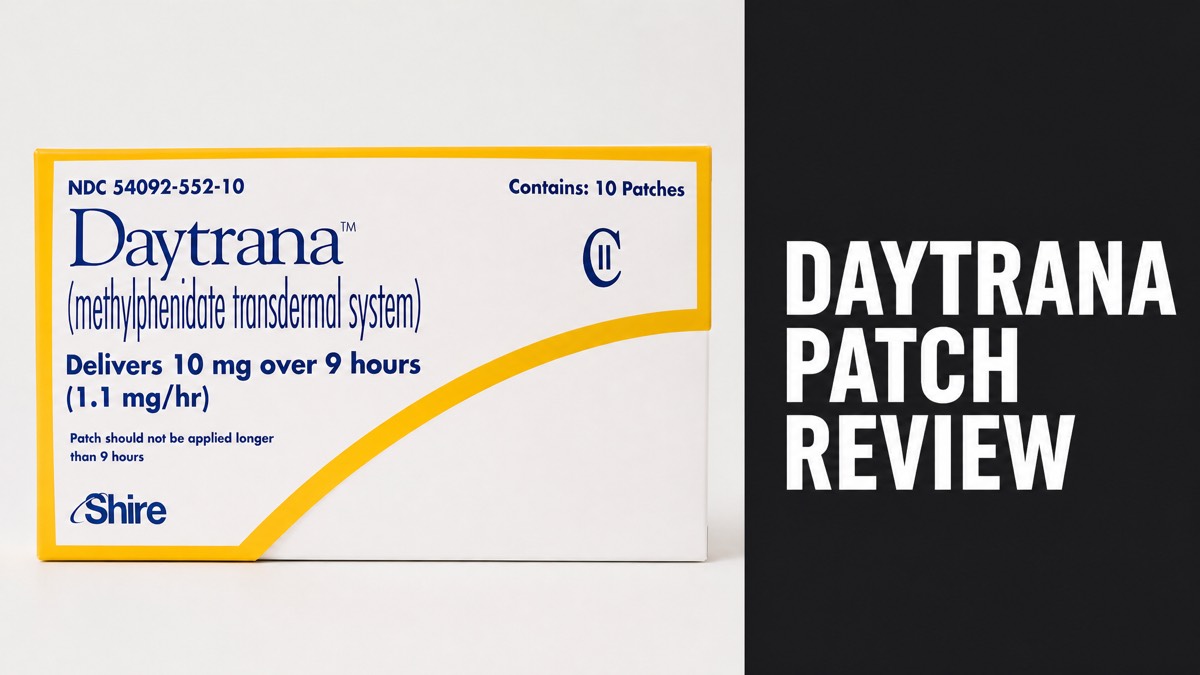
Daytrana is a prescription methylphenidate patch for ADHD in children and teens aged 6 to 17. It has been on the market since 2006. Parents search for it when pills fail or kids refuse them.
This review covers how the patch works, how to apply it and what each dose does. It also covers what users like and hate. Side effects, skin color warnings, cost, the generic version and supply problems all get a straight look.
The short version is that Daytrana works well for many users and brings real trade-offs. Read on to see who benefits most and who should look at other options.
What Is Daytrana Patch?
Daytrana is a stimulant patch that treats ADHD. It contains methylphenidate, the same drug found in Ritalin, Concerta and Focalin. The FDA first approved it in 2006.
The patch sticks to the hip. The medicine passes through the skin into the blood. Stimulants act on the parts of the brain that control attention, hyperactivity and impulses.
Daytrana is a Schedule II controlled substance. That label means a high potential for abuse and dependence. A doctor must prescribe it, and a pharmacy must dispense it.
Who Is Daytrana For?
Daytrana is approved for children and teens aged 6 to 17 with ADHD. Doctors often consider it for kids who refuse pills or cannot swallow them. The patch skips the struggle of crushing tablets into food.
The patch may also suit people who want fewer stomach complaints. Skin delivery avoids the digestive system. Does that make it gentler on a child's stomach? That is the claim, and it matches the way the drug is absorbed.
Large studies in adults do not exist. Even so, adults use it, and the patch should work for them too. A doctor decides whether an adult trial makes sense.
How Does Daytrana Work?
Daytrana moves methylphenidate through the skin and into the bloodstream. Pills release their medicine in the gut first. The patch skips that route. Each part of the patch holds the same amount of drug.
Methylphenidate blocks the reuptake of dopamine and norepinephrine. More of these chemicals stay active in the brain. That boost helps with focus and impulse control.
The patch takes up to two hours to start working. Why plan ahead? Effects fade only one to three hours after removal, so timing the application matters. It stays on for up to nine hours.
How Do You Apply Daytrana?
Apply the patch to a clean, dry area of the hip about two hours before the medicine is needed. Skip the waistline, because clothing rubs the patch loose. Use a fresh patch each day.
Application Steps:
- Pick a clean, dry spot on the hip, away from the waistline.
- Remove the liner and press the patch on firmly for 30 seconds.
- Confirm that every edge sticks to the skin.
- Remove the patch after no more than nine hours.
- Fold the used patch in half and discard it safely.
Press the patch firmly with a hand for 30 seconds. Why so long? All edges must stick, because the full surface needs skin contact for the right dose to pass through. Children should not pick at it during the day.
Switch hips each day to limit irritation. Never use tape or bandages to hold a loose patch. Heat sources like heating pads, electric blankets and hair dryers also stay away from the patch.
Disposal matters as much as application. Fold the used patch in half so it sticks to itself. Then throw it away where small children cannot reach it.
What Doses Does Daytrana Come In?
Daytrana comes in 10, 15, 20 and 30 mg patches. Doctors usually start children on the 10 mg patch. The box states that the 10 mg patch delivers its dose over nine hours.
Available Strengths:
| Strength | Role |
|---|---|
| 10 mg | Usual starting dose |
| 15 mg | First step up |
| 20 mg | Mid-range step |
| 30 mg | Highest strength |
If the starting dose falls short, the doctor raises it step by step, about once a week. Wear time also shapes the dose. A shorter wear time gives a smaller total dose. Parents should never change either without medical advice.
Does Daytrana Actually Work?
Yes. Most users report that Daytrana works. Across 76 ratings the average sits at 8.2 out of 10, and 78% describe a positive effect. Another set of 175 reviews gives 3.9 out of 5, with 83% positive.
Those are strong numbers for an ADHD drug. Why do so many users like it? Control is the main answer. A user can remove the patch early when side effects appear or when focus is no longer needed.
One teen reports that the patch carried them through college-level courses. Another adult reports no evening crash after switching from an oral extended-release tablet. Individual results still vary.
Does Daytrana Beat Oral Methylphenidate?
No. Daytrana does not clearly beat oral methylphenidate, but it fits some people better. Oral methylphenidate averages 7.2 out of 10 across 1,131 ratings, with 61% positive. Daytrana scores higher, though from far fewer ratings.
Daytrana vs Oral Methylphenidate:
| Factor | Daytrana | Oral Methylphenidate |
|---|---|---|
| Average rating | 8.2 out of 10 | 7.2 out of 10 |
| Positive reports | 78% | 61% |
| Negative reports | 9% | 17% |
| Number of ratings | 76 | 1,131 |
The patch trades one set of problems for another. It may cause fewer stomach complaints. But it may cause skin irritation, rash and discoloration. Effects also arrive more slowly than with a tablet.
The drug itself is the same. Both forms are CNS stimulants with the same warnings. So the real choice is about delivery, not about a different medicine.
What Do Daytrana Reviews Say?
Daytrana reviews lean positive, with a clear split in the complaints. Fans praise the focus and the on-off control. Critics focus on patches that fall off, skin problems and the price.
Do high ratings mean no problems? No. Most users who rate it well still mention a downside. Appetite loss, sleep trouble and skin marks come up often, even in happy reviews.
What Do Users Like?
Users like the control, the smooth finish and the lack of pills. One adult stopped getting evening crashes after the switch. A parent says the patch did not hurt a nine-year-old's weight the way other drugs did.
Removal is a favorite feature. A teen takes the patch off before football games and social events. Others wear half a patch or remove it after a couple of hours when appetite drops.
Parents share a practical trick. Keep the patches in the refrigerator. The liner comes off much more easily when the patch is cold.
What Do Users Complain About?
The top complaint is adhesion. Some users find the patches barely sticky and say they fall off easily. Why does that matter? A patch that will not stay on delivers no medicine.
Most Common Complaints:
- Patches that peel off early
- Sticky residue after removal
- Itching and red skin
- Appetite loss and weight drop
- Trouble falling asleep
- High cost even with insurance
Residue is the next gripe. One long-term user calls it patch scum. The sticky mark stays on the skin and is hard to scrub off. Red squares of irritated skin also linger for days.
A few reports are serious. One parent describes tics and hallucinations in an 11-year-old after two months. Others report poor sleep, a low mood when the dose wears off, and heavy weight loss.
Cost also draws anger. One family still pays over $300 a month with insurance. Showers and swimming can loosen the patch, which frustrates active kids.
What Are Daytrana Side Effects?
Loss of appetite is the most reported side effect, followed by skin reactions. Among user-reported effects, appetite loss reaches 18.4%, itching 13.2%, redness 11.8% and insomnia 7.9%. Anger hits 6.6%.
Reported Side Effects:
| Side Effect | Share of Users |
|---|---|
| Loss of appetite | 18.4% |
| Itching | 13.2% |
| Redness | 11.8% |
| Insomnia | 7.9% |
| Anger | 6.6% |
| Brain fog | 3.9% |
| Irritability | 3.9% |
Serious effects are less common. They include slowed growth in children, blurred vision, high blood pressure, circulation problems and seizures. Painful or prolonged erections can also occur.
The drug can trigger mania, psychosis and aggression. Report any such change to the doctor right away. The FDA takes side effect reports at 1-800-FDA-1088.
Can Daytrana Cause Skin Color Loss?
Yes. Daytrana can cause permanent loss of skin color. The condition is called chemical leukoderma. The FDA added this warning to the drug label in 2015.
Mild redness at the patch site is normal. Check the skin each day and rotate the spot. Do not place the patch on cut or irritated skin, because that can raise the amount of drug absorbed.
Swelling, itching, severe redness or small bumps point to contact dermatitis. If it does not improve within 48 hours or spreads beyond the patch site, stop the patch. Then see a dermatologist.
Who Should Avoid Daytrana?
People with severe anxiety, Tourette's syndrome or glaucoma should avoid Daytrana. So should anyone allergic to the drug. Anyone who took an MAO inhibitor in the past two weeks must skip it too, because the interaction is dangerous.
Warning Signs to Discuss With a Doctor:
- Severe anxiety
- Tourette's syndrome
- Glaucoma
- MAO inhibitor use in the past two weeks
- Heart or circulation problems
- Seizures
- History of vitiligo
- Past substance use
Daytrana is habit-forming. Is that a deal-breaker? Not for every family, but a history of substance use in the patient or the family calls for a frank talk with the doctor first. Tolerance can build over time.
Heart problems, circulation problems, seizures, skin conditions and vitiligo also need a doctor's review. Hundreds of drugs interact with it. No human pregnancy studies exist, so pregnant or nursing mothers must ask first.
How Much Does Daytrana Cost?
Daytrana costs about $184 for 30 patches of the 10 mg strength without insurance. That works out to roughly $6.14 per patch. A box of 30 patches at 30 mg runs closer to $320.
Insurance does not always fix the bill. One parent still pays over $300 a month. Another needed a letter from the doctor before the insurer agreed to cover it.
Is There a Generic Daytrana?
Yes. A generic methylphenidate patch exists. Mylan, now part of Viatris, launched it in June 2022. It can cost less than the brand version.
Coupons and patient assistance programs can trim the price further. Ask the pharmacist to check both. Does a generic work the same way? It carries the same drug in the same patch format.
Where Can You Get Daytrana?
Daytrana is available by prescription only, through a pharmacy. No over-the-counter version exists. Federal rules for Schedule II drugs apply, so a doctor must write the prescription.
The maker runs a pharmacy locator service at 1-800-420-2719. It can point to a pharmacy that has stock. If that fails, the prescriber can help find another source.
Why Is Daytrana Hard to Find?
Recalls and shortages have made Daytrana hard to find. The maker recalled hundreds of thousands of patches. What went wrong? The protective liner had problems, and patients struggled to open the packaging.
Spot shortages at retail pharmacies followed. Call ahead before a refill runs out. One teen user coped by wearing several smaller patches in place of one large patch, though a doctor should approve any such swap.
Is Daytrana Worth It?
Yes, for the right patient, Daytrana is worth it. It offers flexible wear time, no pills and strong user ratings. The downsides are skin irritation, adhesion trouble, high cost and patchy supply.
Pros and Cons:
| Pros | Cons |
|---|---|
| Remove it early to end the effect | Skin redness, itching and rash |
| No pills to swallow | Patches can fall off |
| Fewer evening crashes for some users | High price without a generic |
| Strong user ratings | Recalls and shortages |
The decision comes down to a few trade-offs. Does the family value control over convenience? If so, the patch delivers. If skin sensitivity or budget is the main worry, an oral option may fit better.
Who Is Daytrana Best For?
Daytrana suits children and teens who will not take pills and need flexible coverage. It also helps people who had stomach problems or crashes on oral drugs. Users who tried several pills first often rate it best.
It suits poorly for people with very sensitive skin, for frequent swimmers and for tight budgets. Those groups face the most patch problems. Talk to the prescriber, weigh the trade-offs and decide together.
Coffee Loving Card Makers is a reader-supported platform. Purchases made through our links may earn us an affiliate commission at no extra cost to you. Learn more.