
Collagum Review: Is This Brush-In Collagen Powder Worth It?
 By Anna Krause September 27, 2026
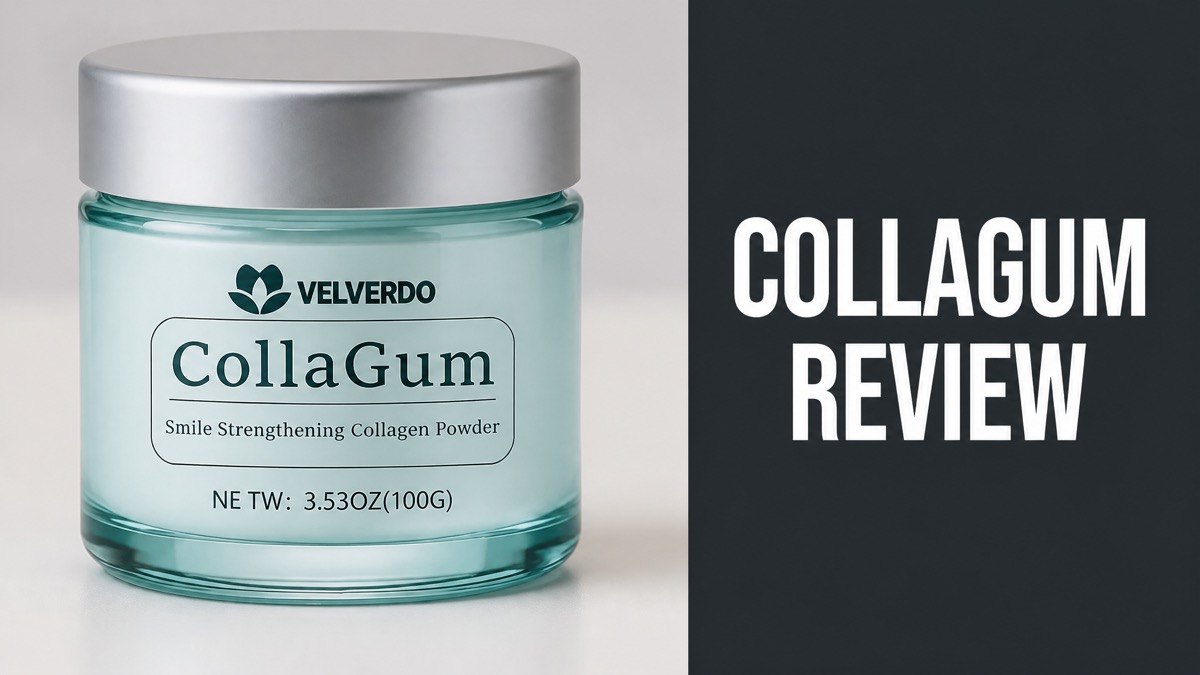
Collagum is a brush-on collagen powder marketed under the Velverdo brand as a daily treatment for stronger, healthier gums. Instead of swapping toothpaste, buyers brush a small amount of powder along the gumline as a twenty-second daily add-on.
The formula mixes collagen peptides, nano-hydroxyapatite, and mild abrasives like calcium carbonate and sodium bicarbonate, skipping fluoride entirely. The brand claims dramatic results, including '25,000+ healthier smiles,' but those figures come from an on-site poll with no independent audit. The same product concept also appears to circulate under more than one storefront name at wildly different prices.
This review breaks down what Collagum's ingredients can realistically do, whether the sensitivity and gum-strength claims hold up, how the price compares to proven fluoride and hydroxyapatite alternatives, and whether it is worth adding to a daily routine.
What Is Collagum?
Collagum is a brush-on collagen powder marketed as a 'Smile Strengthening' treatment for gums. The brand, sold under the name Velverdo, positions the jar of powder as a daily gum-care step rather than a whitening product. The pitch centers on stronger gums, less sensitivity, and a fuller-looking gumline.
The product page frames gum tenderness and recession as problems this powder can reverse. Real gum issues usually trace back to plaque, brushing habits, grinding, hormones, smoking, or periodontal disease. A powder brushed onto the gums supports a routine. It does not replace a dental diagnosis when a real problem exists.
Who Sells Collagum?
Velverdo runs the storefront and controls the marketing around Collagum. The checkout experience leans on steep bundle discounts and countdown-style urgency, a layout common across direct-response ecommerce funnels rather than established oral-care brands.
That structure alone does not prove wrongdoing. It does signal a high-conversion sales operation built for fast checkout, not a company with years of clinical credibility behind it.
How Does Collagum Work?
Collagum works by having the user brush a small amount of powder directly onto the gumline instead of, or alongside, regular toothpaste. The formula combines mild abrasives with collagen peptides and mineral compounds meant to sit against the gum tissue during brushing.
The mechanism relies on surface contact rather than absorption into deeper tissue. Collagen molecules in a topical powder do not integrate into gum structure the way collagen produced inside the body does. The powder can still soothe the surface and buffer mild irritation during brushing.
What Is the 20-Second Routine?
The brand advertises a '20-second ritual' where the user brushes the powder along the gumline once daily. The short time commitment is central to the pitch, positioning Collagum as an easy add-on rather than a full oral-care overhaul.
Twenty seconds of gentle brushing along already-inflamed gums will not reverse periodontal damage. It can help distribute the powder's ingredients across the surface the user is trying to target.
What Ingredients Are In Collagum?
Collagum's label lists Type I bovine collagen peptides, nano-hydroxyapatite, xylitol, calcium carbonate, magnesium and zinc compounds, vitamin C, aloe vera, and sodium bicarbonate. Each ingredient has some precedent in oral care, though the combination is framed as a repair formula rather than a simple cleaning powder.
Sodium bicarbonate and calcium carbonate act as mild abrasives, similar to baking-soda toothpaste. Xylitol reduces the sugars that feed bacteria. Aloe vera and vitamin C appear as soothing and antioxidant additions rather than active gum-repair agents.
Marketing frames this ingredient list as proof of a repair product. A gentle tooth powder supporting a healthy routine is a reasonable claim. Rebuilding gum tissue and visibly restoring a gumline is a much higher bar than this ingredient combination can clear.
What Does Nano-Hydroxyapatite Do?
Nano-hydroxyapatite mimics the mineral structure of tooth enamel and can help remineralize small surface areas of enamel. Enamel and gum tissue are different structures. A mineral that supports enamel does not automatically repair soft gum tissue.
The ingredient carries genuine research behind it for enamel sensitivity. Extending that research to gum-strengthening claims stretches the evidence further than the studies actually support.
Is Collagum Fluoride-Free?
Yes. Collagum's formula skips fluoride entirely, a point the brand markets as a benefit. Fluoride remains the most studied and most effective ingredient for preventing cavities and strengthening enamel against decay.
Removing fluoride is not automatically healthier. It is a preference some buyers hold, often for reasons unrelated to proven efficacy. A fluoride-free formula still needs another proven active ingredient to match fluoride's track record, and Collagum's ingredient list does not clearly provide one.
What Are the Benefits of Collagum?
Collagum's claimed benefits include stronger gums, reduced sensitivity, a fuller-looking gumline, and fresher breath from daily use. The brand supports these claims with a poll-based statistic citing '25,000+ healthier smiles' and high percentages of users reporting improvement within weeks.
Poll-based statistics displayed on a brand's own storefront carry no independent verification. Real-world gum sensitivity varies widely across age, diet, and brushing habits, so uniform results across a large user base are unlikely regardless of the product used.
The gap between a large claimed user base and a small visible review count on the page itself is worth noticing before treating these numbers as settled fact.
Does Collagum Strengthen Gums?
No. Direct evidence for tissue-level gum strengthening from a topical powder is thin. The formula can support a cleaner, gentler brushing habit, and a gentler habit sometimes reduces irritation that gets mistaken for weakness.
Genuine gum strength depends on plaque control, consistent flossing, and treating any underlying periodontal issue. A powder brushed on for twenty seconds a day is not positioned to replace those fundamentals.
Does Collagum Reduce Sensitivity?
Some ingredients in the formula, including nano-hydroxyapatite and aloe vera, have plausible soothing effects on sensitive gums and exposed dentin. A gentler brushing habit paired with a mild powder can reduce the irritation some users experience from harsher toothpaste.
The dramatic sensitivity-reversal claims on the product page outrun what a soothing topical powder can reasonably deliver on its own.
What Do Collagum Reviews Say?
Collagum reviews split sharply between the brand's own glowing testimonials and independent coverage questioning the product's evidence and marketing tactics. On-site testimonials describe smoother gums and fresher breath. Independent write-ups focus more on the funnel structure than the ingredient science.
Video reviewers covering the product spend more time dissecting the sales page's claims than confirming dramatic before-and-after transformations. That pattern is common for products with heavy direct-response marketing and light third-party testing.
Positive Experiences
Positive Experiences:
- Smoother-feeling gums after regular brushing
- Fresher breath noted by some users
- A pleasant, mild taste compared to strong-mint toothpaste
Common Complaints
Common Complaints:
- Results falling short of the dramatic gumline changes shown in marketing
- Difficulty finding independent reviews outside the brand's own site
- Confusion over the product being sold under more than one brand name
Is Collagum a Scam?
No. Collagum is not a fabricated product, but its marketing overstates what a topical powder can realistically achieve. The ingredients are real and have some precedent in oral care. The framing around gum repair and dramatic transformation photos exceeds what those ingredients are shown to do.
The same product concept appears available wholesale under private-label pricing far below the retail bundle price charged on the branded storefront. That pattern points to a marked-up private-label product rather than a fraudulent one.
Why Do the Stats Look Inflated?
The '25,000+ healthier smiles' figure comes from an on-site poll with no third-party audit trail. A statistic collected and displayed entirely by the seller carries less weight than an independently verified clinical result.
Buyers should treat page-hosted statistics as marketing copy first and verified data second, regardless of how specific the numbers look.
Why Is It Sold Under Multiple Names?
The same formula and packaging concept surfaces under more than one storefront name, a pattern typical of private-label products licensed to multiple sellers. Each seller runs its own marketing and pricing on top of the same underlying manufacturing.
This does not make the product fake. It does mean brand loyalty and long-term accountability matter less here than they would with a single, established manufacturer.
Collagum vs Traditional Oral Care
Collagum:
Collagum trades the proven cavity protection of fluoride for a collagen-and-mineral blend aimed at gum comfort rather than decay prevention.
| Product | Primary Claim | Fluoride | Typical Price |
|---|---|---|---|
| Collagum | Gum strength, sensitivity relief | No | $40-$70 per jar bundle |
| Standard fluoride toothpaste | Cavity prevention | Yes | $4-$8 per tube |
| Sensitivity toothpaste (e.g. Sensodyne) | Sensitivity relief | Yes | $6-$10 per tube |
| Hydroxyapatite toothpaste (mainstream brands) | Enamel remineralization | No | $8-$15 per tube |
How Much Does Collagum Cost?
Collagum costs roughly $40 to $70 depending on the bundle size selected at checkout. Single-jar pricing sits well above mainstream toothpaste, and the checkout page pushes multi-jar bundles as the better per-unit value.
The same product concept reportedly sells wholesale for close to $1 per unit under private-label arrangements. That gap between manufacturing cost and retail bundle price is standard for direct-to-consumer marketing but still worth knowing before checkout.
Is Collagum Worth the Price?
No. At $40 to $70 for a single jar, Collagum costs several times more than a tube of proven sensitivity or hydroxyapatite toothpaste that already covers similar ground. A buyer chasing gum comfort has cheaper, better-evidenced options on any drugstore shelf.
A buyer specifically drawn to the brushable-powder format and comfortable with the price gap may still find the texture and mild ingredients pleasant as a routine add-on.
Where to Buy Collagum?
Collagum is sold directly through its own branded storefronts and through third-party marketplaces like Amazon. Buying through Amazon adds standard marketplace return policies that a direct-to-brand checkout may not offer as clearly.
Where to Buy:
- The brand's own storefront (bundle pricing, brand's own return policy)
- Amazon (marketplace buyer protections apply)
Is Collagum Worth It?
No, not at full bundle price. Collagum is not a scam, but it is a marked-up private-label powder whose marketing claims outrun its ingredient evidence. The formula can support a gentler brushing routine and may soothe mild sensitivity, but it will not rebuild gum tissue or replace proven fluoride and hydroxyapatite products already sold at a fraction of the price.
Buyers drawn to the brushable format and comfortable ignoring the inflated statistics may still enjoy it as a routine add-on. Buyers looking for a proven fix for real gum problems are better served seeing a dentist and reaching for evidence-backed toothpaste first.
Coffee Loving Card Makers is a reader-supported platform. Purchases made through our links may earn us an affiliate commission at no extra cost to you. Learn more.