
Cevitol Marine Collagen Peptides Review: Is It Worth It?
 By Anna Krause September 27, 2026
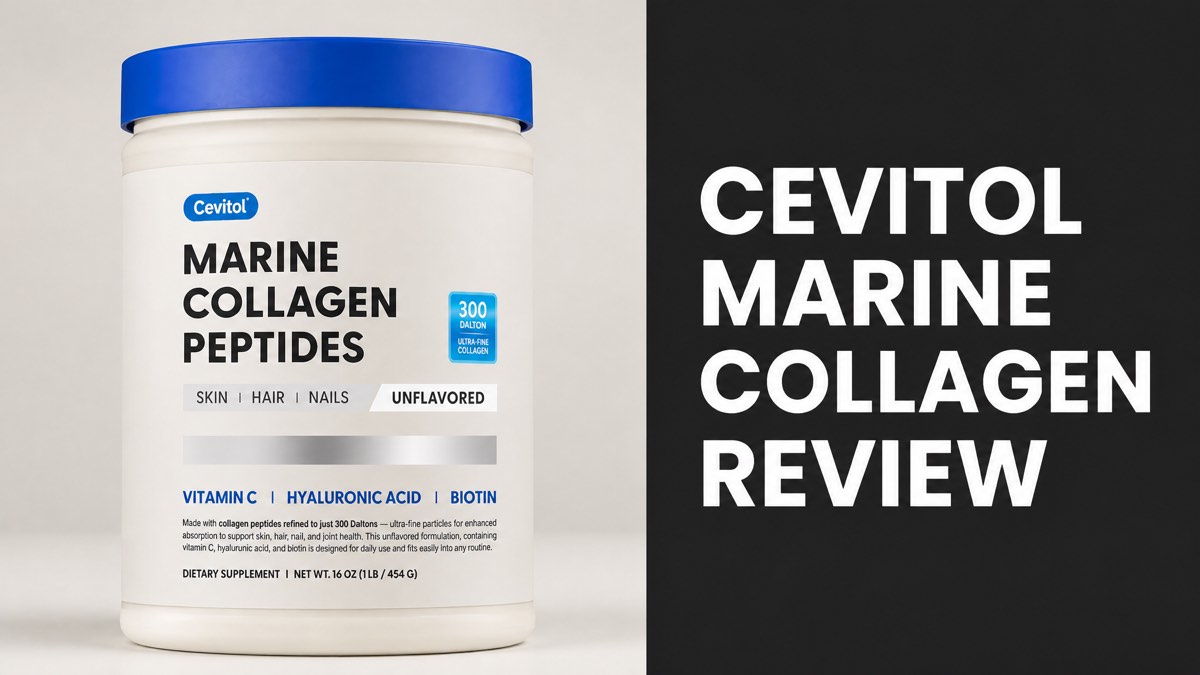
Cevitol Marine Collagen Peptides is a hydrolyzed, fish-derived collagen powder sold in a 16oz canister and a 3.49oz stick format, positioned as clean, single-ingredient nutrition rather than a crowded formula.
The powder breaks its collagen down to an ultra-fine 300 Dalton peptide size that dissolves cleanly into water, coffee, or a smoothie without a fishy aftertaste. Clinical research on marine collagen backs real gains in skin elasticity, hydration, and wrinkle reduction after 12 weeks of consistent daily use, though the joint-health evidence is thinner. Customer reviews split between strong product satisfaction and real shipping delays from the brand's fulfillment team.
This review breaks down what the science actually supports, what real buyers say about the powder and the shipping experience, how Cevitol compares with bovine collagen, and whether the marine collagen category earns a spot in a daily routine.
What Is Cevitol Marine Collagen Peptides?
Cevitol Marine Collagen Peptides is a hydrolyzed fish-derived collagen powder sold in a 16oz canister and a 3.49oz travel stick format. The brand positions the supplement as clean, science-backed nutrition for daily wellness, built around a single ingredient rather than a crowded formula.
The 16oz canister carries over a thousand customer reviews on the brand's own store. That makes it the clear best seller in the Cevitol lineup. The stick format targets people who want single-serving portions for travel or a gym bag.
Cevitol also sells a smaller collagen jar alongside supporting products like a Cal-Mag Vitamin D and K2 complex, a Boswellia joint formula, and a biotin hair-care line. Still, the collagen powder remains the flagship product the brand is best known for.
What Makes It Different From Other Collagen Powders?
Most collagen powders on the market use bovine (cow) sources. Cevitol draws its collagen entirely from fish scales, skin, and bones instead, which puts it in the smaller marine collagen category.
The peptides are broken down to a 300 Dalton molecular weight, well below the size of many competing marine collagen powders. That smaller peptide size is the reason the brand markets the product as ultra-fine and easy to dissolve.
Here's the part that matters for daily use: the powder is virtually odorless and flavorless. It dissolves cleanly into water, coffee, or a smoothie without leaving a fishy aftertaste, which is the most common complaint about lower-quality marine collagen brands.
How Does Cevitol Marine Collagen Work?
Collagen forms one of the major structural building blocks in skin, bones, tendons, ligaments, muscles, and blood vessels. The body produces 28 distinct types of collagen naturally, and that production slows with age and other lifestyle factors.
Here's the catch though: a whole collagen molecule is too large to absorb effectively through digestion or penetrate the skin topically. Manufacturers hydrolyze the protein into smaller peptide chains to solve this size problem.
These smaller peptides enter the bloodstream after digestion and circulate through the body. Some researchers theorize that circulating collagen peptides signal skin cells to increase their own collagen production, though the exact mechanism is still being studied.
Cevitol's 300 Dalton peptide size sits toward the smaller end of what hydrolyzed collagen supplements typically offer. And a smaller peptide generally absorbs faster than a larger, less-processed fragment.
Why Use 300 Dalton Hydrolyzed Peptides?
A dalton measures molecular weight, and 300 daltons describes an extremely small peptide fragment, far below the size of most whole proteins. Smaller fragments cross the gut lining more readily than larger, less-broken-down collagen chains.
This ultra-fine processing also explains the powder's texture and solubility. Smaller particles dissolve faster in liquid and leave less grit at the bottom of a glass than coarser collagen powders.
What Are the Benefits of Marine Collagen?
Marine collagen supports skin elasticity, hydration, and joint comfort based on multiple published clinical trials. The evidence base is strongest for skin-related outcomes and more limited for joint health.
A 2021 randomized, triple-blind, placebo-controlled study gave 50 women aged 45 to 60 a 10 gram (0.35 ounce) marine collagen powder dose daily for 12 weeks. The treatment group saw a 35 percent reduction in wrinkles compared with the placebo group, alongside measured improvements in skin elasticity, hydration, and firmness.
A separate double-blind, randomized clinical trial gave 120 participants a supplement combining hydrolyzed fish collagen with vitamins, antioxidants, and glucosamine. Skin elasticity increased 40 percent compared with placebo. Participants also self-reported a 43 percent reduction in joint pain and 39 percent better joint mobility.
And here's the mechanism behind those numbers: collagen peptides act as antioxidants in skin cells. This antioxidant activity quells free radicals and inflammation, two processes tied to both chronic disease and visible skin aging.
Does Cevitol Improve Skin Elasticity and Hydration?
Yes. Marine collagen peptides at doses similar to Cevitol's serving size improved elasticity, hydration, and firmness in controlled clinical trials. The strongest data point comes from the 2021 study's 35 percent wrinkle reduction after 12 weeks of daily use.
Individual results still vary by age, skin type, dose consistency, and baseline collagen levels. A single canister rarely covers the full 12-week window the clinical studies used, so consistent reordering matters more than any single purchase.
Does Cevitol Support Joint Health?
The joint evidence is thinner than the skin evidence, and it's worth being upfront about that. The 120-person trial that measured joint pain and mobility improvements combined fish collagen with additional compounds like glucosamine, not collagen alone.
Isolating collagen's individual contribution to joint comfort remains difficult from that combined-formula data. So Cevitol's single-ingredient powder likely offers some joint support, but it hasn't been tested in isolation the way the combination formula was.
What Do Cevitol Reviews Say?
Customer feedback on Cevitol's own store splits between strong product satisfaction and real shipping frustration. Over a thousand reviews sit on the 16oz canister's product page, giving the line a meaningful review volume for a newer supplement brand.
Product quality feedback trends positive. Buyers describe the powder as effective and easy to mix, matching the brand's claims about solubility and taste.
Worth a quick note here: a separate collagen product from a different manufacturer using the Cevitol name, reviewed on a Korean beauty retail site, drew praise for taste and long-term usability without becoming tiresome. That listing is a distinct product line and shouldn't be confused with the marine collagen powder reviewed here.
What Do Positive Reviews Mention?
Satisfied customers call it the best product they've tried in the category. Buyers who received their orders describe the powder mixing cleanly into drinks without an unpleasant fishy taste, matching the brand's odorless and flavorless claims.
One buyer who'd been using the product for just over a week reported the order arriving in good condition and said she'd report back on results. That's the kind of early-adopter enthusiasm common in a newer product's review section.
What Are the Common Complaints?
Order fulfillment is the most consistent complaint. One buyer waited a month and a half for a shipment to arrive. Another reported no delivery at all after messaging the Cevitol team twice with no response.
So what does that mean for you? These complaints center on shipping speed and customer service responsiveness, not the supplement's ingredients or effectiveness. A buyer weighing Cevitol should budget extra time for delivery and expect a newer brand's support team to respond more slowly than an established retailer.
Cevitol vs Bovine Collagen: Which Is Better?
Bovine collagen remains the more common and typically cheaper source, while marine collagen appeals to buyers avoiding red meat products. Traditional collagen powders and supplements are made predominantly from cow skin and bones.
Marine collagen comes from fish scales, skin, and bones instead. Shoppers moving away from red meat consumption often view fish as the healthier protein source, and that's driving some of marine collagen's growing popularity over bovine alternatives.
Marine vs bovine collagen:
| Factor | Marine Collagen (Cevitol) | Bovine Collagen |
|---|---|---|
| Source | Fish scales, skin, bones | Cow skin and bones |
| Peptide size | 300 Dalton, ultra-fine | Varies by brand |
| Taste profile | Odorless, flavorless | Often neutral, brand-dependent |
| Typical appeal | Buyers avoiding red meat | Wider market availability |
The market data reflects this shift. The marine collagen market was valued above $1.1 billion in 2022 and is forecast to triple over the following decade, a faster growth rate than the broader collagen supplement category.
What Are the Side Effects of Marine Collagen?
Marine collagen carries a generally mild safety profile, with fish or shellfish allergy as the primary concern. Hydrolyzed collagen peptides are a common food-derived ingredient with a long history of use in supplements and functional foods.
People with a known fish allergy face the clearest risk with any marine-sourced collagen product, including Cevitol. Mild digestive effects like bloating or an upset stomach occasionally appear when a new supplement is introduced too quickly at a full dose.
Who Should Avoid Cevitol?
Anyone with a diagnosed fish or shellfish allergy should avoid marine collagen products entirely, including Cevitol. Pregnant or breastfeeding individuals and anyone managing a chronic health condition should confirm the supplement with a doctor before starting it, since collagen powders aren't evaluated by the FDA the way medications are.
Is Cevitol Marine Collagen Backed by Science?
Yes. Marine bioactive peptides show documented antioxidant and anti-inflammatory activity in published research, and marine collagen specifically has been studied for skin aging, tissue engineering, and cosmetic applications.
A 2024 scientific review examined marine collagen's therapeutic potential for delaying skin aging, covering its effects on hydration and elasticity alongside its emerging role as a biomaterial in tissue engineering. The review treated marine collagen as a legitimate research area rather than a fringe ingredient.
Here's the honest caveat: Cevitol itself hasn't published its own clinical trial. Its science-backed claims rest on the broader body of marine collagen research rather than a study conducted on the Cevitol formula specifically, which is standard practice across most single-ingredient supplement brands.
How Much Does Cevitol Cost?
Cevitol's exact pricing wasn't available at the time of this review. The brand sells directly through its own online store, and pricing there is subject to change with promotions and bundle discounts.
Shoppers should check the current price on Cevitol's official store before purchasing, since supplement pricing shifts frequently with seasonal offers.
Is Cevitol Worth the Price?
Value depends on consistent use rather than a single canister purchase. The clinical trials behind marine collagen's benefits used daily dosing across a 12-week window, so a buyer who reorders consistently is more likely to see the elasticity and hydration improvements than someone who tries a single container and stops.
How Do You Take Cevitol Marine Collagen?
Steps:
- Scoop the recommended daily serving from the 16oz canister or open one 3.49oz travel stick.
- Stir the powder into water, coffee, or a smoothie.
- Drink once fully dissolved, ideally at the same time each day for consistency.
- Repeat daily for at least 12 weeks to match the dosing window used in the clinical research above.
The powder's odorless, flavorless profile means it blends into an existing morning routine without changing the taste of a coffee or smoothie. Consistency matters more than the specific drink it gets mixed into.
Where Can You Buy Cevitol Marine Collagen?
Key places to buy:
- Cevitol's official online store, which carries the full 16oz canister, the 3.49oz stick format, and the rest of the brand's supplement lineup
- Amazon, where the product is listed under its hydrolyzed ultra-fine marine collagen peptide description
- TikTok Shop, where the product appears alongside short-form video demonstrations
Buying direct from Cevitol's own store gives access to the full product catalog, including bundle options with the brand's other supplements. Third-party marketplaces may offer faster shipping for buyers who experienced the delivery delays described above.
Is Cevitol Marine Collagen Worth It?
Cevitol Marine Collagen Peptides earns its strongest praise for product quality. The ultra-fine 300 Dalton peptides dissolve cleanly, stay odorless and flavorless, and sit on solid clinical ground for skin elasticity and hydration when used consistently for 12 weeks or longer.
The clearest weakness is fulfillment, not formulation. Multiple buyers reported slow shipping and unresponsive customer service, a real risk for anyone who needs their order to arrive on a predictable timeline.
Bottom line: for a buyer comfortable ordering from a newer direct-to-consumer brand and willing to reorder consistently, Cevitol's marine collagen holds up on the ingredient science. Anyone who needs guaranteed fast shipping may be better served checking the Amazon listing first.
Coffee Loving Card Makers is a reader-supported platform. Purchases made through our links may earn us an affiliate commission at no extra cost to you. Learn more.