
Carter's Little Liver Pills Review: What Happened to the Original Formula?
 By Anna Krause September 11, 2026
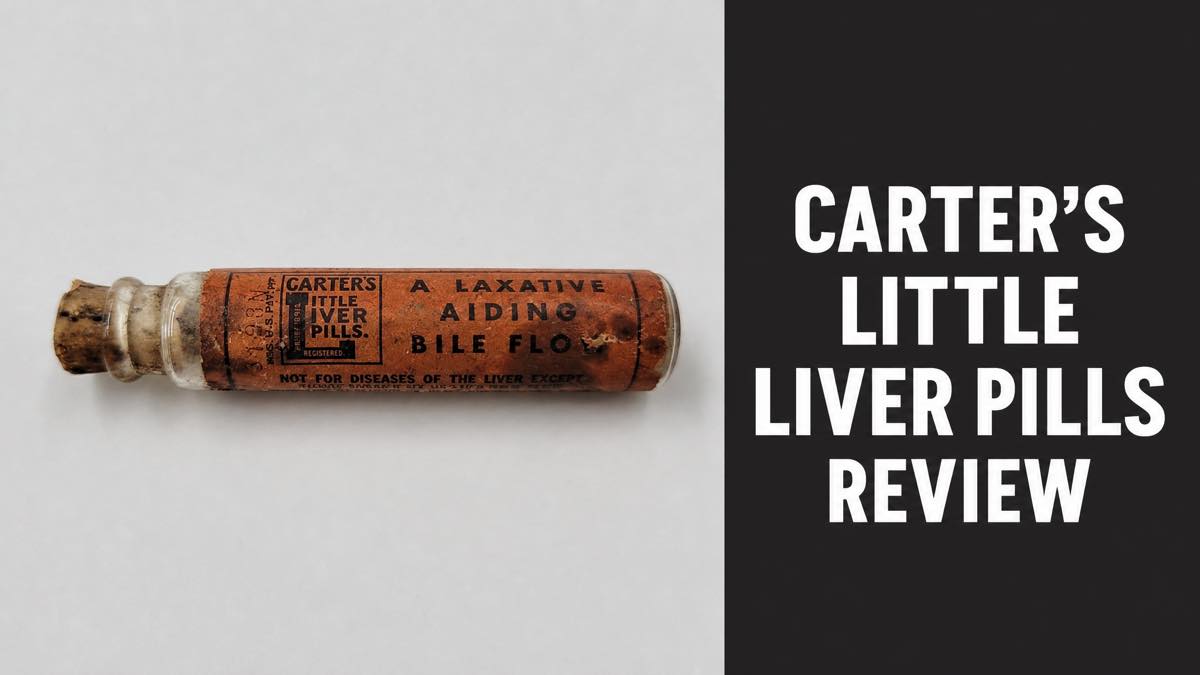
Carter's Little Liver Pills started as a patent medicine developed in 1868 by Samuel J. Carter of Erie, Pennsylvania. The brand became one of the most widely advertised remedies in American history, sold as a cure for headaches, constipation, and a so-called 'torpid liver.'
The pills promised to ease sick headache, dyspepsia, and indigestion from 'hearty eating.' A 1942 medical study tested whether the formula actually affected the liver at all, and the Federal Trade Commission later forced the company to drop the word 'liver' from the name. By 1959 the product had a new formula and a new name: Carter's Little Pills.
The brand is still sold today under Church & Dwight, though almost nothing about it matches the original 1868 product. This review covers what the pills claimed, what changed, what the research found, and whether the modern version is worth buying.
What Are Carter's Little Liver Pills?
Carter's Little Liver Pills were a patent medicine formulated in 1868 by Samuel J. Carter in Erie, Pennsylvania. The company incorporated as Carter Products by 1880 and used a black crow as its trademark.
The product was marketed nationally in newspapers and on advertising cards throughout the late 19th and early 20th centuries. It was sold by Carter's Products of New York and became common enough in American households that a popular saying grew around how many pills the company supposedly had in supply.
How Did Carter's Little Liver Pills Work?
The pills were marketed as a laxative that aided bile flow in the liver. That claim was the basis of the entire brand for nearly a century, printed directly on the packaging sold through drugstores.
What Were the Original Ingredients?
The original formula contained 1/4 grain, about 16 milligrams, of aloe and 0.062 grains, about 4.0 milligrams, of podophyllum resin per pill. Podophyllum resin comes from the mayapple plant and has long been used as a purgative.
Curaçao aloe was the second listed ingredient on the package. Both ingredients act on the digestive system as laxatives rather than on the liver directly.
What Did Carter's Little Liver Pills Claim to Cure?
The pills were advertised to cure headache, constipation, dyspepsia, and biliousness. Ads from 1887 promised the pills would relieve 'distress from dyspepsia, indigestion and hearty eating.'
Key claimed benefits:
- Relief from sick headache
- Relief from constipation
- Relief from dyspepsia and indigestion
- Relief from biliousness, described as a torpid liver
These claims ran unchanged in advertising for decades, reaching international markets as well as the United States through distributors like John Morgan Richards in the UK.
Does Carter's Little Liver Pills Actually Work on the Liver?
No. The ingredients in Carter's Little Liver Pills do not act on the liver. A 1942 medical investigation tested whether the formula caused the gallbladder to contract or stimulated bile flow, and found the pills' effect was on the bowel, not the liver itself.
What Did the 1942 Research Find?
The study, published in the Quarterly Bulletin of the Northwestern University Medical School, directly asked whether the ingredients 'cause the gall bladder to contract, and stimulate the flow of bile by the liver.' The pills worked as a bowel laxative through aloe and podophyllum resin, not through any liver mechanism.
Why Did Carter's Little Liver Pills Change Its Name?
The Federal Trade Commission challenged the 'liver' claim starting in 1943, arguing the name was deceptive since the pills had nothing to do with the liver. The fight over the name stretched on for years before it was resolved.
When Did the Ingredients Change?
The case settled and the product became 'Carter's Little Pills' in 1959, dropping any reference to the liver. At the same time, the active ingredient was switched entirely to bisacodyl, a synthetic laxative that predates other bisacodyl products on the market.
What Are the Side Effects of Carter's Little Pills?
The modern formula can cause abdominal discomfort, nausea, cramps, and faintness at normal doses. These are the most commonly reported effects across the tablet, suppository, and enema forms of bisacodyl.
Reported side effects:
- Abdominal discomfort, cramps, and griping
- Nausea and occasional vomiting
- Diarrhea with gastrointestinal irritation
- Rectal burning and mild proctitis with suppository or enema use
What Are the Risks of Long-Term Use?
Prolonged use of bisacodyl drives fluid and electrolyte loss, especially potassium depletion from repeated diarrhea. This risk applies to any bisacodyl-based laxative used beyond occasional, short-term constipation relief.
Is Carter's Little Liver Pills Still Sold Today?
Yes. Carter's Little Pills is still sold today as a sodium-free laxative with bisacodyl as the active ingredient. The liver branding and marketing that once made it a household name are largely gone, and the product is now a niche laxative rather than a mass-advertised cure-all.
How Much Does Carter's Little Pills Cost?
Pricing information for the current retail formula was too limited in the available research to state a reliable figure here. Buyers should check current listings directly rather than rely on an outdated number.
What Is the Legacy of Carter's Little Liver Pills?
The brand's biggest legacy is not medical. Carter's Little Liver Pills became famous enough to spawn a lasting American idiom about abundance. Vintage bottles and boxes from the original run are now sold as collectibles rather than medicine.
Where Does the Phrase 'More Than Carter Has Little Pills' Come From?
The saying 'more than Carter has little liver pills' grew out of how widely and constantly the brand was advertised, giving the impression of an endless supply. Senator Robert Byrd used a version of the phrase after his 2000 re-election, and a 2013 remark from a New Jersey congressman confused audiences who assumed it referenced President Jimmy Carter rather than the pill company. The phrase also appeared in a 1968 collage film as an old advertisement.
Carter's Little Pills vs Dulcolax: What's the Difference?
Label:
| Product | Active Ingredient | Original Marketing |
|---|---|---|
| Carter's Little Pills | Bisacodyl | Rebranded 1959 from a liver remedy |
| Dulcolax | Bisacodyl | Sold under its own name from the start |
Both products use the same active ingredient and the same mechanism of action. The difference between them today is branding and history, not the medicine itself.
Is Carter's Little Liver Pills Worth Buying Today? Final Verdict
The original Carter's Little Liver Pills, the 1868 liver remedy, no longer exists in any meaningful sense. What is sold under the Carter's name today is a standard bisacodyl laxative that happens to carry a famous old brand name.
Buyers looking for a laxative get the same active ingredient found in Dulcolax and other bisacodyl products, with the same side effect profile: cramping, nausea, and electrolyte loss with prolonged use. Anyone buying it expecting a liver remedy is buying a product whose own history proves that claim false.
Coffee Loving Card Makers is a reader-supported platform. Purchases made through our links may earn us an affiliate commission at no extra cost to you. Learn more.