
CareUplift Patch Review: An Honest Look at the Claims
 By Anna Krause November 9, 2026
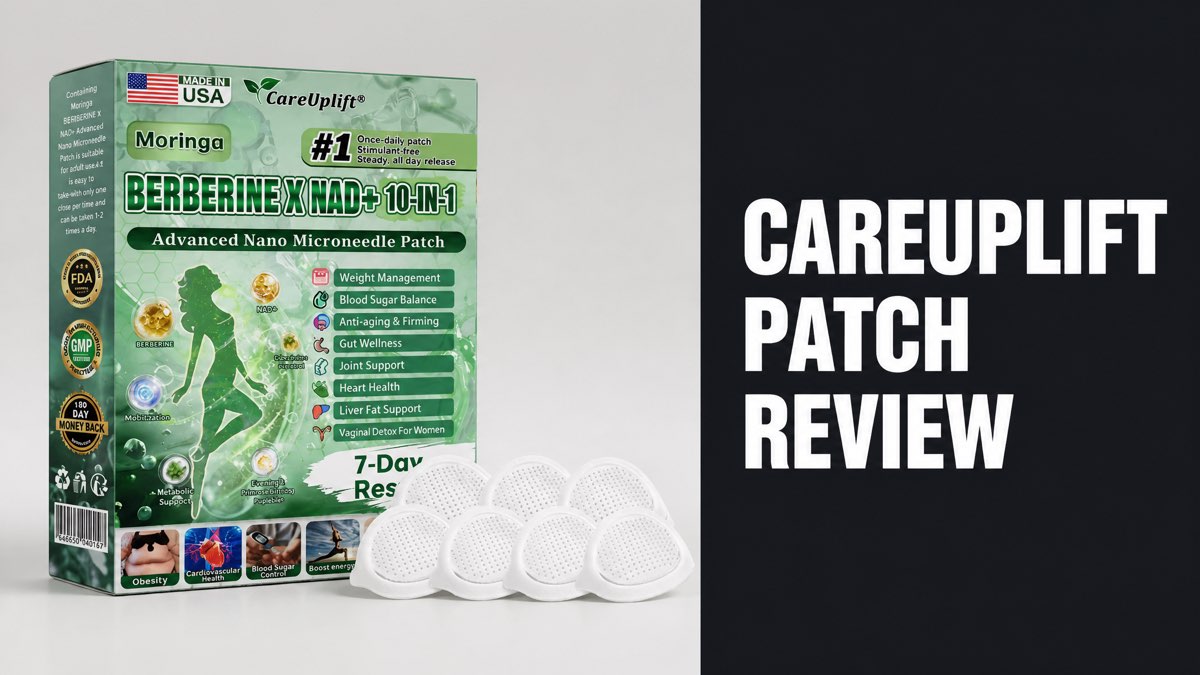
CareUplift Patch is a skin patch sold online as a 10-in-1 nano microneedle weight and metabolic aid. It combines moringa, berberine, and NAD+ and promises visible changes within 7 days from one patch a day. Sales pages push it with clinical-sounding badges and bold promises about fast results.
The patch claims to deliver ingredients through dissolving microneedles, yet no dosing or delivery data supports that claim. Reviews split between a few glowing accounts and steady complaints about delivery, billing, and refunds. Safety stays unverified, and badges like FDA Certified arrive without any paperwork or named studies behind them.
The big picture is simple: heavy marketing is doing the work that evidence normally does. The breakdown below covers the ingredients, the price, the refund policy, and the steps to take if an order already went through, so the full picture is clear before any money changes hands.
What Is CareUplift Patch?
CareUplift Patch is a skin patch marketed for weight management and metabolic support. The product page brands it a 10-in-1 advanced nano microneedle patch built around moringa, berberine, and NAD+. Buyers apply one patch to the skin instead of swallowing a pill.
The listing promises visible changes in 7 days from one patch a day. And the claims don't stop at weight. They stretch into blood sugar, sleep, loose skin, and joint issues. Why does that matter? One patch promising this many outcomes invites close scrutiny.
To be clear, no clinical trial on this specific patch appears in the sales material. The listing leans on labels like Clinically Validated and #1 Ranked instead. Those phrases describe marketing, not tested results.
Who Sells CareUplift Patch?
CareUplift Patch sells through a network of near-identical online storefronts rather than one clear brand. The main site labels itself an official US store. Other listings show the same patch under different names, discount badges, and price ranges.
Here's the problem: no verifiable company name, address, or working contact sits behind the offer. Support addresses bounce or go unanswered. One buyer found that the phone number in an ad belonged to an unrelated furniture store in Missouri.
Similar patches appear on wholesale sites for roughly $1.47 to $1.85 per unit in bulk. So what does that mean? The pricing points to a private-label product, where a generic item gets premium pricing through advertising.
How Does CareUplift Patch Work?
The listing says the patch delivers its ingredients through the skin with dissolving microneedles. Each microneedle measures about one-seventh the thickness of a human hair. The seller says this design makes application smooth and nearly painless.
Use is simple. Apply one patch to clean, dry skin and press for 10 to 15 seconds. The seller recommends one patch per day. No pills, injections, or meal timing are involved.
But the mechanism story stops there. Where's the proof the ingredients reach the body? No dosing figures, absorption data, or delivery tests back that claim. Skin acts as a strong barrier, which makes the missing data the central gap.
What Does Nano Microneedle Mean?
The term nano microneedle works as a marketing label, not a recognized standard. Real microneedle technology exists in medical and cosmetic settings. But the existence of the technology does not validate every patch sold under that name.
Proof for a patch like this needs three things: the dose of each ingredient, evidence the ingredient crosses the skin, and human results from the exact product. Here's the kicker: the sales material supplies none of the three.
Dissolving microneedle patches sold for skincare target local effects such as fine lines. Claims of whole-body weight loss from a patch sit in a different category. That category demands far stronger evidence.
What Is in CareUplift Patch?
The headline ingredients are moringa, berberine, and NAD+. The listing adds a 10-in-1 label to suggest a complete formula. No full ingredient panel with amounts per patch appears in the sales material.
Headline Ingredients:
- Moringa
- Berberine
- NAD+
The listing also names what the patch leaves out. It claims freedom from fragrances, preservatives, alcohol, dyes, sulfates, parabens, formaldehyde, and heavy metals such as lead and mercury. The sales material shows no test documentation for that list.
The 10-in-1 label describes marketing, not a medical standard. What are the ten benefits? The label never says. It doesn't say how each is measured or how much of any ingredient each patch holds.
Are Moringa, Berberine and NAD+ Proven for Weight Loss?
No. Ingredient names do not prove results for this patch. Moringa and berberine appear often in supplement marketing, and NAD+ is a wellness buzzword. Dose, form, absorption, and human outcomes decide whether an ingredient works.
Swallowed capsules at least follow established absorption routes. A patch adds an extra hurdle, because the ingredient must cross the skin. In plain English: without delivery evidence, the ingredient list works as a persuasion layer, not a scientific one.
Does CareUplift Patch Actually Work?
No. No independent evidence shows that CareUplift Patch produces weight loss. The sales page offers testimonials, dramatic promises, and badges instead of peer-reviewed trials. Testimonials are easy to curate and do not prove the patch caused any change.
Weight loss usually takes a sustained calorie deficit, lifestyle changes, or medically proven treatment. Can a patch melt fat by sitting on the skin? No patch has been scientifically shown to do that. Extraordinary claims need extraordinary evidence.
Some buyers do report effects. One describes sugar cravings disappearing after two days. A parent describes a daughter losing nearly 15 pounds in two weeks. But anecdotes don't establish cause, and extremely rapid loss deserves medical attention.
What Does CareUplift Patch Claim to Do?
The listing claims fast, effortless metabolic support from one patch a day. Promised benefits include weight loss, appetite control, blood sugar support, and energy. The seller says visible changes arrive within 7 days.
Claimed Benefits:
- Weight loss
- Appetite control
- Blood sugar support
- Energy
- Help with loose skin, sleep apnea, and joint issues
And the claim list keeps growing. Pages name obesity, loose skin, diabetes, sleep apnea, and joint issues. Can one patch credibly address that many systems? It can't. A list this wide mostly serves to match as many searches and fears as possible.
What Do CareUplift Patch Reviews Say?
Reviews split between a few glowing accounts and a steady stream of complaints about delivery and refunds. Positive accounts mention fewer sugar cravings and less hunger after a couple of days. Negative accounts describe missing orders, wrong products, and unanswered emails.
Review claims deserve caution too. Wording copied across websites, curated screenshots, and unverified counts are common in patch funnels. Where's the audit behind the 98.8% repurchase rate? None is visible, and no independent review system backs it.
Separate review pages exist for different CareUplift storefronts. A page for one related domain listed 27 reviews as of June 2026. Splitting feedback across domains makes the true overall picture hard to measure.
What Are the Common Complaints?
Complaints cluster around four problems: no delivery, wrong product, extra charges, and refund friction. Buyers report paying and never receiving anything. Others received smaller patches than the ones pictured in the ads.
Common Complaints:
- Order never delivered
- Wrong product or smaller patches
- Extra or duplicate charges
- Refund requests ignored
Billing complaints stand out. One buyer saw a $44 charge followed by a $66 charge and no product. Another got a failed-order email, then found a second discounted order had gone through. Nothing shipped, and nobody answered.
Fit and skin problems also appear. One buyer ordered the large patch, received small ones that do not stick, and reacted to the adhesive. Another reports skin irritation at the start of use and patches smaller than advertised.
Is CareUplift Patch Safe?
No. CareUplift Patch has no verifiable safety record. The sales material lists no full ingredient amounts, no safety testing, and no checkable regulatory documentation. Nobody outside the seller can confirm what each patch contains or delivers.
Skin reactions are the reported risk. Buyers describe redness, itching, burning, and adhesive allergies. Microneedle-style products and unknown adhesives irritate skin. So what happens at the first sign of a reaction? The patch comes off.
Reactions to a product like this go to the FDA at fda.gov/medwatch. Persistent or spreading skin symptoms call for a pharmacist or doctor. Rapid weight loss and appetite loss from a patch also warrant medical review.
Who Should Avoid CareUplift Patch?
Adults with adhesive allergies, sensitive skin, or diabetes face the highest risk. Adhesive allergies mean a reaction is likely, and buyers already report allergic responses. Diabetes brings a different danger, since the blood sugar claim has no evidence behind it.
Anyone replacing prescribed treatment with the patch carries the greatest risk. A doctor remains the reliable route for diabetes, sleep apnea, and joint issues. The patch offers no substitute for medical care.
Is CareUplift Patch Legit?
No. The selling method raises serious red flags, even where a physical patch does arrive. Exaggerated claims, pressure discounts, and duplicate official stores appear together. Legitimate brands protect one consistent identity.
Pressure tactics are built into the offer. Discount badges, countdown urgency, and a claim that most customers order 6 boxes push larger bundles. Why does that matter? Bulk orders delay refund requests, because buyers feel invested before they can judge any result.
Private-label sourcing adds to the doubt. Similar patches sell wholesale for under $2 per unit, while the storefront price runs from $15.30 to $50.15. Bottom line: that gap suggests the markup comes from advertising, not from a proprietary formula.
Are the FDA Certified and Doctor Recommended Claims Real?
No. The claims arrive as badges, not as documents. The listing shows phrases like FDA Certified, Trusted by Google, Doctor Recommended, and Clinically Validated. Serious brands back such claims with named studies, lab reports, and registration numbers. None appear here.
Claims vs Proof:
| Claim | What Appears | What Is Missing |
|---|---|---|
| FDA Certified | Badge on the listing | Registration or paperwork |
| Doctor Recommended | Heading text | Named doctors |
| Clinically Validated | Heading text | Study or trial data |
| 98.8% repurchase rate | Sales statistic | Audit or review system |
The FDA doesn't approve most supplements the way it approves prescription drugs. Wording like FDA certified retailer implies an endorsement that doesn't exist. Without verifiable paperwork, the wording is credibility theater.
Statistic-style claims follow the same pattern. A 98.8% repurchase rate and 20 years of research by more than 30 experts sound measurable. No named researchers, publications, or audits come with them.
How Much Does CareUplift Patch Cost?
Prices vary by listing and pack size, from $15.30 to $50.15 on the main storefront page. Other near-identical listings show different ranges and discount badges. Free shipping thresholds also differ, from $60 in the banner to $99 on the product page.
Price and Policy Snapshot:
| Item | Detail |
|---|---|
| Storefront price range | $15.30 to $50.15 |
| Free shipping | Over $60 (banner) or over $99 (product page) |
| Advertised guarantee | 180 days, 100% money back |
| Similar wholesale patches | $1.47 to $1.85 per unit |
Bundles drive the real spend. The listing claims most customers order 6 boxes or more. And larger bundles raise the total before any result shows. They also lock in the cost while refund questions stay unanswered.
Unexpected charges add cost. One buyer reports a $66 charge after an initial $44 charge. Another reports a second discounted order after a failure email. Checking the card statement right after purchase is essential.
Where to Buy CareUplift Patch?
CareUplift Patch sells through its own storefront at careuplift.net, plus resale listings such as eBay. The main site calls itself the official US store. No pharmacy or established retail chain appears among the sellers found.
Payment method matters. Credit cards give stronger dispute protection than debit cards. Virtual card numbers reduce risk further, because a blocked merchant cannot rebill. Transaction alerts help catch surprise charges early.
What Is the Refund Policy?
The seller advertises a 180-day after-sales service and a 100% money-back guarantee. The listing promises a full refund to any dissatisfied buyer. On paper, the offer sounds risk free.
Practice looks different. Buyers report bouncing emails and no reply for over three months. What's a guarantee worth then? Very little, when no identifiable company stands behind it and no return authorization ever arrives.
Card disputes remain the dependable route. File the dispute as goods not received or not as described, and ask the issuer to block the merchant. Screenshots of the checkout page, order confirmation, and emails strengthen the case.
Is CareUplift Patch Worth It?
No. CareUplift Patch is not worth the money. Short answer: the cons outweigh the pros by a wide margin. No evidence backs the weight loss claims, and the complaints about delivery and refunds keep piling up.
The pros are small. The patch is easy to apply, and a few buyers report less hunger. That doesn't outweigh unverifiable claims and refund risk. A calorie deficit and medical guidance deliver more for far less risk.
Pros:
- Easy to apply
- A few buyers report less hunger
Cons:
- No evidence for weight loss claims
- No full ingredient amounts
- Pressure discounts and bundle pushing
- Complaints about delivery, billing, and refunds
Bottom line: any patch worth considering comes from a seller with a named company, full ingredient amounts, and clinical evidence for the exact product. CareUplift offers none of the three.
What If You Already Bought CareUplift Patch?
Buyers who already ordered hold the most leverage in the first days. Save checkout screenshots, order confirmations, and every email. Check the card statement for duplicate or unexpected charges.
Stop using the patch if redness, itching, or burning appears. If the seller stalls, contact the card issuer for a dispute and ask for a replacement card number to stop rebilling. Report reactions to the FDA at fda.gov/medwatch.
Coffee Loving Card Makers is a reader-supported platform. Purchases made through our links may earn us an affiliate commission at no extra cost to you. Learn more.