
Butrans Patch Review: Does the Weekly Pain Patch Work?
 By Anna Krause November 2, 2026
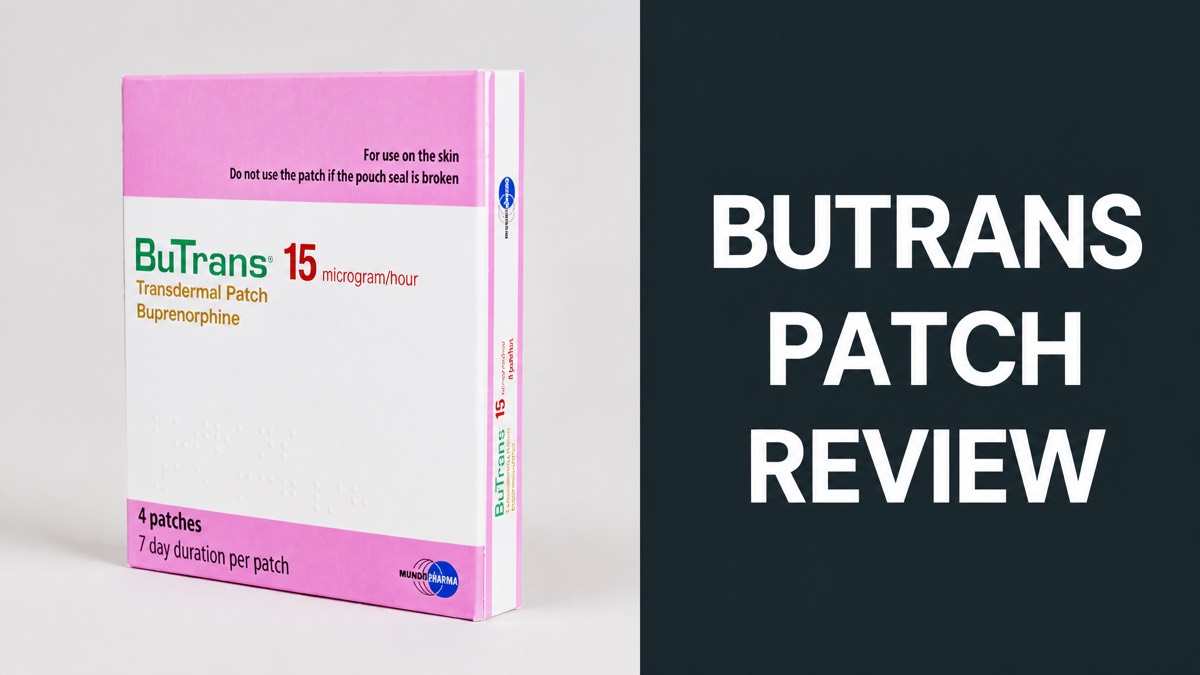
The Butrans patch is a weekly buprenorphine skin patch for severe chronic pain. It is a Schedule III opioid partial agonist. A pain specialist prescribes it when other treatments have failed or cause problems.
The patch delivers medicine through the skin for 7 days. It comes in five strengths, from 5 to 20 mcg/hr. Patient ratings sit in the middle, and side effects, skin reactions, and heat risks all matter. Cost swings from $60 to $900 per month.
This review covers how the patch works, who should avoid it, and how it compares to fentanyl patches and Belbuca. You will also see what it costs and whether it earns its price.
What Is the Butrans Patch?
The Butrans patch is a buprenorphine skin patch that treats severe chronic pain. Buprenorphine is an opioid partial agonist and a Schedule III controlled substance. You apply one patch a week, and you can only get it with a prescription.
A pain specialist usually prescribes it. Doctors reach for it when other pain treatments haven't worked or can't be tolerated.
Why the extra paperwork? The patch is only available through the Opioid Analgesic REMS program. Your prescriber and your pharmacy must register and complete safe-use training.
What Is Butrans Used For?
Butrans treats severe, persistent pain that needs an extended treatment period. Doctors consider it when other pain medicines didn't work well enough or can't be tolerated.
It isn't a short-term fix. Mayo Clinic advises against it for pain after surgery, mild pain, or occasional as-needed pain.
Long-term use can become habit-forming, and stopping suddenly can cause withdrawal. The good news? A gradual dose reduction usually prevents the severe symptoms.
How Does the Butrans Patch Work?
Buprenorphine attaches to opioid receptors in the brain and lowers how much pain a person feels. The drug changes how the brain reacts to pain signals. The patch releases it through the skin for 7 days.
Blood levels reach steady state in about 3 days. After removal, levels fall by about half within 12 hours. Effects can linger for around 24 hours.
Why does a partial agonist matter? Buprenorphine has a ceiling effect on slowed breathing, which full opioids lack.
How Do You Apply the Patch?
The patch goes on flat, hairless, unbroken skin. Approved sites are the upper outer arm, upper chest, upper back, and side of the chest. Clip hair with scissors instead of shaving. Clean the skin with clear water only. Soap, lotion, alcohol, and oil are off limits.
Here's the routine in order:
- Clip any hair and clean the skin with clear water
- Press the patch onto flat, unbroken skin on an approved site
- Leave it on for 7 days, showering as normal
- Rotate to a new site and wait at least 3 weeks before reusing one
- Fold the used patch sticky sides together and seal it in the disposal unit
Heat is the big warning. Why is it such a problem? Heat speeds up absorption and raises the overdose risk. Heating pads, electric blankets, saunas, hot tubs, long hot baths, and sunbathing are all banned. A fever also needs a call to your doctor.
Used patches still hold medicine. That's why sealing them in the disposal unit matters.
What Strengths Does Butrans Come In?
Butrans comes in five strengths. Each patch stays on for 7 days, and the 20 mcg/hr patch is the highest strength.
Available Strengths:
- 5 mcg/hr (micrograms per hour)
- 7.5 mcg/hr
- 10 mcg/hr
- 15 mcg/hr
- 20 mcg/hr
Doctors raise the dose gradually. How fast? Increases happen no more often than every 3 days.
How Is the Butrans Dose Chosen?
Who picks the dose? A pain specialist sets it based on pain severity and any earlier opioid use. Everyone beginning treatment starts at 5 mcg/hr.
Let me explain what an increase looks like. Sometimes it means two patches at once. The patient removes the current patch and places both new ones side by side at a new site. Both are changed together afterward.
If side effects appear, the doctor may lower the dose. Never change it on your own.
What Do Butrans Patch Reviews Say?
Patient ratings land in the middle. And the split is sharp. Some patients call the patch life-changing, while others report no relief at all.
Patient Rating Snapshot:
| Measure | Result |
|---|---|
| Average, first set (237 reviews) | 6.2 out of 10 |
| Positive vs negative, first set | 50% vs 28% |
| Average, second set (240 reviews) | 3.1 out of 5 |
| Positive effect, second set | About 55% |
What Do Patients Like?
The biggest benefit is freedom from daily pills. Patients stop tracking doses or worrying about running out. One shift worker no longer wakes at night to take a pill.
Some report large pain drops. One patient went from a pain and fatigue level of 8 down to 1-2. Another stayed on the same 10 mcg/hr dose for two years with no tolerance problems.
The patch needs time, though. One patient noticed it working after about a week. The full impact showed up after two months.
What Are the Common Complaints?
The most frequent complaint is little or no pain relief. Who reports it most? Patients with high opioid tolerance. Several say the patch didn't help alongside other opioids.
Top Complaints:
- Little or no pain relief
- Patches that fall off and need tape
- Headache, nausea, and fatigue
- Itching, rash, and blisters
Adhesion is the second problem. Showering becomes a hassle for people who cover the patch with plastic wrap.
Side effects add to the list. One patient couldn't drive. Another had blurred vision that cleared after stopping. Skin damage is the harshest report, with sunburn-like tears in some cases.
What Are the Side Effects of Butrans?
Common side effects include nausea, dizziness, headache, skin irritation, and tiredness. Trouble sleeping, constipation, dry mouth, and increased sweating also occur. Most are mild and show up when treatment starts.
How common are they? Trial figures show the scale. Nausea hit 45% of patients at the start. Dizziness hit 27%, somnolence 24%, and constipation 21%.
Serious effects are rarer. They include severely low blood pressure, adrenal problems, heart rhythm problems, liver damage, and a higher seizure risk. Some patients also develop increased sensitivity to pain.
The FDA attached boxed warnings, its strictest kind. They cover misuse and accidental exposure in children. They also cover withdrawal in newborns and slowed breathing when mixed with alcohol, other opioids, or benzodiazepines.
Does Butrans Cause Skin Irritation?
Yes. Application-site redness, itching, and rash are common. How common? About 25% of patients in clinical trials had these effects.
Rotating sites lowers the risk. RxFiles also suggests a corticosteroid spray on the skin before applying the patch.
A few patients report severe reactions. Blisters and burn-like skin damage appear in some reports. Those cases need a doctor visit.
Who Should Avoid Butrans?
People with breathing problems should avoid Butrans. Respiratory depression and acute asthma are listed contraindications. So are mild or occasional pain, hypersensitivity to the drug, and acute opioid withdrawal.
Several substances interact with the patch. Why avoid alcohol, benzodiazepines, and other opioids? They add sedation and slow breathing. Grapefruit juice and certain drugs block the CYP3A4 enzyme and raise buprenorphine levels.
Older adults face more constipation, urination trouble, and fall risk. Safety in children hasn't been established. Breastfeeding calls for weighing benefits against risks.
Is Butrans Safe to Use?
Not without precautions. Safe use depends on following the prescription exactly. Butrans is often considered less risky than typical opioids, but it still carries the FDA's strictest warnings.
Misuse is dangerous. What happens if someone chews the patch or places it in the mouth? Choking and fatal slowed breathing can follow.
Accidental exposure is a second danger. Children, pets, and other adults can overdose from a used patch. Proper disposal prevents this.
How Does Butrans Compare to Other Pain Medicines?
Butrans offers weekly dosing with possibly less constipation and milder withdrawal than other opioids. The kappa antagonist effect may also mean less dysphoria and craving.
The downsides are real. The long, delayed action doesn't suit acute or fluctuating pain. And the studies are short with modest results.
Here's the catch on value. A Canadian drug review body judged it no more effective than oral opioids. It cost more, so the body recommended against coverage.
Butrans vs Fentanyl Patches?
Butrans has a lower abuse potential than the fentanyl patch. Withdrawal is also milder. Doctors can start Butrans in patients new to opioids.
Each Butrans patch lasts 7 days. That fits chronic, stable pain better than acute pain.
Butrans vs Belbuca?
Belbuca is a buccal film form of buprenorphine that also treats chronic pain. Butrans delivers the same drug through the skin instead.
The choice comes down to format. Butrans means one patch per week. Belbuca means a film placed inside the cheek.
How Much Does Butrans Cost?
A four-week supply costs between $60 and $900 without insurance. Why does the price swing so much? Strength and patch count drive the range. Most people need only the low dose, which sits at the cheaper end.
Generic buprenorphine patches cost less than the brand. Here's what four patches run:
| Strength | Four Patches |
|---|---|
| 5 mcg/hr | $60-$150 |
| 7.5 mcg/hr | $90-$260 |
| 10 mcg/hr | $110-$290 |
| 15 mcg/hr | $160-$315 |
| 20 mcg/hr | $190-$500 |
Insurance cuts the bill. Aetna, Blue Cross Blue Shield, Cigna, Humana, Medicare, and Medicaid cover it. Out-of-pocket cost can drop to $15.
Is Butrans Worth the Price?
Sometimes. The value depends on the strength prescribed and the insurance coverage. Low doses cost far less than high ones.
The convenience has real worth. A weekly patch replaces daily pills. Does it beat cheaper oral opioids? The evidence is thin.
Is Butrans Worth It?
Short answer: for the right patient, yes. Butrans works well for some people and fails others. If a pain specialist has already ruled out other options, it's worth a serious conversation. For short-term or occasional pain, skip it.
Pros:
- Weekly dosing with no daily pills
- Large pain drops for responders
- Usually milder withdrawal after stopping
Cons:
- Mixed patient ratings
- Adhesion trouble and skin reactions
- Heat risk and boxed warnings
Who Is Butrans Best For?
Butrans fits adults with severe chronic pain who need around-the-clock treatment. Candidates haven't responded to other treatments or can't tolerate them.
It doesn't fit occasional or short-term pain. Those patients need a different option.
Coffee Loving Card Makers is a reader-supported platform. Purchases made through our links may earn us an affiliate commission at no extra cost to you. Learn more.