
Biofreeze Patch Review: Is It Worth It in 2026?
 By Anna Krause November 3, 2026
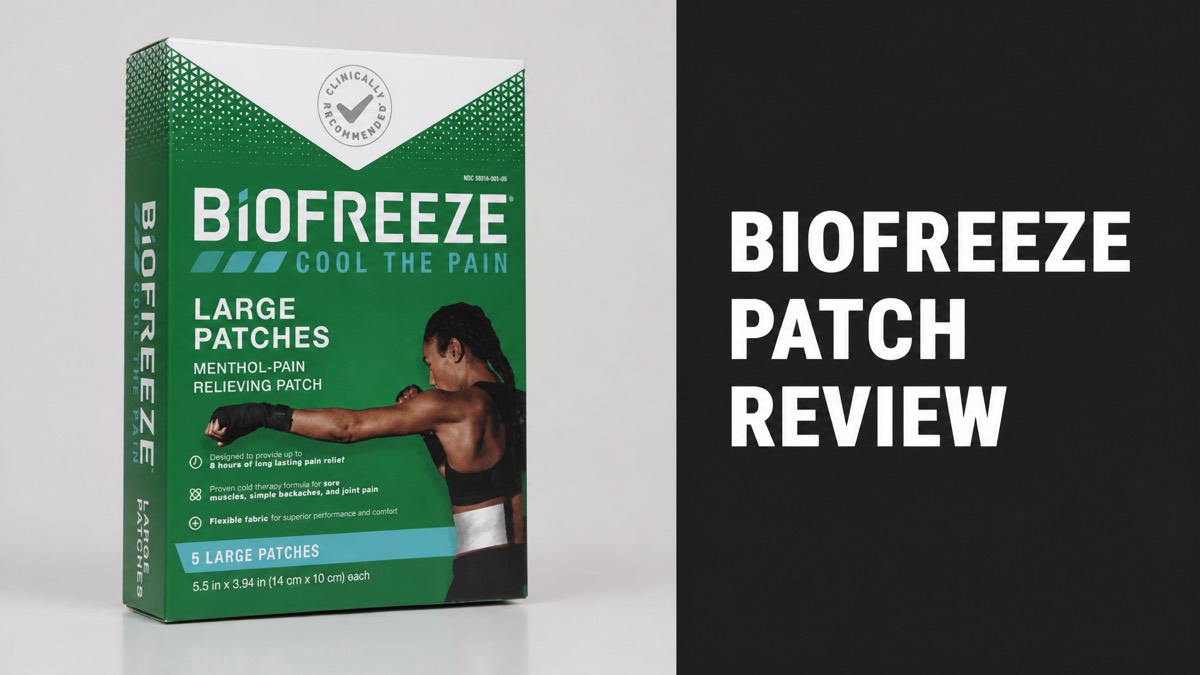
The Biofreeze patch is an over-the-counter pain relieving patch that uses 5% menthol to cool sore muscles and joints. Reckitt Benckiser LLC lists it as an OTC drug. The patch comes in Large and Extra-Large sizes, and each patch is individually wrapped for easy carrying in a purse or bag.
Buyers praise the size, the stay-put grip and the mess-free feel of the patch. Complaints center on edges that slip near a waistband and a scent that bothers some people. A single patch lasts up to 8 hours by the brand's claim. Prices run from $1.75 to $3.00 per patch, depending on the pack size and the store. Every price here comes from live retail listings and moves often.
Ranked against lidocaine patches, Biofreeze trails, yet it still delivers real relief for minor aches. Read on for the ingredients, the side effects, the price and the people who must skip it. Each section builds toward one honest answer on whether the patch earns a place in your cabinet.
What Is the Biofreeze Patch?
The Biofreeze patch is an over-the-counter menthol patch for minor muscle and joint pain. Reckitt Benckiser LLC lists it as an OTC drug under the Biofreeze name. The patch sticks to the skin and delivers cooling relief without gel or spray.
The label covers temporary relief of minor aches and pains in muscles and joints. Think of it as a short-term helper. Typical uses include simple backache, arthritis, strains, bruises and sprains.
Biofreeze calls itself the number one clinician recommended menthol topical pain relief brand. Does a brand slogan prove anything? Not really. That claim comes from the brand itself and counts as marketing, not independent proof.
What Sizes Does the Biofreeze Patch Come In?
The patch comes in a Large size and an Extra-Large size. The Large patch measures 5.5 x 3.94 inches (14 x 10 cm) and ships five to a pack. The XL patch measures 9.84 x 5.5 inches (25 x 14 cm).
Now, watch this: the XL patch runs 150% larger than the Large one. Biofreeze pitches the XL for the back, shoulders and other big areas. Mixed boxes also exist, with long patches near 8 x 4 inches (20 x 10 cm).
Patch Sizes:
| Size | Dimensions | Pack |
|---|---|---|
| Large | 5.5 x 3.94 in (14 x 10 cm) | 5 patches |
| Long | About 8 x 4 in (20 x 10 cm) | Mixed boxes |
| XL | 9.84 x 5.5 in (25 x 14 cm) | 4 patches |
Each patch comes individually wrapped and made of flexible fabric. Single wrappers make the patches easy to carry in a bag.
What Is in the Biofreeze Patch?
The Biofreeze patch relies on menthol 5% as its only active ingredient. Short answer: that's the whole active list. The label lists the purpose as a pain relieving patch. A DailyMed listing for the menthol patch confirms the same 5% strength.
The inactive list adds plant extracts. These include aloe leaf extract, arnica flower extract, boswellia resin extract and green tea leaf extract.
Plant Extracts:
- Aloe leaf extract
- Arnica flower extract
- Boswellia resin extract
- Green tea leaf extract
The base also holds glycerin, kaolin, mineral oil, petrolatum and water. Polyacrylic acid and sodium polyacrylate appear on the list as well.
Does the Biofreeze Patch Contain Lidocaine?
No. The classic Biofreeze patch uses menthol only and contains no lidocaine. The Large patch listing also calls the product NSAID-free. And here's the catch: Biofreeze sells lidocaine patches under a separate Ultraflex name.
The Ultraflex line uses 4% lidocaine without menthol. A second version, Ultraflex Plus, combines 4% lidocaine with menthol.
Product names look alike across the range. Buyers who want the menthol patch must confirm menthol 5% on the label before ordering.
How Does the Biofreeze Patch Work?
Menthol acts as a counter-irritant that stimulates cold receptors in the skin. Biofreeze explains that these cold sensations stimulate receptors which block pain signals. The cooling signal competes with pain on its way to the brain.
WebMD describes menthol the same way. The ingredient stimulates receptors and then produces a cooling effect. Why does pain ease? The cooling signal competes with pain on its way to the brain. Pain feels weaker while that effect lasts.
Here is the part most people miss: the effect masks pain rather than repairing tissue. A sore muscle still needs time to heal. Relief ends when the cooling fades.
How Do You Apply the Biofreeze Patch?
Application needs only a peeled backing and a firm press onto the sore area. The flexible fabric then moves with the body. The patch works under clothing, so wearers can keep going about their day.
The label bars use on wounds, damaged skin or irritated skin. The patch must also stay away from the eyes and mucous membranes.
Steps:
- Peel off the backing.
- Press the patch onto the sore area.
- Keep the patch away from eyes and wounds.
- Skip heating pads and tight bandages over the patch.
Heating pads and tight bandages are off limits over the patch. Why skip the heating pad? Heat pushes too much medicine into the skin.
Does the Biofreeze Patch Actually Work?
Yes. The Biofreeze patch delivers real but temporary relief for minor muscle and joint pain. Users report that the cooling starts fast. The benefit comes from the surface sensation, not from healing the strain.
Retail ratings back up the praise. The XL pack holds 4.6 out of 5 stars across 485 ratings. The Large pack holds 4.5 stars across more than 18,000 reviews.
A Drugs.com page rates the Biofreeze line at 6.9 out of 10 from 9 ratings. Of those, 56% were positive and 11% were negative. Is 6.9 out of 10 impressive? The sample is tiny, so the number carries little weight.
How Long Does the Biofreeze Patch Last?
A single patch lasts up to 8 hours by the brand's claim. Do users agree? Several users report that the cooling holds through a full day. One user still had medicine in the patch at the end of the day.
One buyer with knee arthritis and lower back pain applied two patches. And it gets better: relief kept going strong after 9 hours.
Night use works too. A patch on the shoulder before bed left one user's arm feeling much better by morning. Biofreeze also sells a separate Overnight Relief patch.
Does the Biofreeze Patch Help Lower Back Pain?
Yes. The XL patch covers a large share of the lower back and brings relief to most users. A construction worker's spouse reports a clear difference after long days. The patch stays in place during work.
But here's the catch: placement matters. One user lost relief when a pant waistband rubbed the patch loose. One user found no relief because a pant waistband rubbed the patch loose.
A patch worn on the upper or mid back avoids the waistband problem. Lower placements need a snug fit with nothing rubbing the edges.
What Do Biofreeze Patch Reviews Say?
Buyer feedback runs strongly positive, and most complaints involve fit rather than results. Praise centers on size, grip and the lack of mess. Criticism centers on slipping, scent and ordering mix-ups.
To be clear, neither side reports serious problems. The negative notes describe a patch that moved or a product that was not the one expected.
What Do Users Like About the Biofreeze Patch?
Users like the size, the stay-put grip and the mess-free cooling. One large patch covers an area that once took several applications of gel. The patch moves with the body instead of feeling stiff.
What's more, removal gets praise as well. The patches peel off easily without pulling skin or leaving gunk behind.
Many users prefer a patch to gel or spray because clothes stay clean. The scent reads as subtle to several of them.
Main Pros:
- Covers large areas of the body
- Stays in place
- Lasts without mess or residue
- Peels off easily
What Are the Common Biofreeze Patch Complaints?
The main complaints involve patches that slip or fail to help in awkward spots. The lower back near a waistband is the most cited problem area. Friction there loosens the edges.
Scent gets mixed marks. Is it strong or subtle? That depends on the person. Some users call it refreshing and subtle. Others call it strong and lingering.
A few poor ratings come from mix-ups. One buyer expected the roll-on and received patches. Checking the product type before ordering avoids that miss.
How Does the Biofreeze Patch Compare to Salonpas and Icy Hot?
Biofreeze uses 5% menthol, while the top-ranked Salonpas and Icy Hot Max patches use 4% lidocaine. Icy Hot Max adds 1% menthol. The three patches reach pain relief by different routes. So which one wins on paper?
US News ranked pain patches and gave Salonpas a score of 100. Icy Hot scored 62. Biofreeze scored 57. Biofreeze finished third of the three. Does that make it a bad patch? Not necessarily, because the score reflects one ranking.
Patch Comparison:
| Brand | Active Ingredient | US News Score |
|---|---|---|
| Salonpas | Lidocaine 4% | 100 |
| Icy Hot Max | Lidocaine 4%, menthol 1% | 62 |
| Biofreeze | Menthol 5% | 57 |
Feel differs too. Traditional Icy Hot patches start cold and end warm. Biofreeze stays cool from start to finish.
How Do Menthol and Lidocaine Patches Differ?
Lidocaine patches numb the area by blocking nerve signals, while menthol patches distract the brain with cold. Menthol belongs to the counterirritant group. Lidocaine belongs to the anesthetic group.
Traditional Icy Hot patches often pair menthol with methyl salicylate. Biofreeze keeps its classic patch to menthol alone.
Biofreeze also sells a lidocaine option itself. The Ultraflex 4% lidocaine patch holds 4.0 stars across 1,707 reviews. Buyers who want numbing relief can stay inside the brand.
What Are the Side Effects of the Biofreeze Patch?
The Biofreeze patch causes mild skin reactions in some users. WebMD lists redness, irritation, stinging, burning and tingling at the application site. These reactions are local to the skin under the patch.
The bad news? Allergic reactions are rare but serious. Hives, trouble breathing or swelling of the face, lips or throat call for emergency help. Use stops at once.
Mild Reactions:
- Redness
- Irritation
- Stinging
- Burning
- Tingling
The label says to stop use and ask a doctor if pain, swelling or blistering of the skin appears. The same applies if the condition worsens or redness is present.
Symptoms that last more than 7 days need a doctor. Arthritic pain that lasts more than 10 days needs one too.
Who Should Avoid the Biofreeze Patch?
People with wounds, broken skin or irritated skin must skip the patch. The label bars use on damaged skin. Eyes and mucous membranes need protection from contact.
Pregnant and breastfeeding women must ask a health professional before use. The label gives the same instruction.
The patch stays out of reach of children. A swallowed patch calls for medical help or Poison Control. Heating pads over the patch are also off limits.
How Much Does the Biofreeze Patch Cost?
The Biofreeze patch costs about $1.75 to $3.00 per patch in the US, depending on size. A five-count Large pack lists at $8.75 ($1.75 each). A two-pack of XL boxes lists at $23.99 ($3.00 each).
Other stores charge more. One US store lists five Large patches at $12.99 ($2.60 each). A Canadian retailer lists five patches at $19.94.
Price Per Patch:
| Pack | Price | Each |
|---|---|---|
| Large, 5 count | $8.75 | $1.75 |
| Large, 5 count (other store) | $12.99 | $2.60 |
| XL, 2 boxes of 4 | $23.99 | $3.00 |
| Ultraflex lidocaine, 4 count | $9.19 | $2.30 |
The lidocaine Ultraflex patch lists at $9.19 for four ($2.30 each). Prices move often, so the listing price on the day matters. Is there a cheaper size? The Large pack has the lowest cost per patch.
Where Can You Buy the Biofreeze Patch?
Biofreeze patches sell at drugstores, big-box stores and online. Walmart, Sam's Club, CVS, Walgreens, H-E-B, Amazon and the Biofreeze site all carry them. Availability varies by size.
The good news? Many listings mark the patches FSA eligible. Buyers with an FSA account can pay with those funds.
Pack size and product type vary between listings. The XL listing on Amazon, for example, is a two-pack of four-count boxes.
Is the Biofreeze Patch Worth It?
Yes. The Biofreeze patch is worth it for short-term relief of minor muscle and joint aches, especially across large areas. Size, grip and a mess-free feel earn the strongest praise. Up to 8 hours of wear adds to the value.
But let's be honest about the limits. The patch masks pain without treating the cause. Scent bothers some users. Edges lift on spots that rub, like the waistband.
Does the ranking sink it? Ranked against lidocaine patches, Biofreeze trails, yet the praise for size and grip stays. Pain that persists beyond 7 days, or arthritic pain beyond 10, needs a doctor, per the label.
Who Should Buy the Biofreeze Patch?
Buyers who want a cooling, mess-free option for back, shoulder or knee soreness fit the patch best. The XL size suits big areas. The Large size suits smaller spots.
Buyers who want numbing relief do better with a lidocaine patch. People with irritated skin, or who are pregnant, must check with a health professional first.
Coffee Loving Card Makers is a reader-supported platform. Purchases made through our links may earn us an affiliate commission at no extra cost to you. Learn more.