
Is BioCell Collagen Worth It in 2026? An Honest Review
 By Anna Krause September 22, 2026
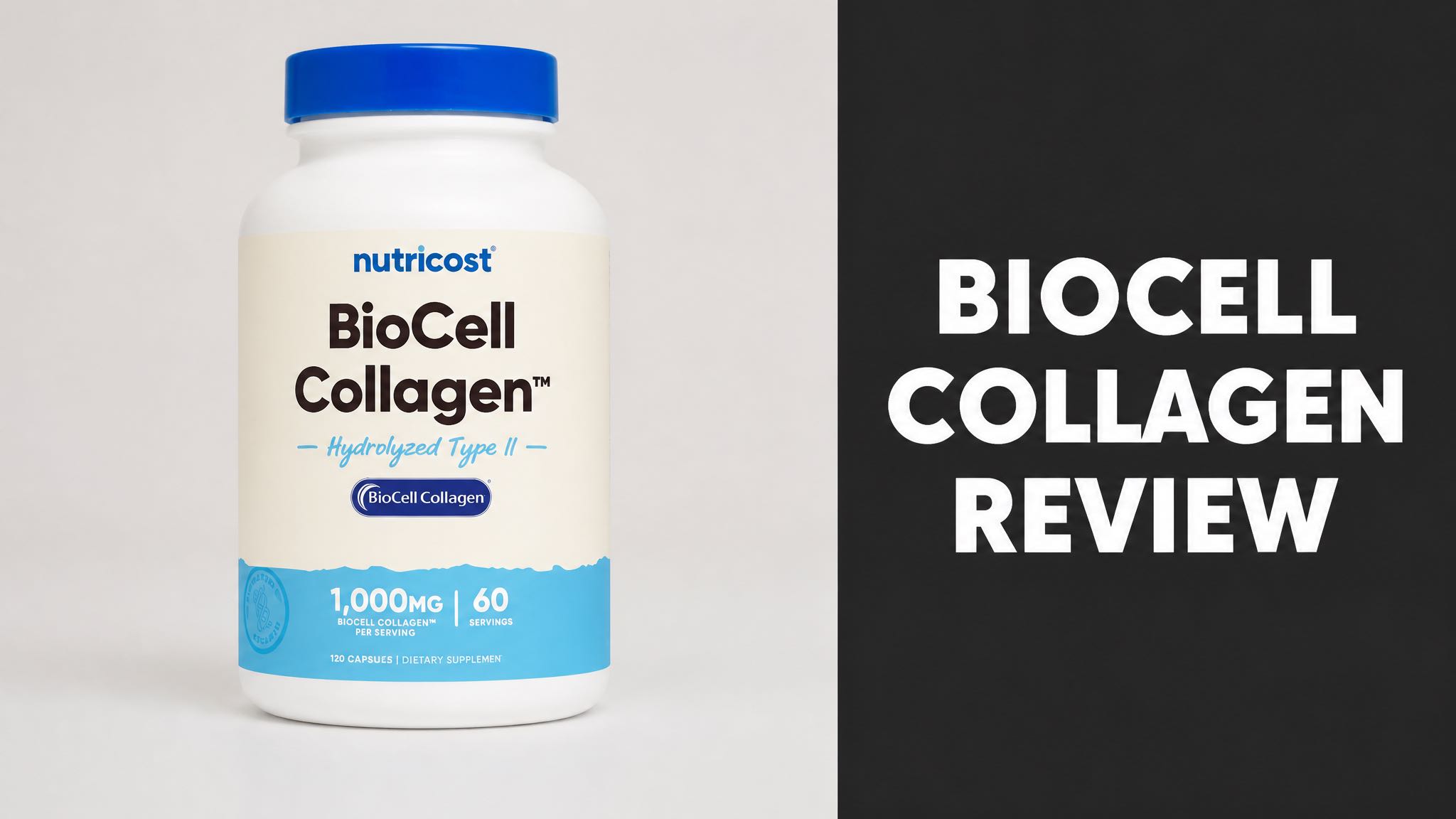
BioCell Collagen is a naturally occurring matrix of hydrolyzed collagen type II peptides, chondroitin sulfate, and hyaluronic acid, sourced entirely from chicken sternal cartilage. It has stayed on the market since 1998, backed by seven human clinical trials.
The matrix stimulates chondrocytes to build cartilage, up-regulates hyaluronic acid production in skin, and inhibits the enzyme that breaks hyaluronic acid down. Clinical studies link daily use to reduced facial wrinkles, better skin hydration, and healthier, more active joints. Customer ratings lean heavily positive, with joint comfort and visible skin improvement cited most often. Pricing ranges from lower-cost single-ingredient capsules to a $167.60 multi-ingredient liquid formula.
An independent toxicology panel affirmed BioCell Collagen as Generally Recognized As Safe, and millions of consumers have used it without incident since its 1998 launch. This review breaks down what it is, how it works, what it costs, and whether the evidence backs up buying it.
What Is BioCell Collagen?
BioCell Collagen is a naturally occurring matrix of hydrolyzed collagen type II peptides, chondroitin sulfate, and hyaluronic acid. The three components work together as one bonded matrix, not as separate ingredients mixed in a blender.
Here's the thing: the ingredient has stayed on the market since 1998. Millions of consumers have used it since that launch without a wave of reported problems.
BioCell Collagen carries status as a clinically studied dietary ingredient. BioCell Technology developed and patented the formula, then built a research record around it.
What Makes BioCell Collagen Different From Other Collagen?
Most collagen powders on shelves start as separate ingredients. Manufacturers blend collagen peptides with other additives after the fact.
BioCell Collagen skips that step. Its collagen, chondroitin sulfate, and hyaluronic acid occur together naturally in the source material, forming one synergistic matrix instead of a mixed formula.
Sourcing differs too. Many competing products pull collagen from whole animal carcasses, including cow, pig, or marine sources, then label it Collagen Peptides, Hydrolyzed Collagen, or Gelatin. So what does that mean for you? A more traceable, single-source ingredient on one side, and a mixed-source blend on the other.
Clinical support separates the two categories further. Seven human clinical trials back BioCell Collagen, while many competing collagen products carry no human studies at all or use ingredient amounts below tested levels.
What Is BioCell Collagen Made From?
BioCell Collagen starts as a 100% pure hydrolyzed chicken sternal cartilage extract. The cartilage itself supplies every core component of the finished ingredient.
Independent lab analysis confirms the resulting matrix contains at least 60% hydrolyzed collagen type II, at least 20% chondroitin sulfate, and at least 10% hyaluronic acid.
Chicken sternal cartilage carries a purity advantage. The tissue contains no blood vessels, lymphatics, or nerves, and the source birds don't receive hormones or antibiotics, which lowers contamination risk from the start.
Manufacturing follows a patented sequence: filtration, purification, concentration, hydrolysis, and sterilization. Production happens exclusively in the USA and Germany.
How Does BioCell Collagen Work?
BioCell Collagen's hydrolyzed collagen type II peptides stimulate chondrocytes to produce cartilage-specific collagen and proteoglycans. Chondrocytes are the cells responsible for building and maintaining cartilage tissue.
The matrix works on skin through a separate pathway. Collagen peptides up-regulate hyaluronic acid synthases and increase the proliferation of dermal fibroblasts, the cells that build the skin's structural network. Here's what that actually means: the skin gets more of the raw materials it needs to rebuild itself.
BioCell Collagen also produces a dose-dependent inhibition of hyaluronidase. Hyaluronidase is the enzyme that breaks down hyaluronic acid in skin, so slowing it down helps hyaluronic acid levels hold steady.
How Does BioCell Collagen Support Skin?
Skin loses collagen, hyaluronic acid, and chondroitin sulfate naturally with age. BioCell Collagen supplies bioavailable versions of all three to rebuild the dermal matrix as those natural levels decline.
A 2011 study measured the effect directly. Why does hyaluronic acid matter so much? It's the molecule that holds water in the skin. Human subjects saw their hyaluronic acid levels rise 60-fold in their blood during 28 days of daily BioCell Collagen intake.
A follow-up clinical study extended the timeline to 12 weeks. Daily ingestion reduced facial lines and wrinkles, enhanced hydration, and stimulated collagen biosynthesis, with results published in Clinical Interventions in Aging in 2012.
How Does BioCell Collagen Support Joints?
Hydrolyzed collagen type II stimulates chondrocytes to produce cartilage-specific collagen and proteoglycans. Both compounds form the structural backbone of healthy joint cartilage.
Chondroitin sulfate contributes a separate function. The molecule gives cartilage its shock-absorbing properties, cushioning joints during movement. That's the part that keeps joints feeling steady, not creaky.
Human clinical trials studied a 2-gram daily dose specifically for joint health outcomes. That dosing level anchors most of the joint-focused research behind the ingredient.
What Are the Benefits of BioCell Collagen?
BioCell Collagen's skin benefit centers on reducing dryness, scaling, and visible wrinkles. The result is younger-looking skin texture over a period of consistent daily use.
Joint health forms the second core benefit. BioCell Collagen promotes active joints and healthy connective tissue through its cartilage-building peptides.
A 2011 human skin study surfaced a third benefit: increased facial hemoglobin. And here is the kicker: researchers linked that increase to enhanced dermal microcirculation, meaning better blood flow to the skin's surface layer.
Key Benefits:
- Reduces skin dryness, scaling, and visible wrinkles
- Promotes active joints and healthy connective tissue
- Enhances dermal microcirculation and hemoglobin levels in skin
Does BioCell Collagen Improve Skin Hydration?
Yes. BioCell Collagen enhances skin hydration and turgidity by supplying hyaluronic acid directly and by inhibiting the enzyme hyaluronidase that breaks it down.
Most participants in the 12-week clinical study experienced improved skin texture, enhanced moisture, and reduced scaling. That outcome matched the mechanism the ingredient targets.
Does BioCell Collagen Help Joint Health?
Yes. Multiple human clinical trials demonstrate the safety and efficacy of BioCell Collagen in promoting joint health specifically.
Researchers tested a 2-gram daily dose for this exact outcome. That dose remains the benchmark cited across the joint-focused studies.
What Do BioCell Collagen Reviews Say?
One BioCell Collagen listing carries over 5,000 customer ratings, with the large majority landing at 4 stars or higher. That volume gives a reasonably clear read on general satisfaction.
Customers most often mention two outcomes: joint comfort and visible skin improvements. Both align with the ingredient's two headline benefit areas.
A product comparison video highlighted a further point. The reviewer favored BioCell Collagen's value and effectiveness over generic multi-collagen blends after trying both.
What Do Customers Like Most?
Joint comfort and visible skin benefits top the list of cited positives. These two outcomes repeat across the available customer feedback.
Value comparisons favor BioCell Collagen too. A direct side-by-side against multi-collagen products came down in favor of BioCell Collagen on both value and effectiveness.
What Are Common Complaints?
Available customer feedback skews heavily positive. No single complaint dominates or repeats consistently across the sourced reviews.
Some uncertainty does exist around scope of effect, though. Clinical evidence ratings classify BioCell Collagen as possibly effective for some uses and possibly ineffective for others, so results aren't universal across every claimed benefit.
BioCell Collagen vs Other Collagen Supplements
BioCell Collagen's sourcing sets it apart immediately: chicken sternal cartilage only, not the whole-carcass sourcing common to competitors. Cow, pig, and marine collagen all fall under that broader whole-carcass category.
Formulation marks a second difference. BioCell Collagen forms a naturally occurring synergistic matrix, while most collagen peptide or gelatin products are blended formulations assembled from separate ingredients.
Clinical evidence draws the sharpest line, though. Many competing collagen supplements carry no human clinical studies, or use ingredient quantities below the levels shown effective in research.
BioCell Collagen vs Typical Collagen Supplements:
| Factor | BioCell Collagen | Typical Collagen Supplement |
|---|---|---|
| Source | Chicken sternal cartilage only | Whole animal carcass (cow, pig, marine) |
| Formulation | Naturally occurring matrix | Blended from separate ingredients |
| Clinical trials | Seven human clinical trials | Often none, or limited |
| Safety status | GRAS since 1998 | Varies by brand |
Is BioCell Collagen Safe?
Yes. An independent expert toxicology panel affirmed BioCell Collagen as Generally Recognized As Safe (GRAS) after reviewing its safety data and manufacturing processes.
The track record backs that up. Millions of consumers have used BioCell Collagen safely since 1998, a period spanning almost three decades.
Allergen exposure stays low too. BioCell Collagen is non-GMO and free of gluten, soy, shellfish, fish, egg, milk, peanuts, and sugar.
What Are the Side Effects of BioCell Collagen?
BioCell Collagen is likely safe for adults taken by mouth short-term in daily doses of 2 grams or less. That dosing ceiling matches the amount studied in most clinical trials.
Topical use tells a different story, though. Not enough evidence exists to confirm safety when BioCell Collagen is applied to skin rather than taken orally.
Pregnancy and breastfeeding carry a specific precaution. Not enough is known about safety during those periods, so avoiding use is the recommended approach.
Safety Snapshot:
- Likely safe orally at 2 grams or less per day, short-term
- Insufficient evidence for topical/skin application
- Not recommended during pregnancy or breastfeeding
What Is the Effective Dose of BioCell Collagen?
Skin benefits require a studied dose of 1 gram, or 1000 milligrams, per day. That amount anchors the clinical research behind the ingredient's skin-related outcomes.
Joint and combined skin health benefits call for a higher amount. Researchers studied 2 grams, or 2000 milligrams, per day for that broader outcome.
How Much Does BioCell Collagen Cost?
The Modere Liquid BioCell Life 2-Pack carries a retail price of $167.60. That figure represents the full-formula, multi-ingredient version of the product.
The good news? Loyalty membership brings the price down. Modere's member price for the same 2-Pack drops to $142.50.
Single-ingredient BioCell Collagen capsules sit at a different price point. Retailers like iHerb and Walmart carry these formats at a lower per-bottle cost than multi-ingredient liquid blends.
Price Comparison:
| Product | Price Type | Price |
|---|---|---|
| Modere Liquid BioCell Life 2-Pack | Retail | $167.60 |
| Modere Liquid BioCell Life 2-Pack | Member | $142.50 |
| Single-ingredient BioCell capsules | Standard retail | Lower per-bottle cost |
Is BioCell Collagen Worth the Price?
Modere Liquid BioCell Life justifies its higher price through added formulation. The product combines BioCell Collagen with 13 phytonutrient-rich superfoods and resveratrol, which pushes the price above single-ingredient formats.
Single-ingredient BioCell Collagen capsules answer a different budget. Shoppers who don't need the added superfoods get the same clinically studied matrix at a lower cost per serving.
Where Can You Buy BioCell Collagen?
Mainstream retailers carry BioCell Collagen under brand formulations such as NOW Foods and Olympian Labs. iHerb, Walmart, and Swanson Vitamins all stock these versions.
Modere Liquid BioCell takes a different distribution path. Modere sells it directly through its own retail site, with retail, loyalty, and member pricing tiers built into that single channel.
Is BioCell Collagen Worth It?
BioCell Collagen's strongest case rests on its evidence base. Seven human clinical trials and a GRAS safety status separate it from many unstudied collagen products on the market.
The case against it is narrower, but it's real. Pregnant and breastfeeding users should avoid it due to insufficient safety data, and pricing swings widely depending on brand and format chosen.
Weighing both sides together: the clinically studied dosing of 1 to 2 grams per day and a consistent multi-decade safety record make BioCell Collagen one of the more credibly supported collagen ingredients available today.
Coffee Loving Card Makers is a reader-supported platform. Purchases made through our links may earn us an affiliate commission at no extra cost to you. Learn more.