
Balea Beauty Collagen Retinol Serum Review: Does It Actually Work?
 By Anna Krause September 21, 2026
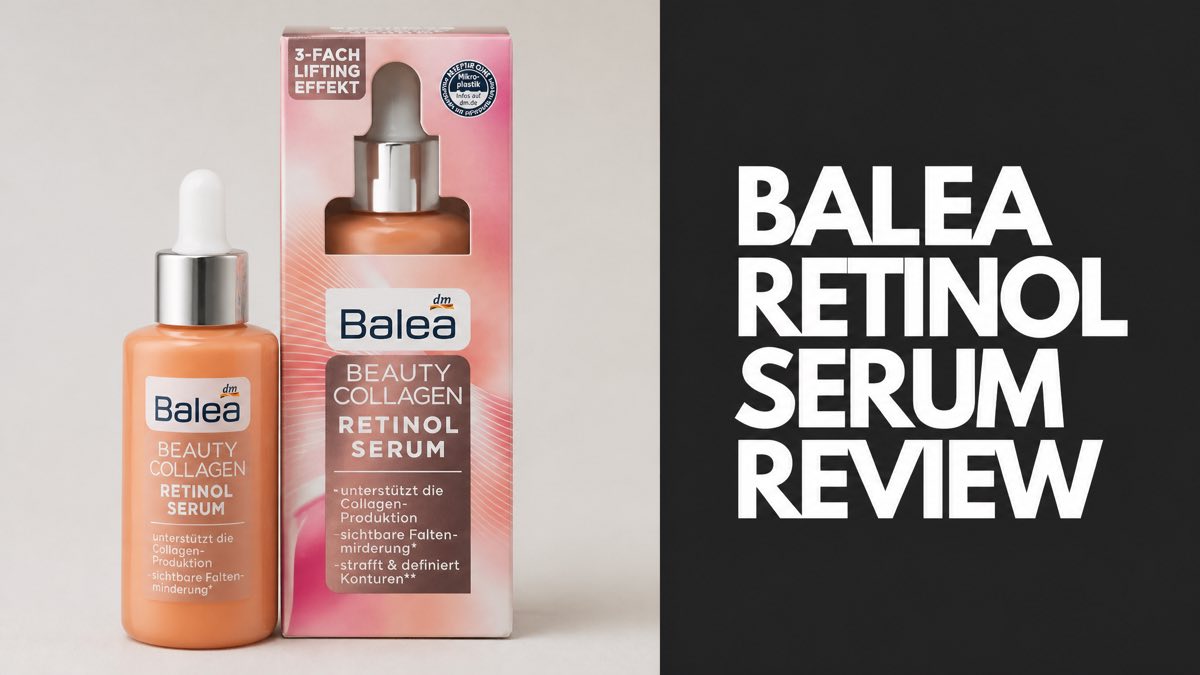
Balea Beauty Collagen Retinol Serum is a budget drugstore serum built around a dual retinol complex and a triple collagen blend. It costs under eight dollars for a 30ml bottle, which raises an obvious question: can a serum this cheap actually do anything for fine lines, texture, and tone?
The ingredient list leans almost entirely on one active, retinol, supported by a handful of moisturizing and stabilizing extras. That single-active focus is worth understanding before you add it to a routine, so this review breaks down exactly what the formula contains, what it can realistically do, and where the price tag creates real trade-offs.
Here is an honest look at the formula, the evidence behind its claims, who should be cautious, and whether it earns a spot in a skincare routine.
What Is Balea Beauty Collagen Retinol Serum?
Balea Beauty Collagen Retinol Serum is a facial serum sold in a 30ml bottle for roughly $7.69 to $13.00 in the United States, positioned as an anti-aging treatment for fine lines, firmness, and skin elasticity. Balea is a German drugstore brand, and this serum markets itself around a "dual retinol complex" and "triple collagen support," pairing Retinol and Retinyl Palmitate with Acacia Collagen and peptides. The formula targets five effects: anti-aging, anti-blemish, exfoliation, antioxidant protection, and evening skin tone.
What's Inside: Key Ingredients Explained
The active driving nearly every claim on the bottle is retinol, two conversion steps away from retinoic acid, the form vitamin A takes once it's working in skin. Retinyl Palmitate sits three steps away from retinoic acid, meaning it needs an extra conversion and typically shows up in low concentrations, making it a gentler but weaker supporting ingredient rather than a second full-strength active. Arginine and lysine polypeptide, a peptide pairing, adds moisturizing support and may help collagen production, though the evidence for that specific peptide combination is thinner than the evidence for retinol itself.
Tocopherol, pure vitamin E, and Tocopheryl Acetate, a more stable but less potent vitamin E derivative, round out the antioxidant side of the formula, mostly protecting the skin barrier and stabilizing the other ingredients rather than driving visible results on their own.
| Ingredient | Role | Strength Note |
|---|---|---|
| Retinol | Primary active — cell turnover, fine lines, tone, blemishes | Two steps from retinoic acid; can be irritating |
| Retinyl Palmitate | Secondary vitamin A derivative | Three steps from retinoic acid; often under-dosed |
| Arginine/Lysine Polypeptide | Moisturizer, possible collagen support | Limited independent evidence |
| Tocopherol / Tocopheryl Acetate | Antioxidant, formula stabilizer | Supportive, not a standalone active |
What Does Retinol Actually Do for Skin?
Retinol works by converting to retinoic acid inside the skin, and once converted, it is proven effective against nearly every visible sign of aging. It speeds up skin cell turnover, helps clear blemishes and clogged pores, can regulate excess oil, and evens out skin tone over time. That mechanism is well established for retinol as an ingredient class — the open question with any specific product is concentration and formulation, and this serum's label does not disclose a percentage.
Does It Help With Fine Lines and Wrinkles?
This serum can plausibly reduce and soften the appearance of fine lines and improve skin elasticity and firmness because retinol is its main active ingredient. Results here take patience: visible change in fine lines and elasticity typically needs at least six weeks, because the changes happen in the deeper layers of skin, not the surface. No topical product, at this price or any other, erases wrinkles or reverses aging outright, and this one is no exception.
Can It Even Out Skin Tone and Reduce Blemishes?
Retinol is also the ingredient responsible for this serum's anti-blemish and skin-tone claims. It can reduce breakouts and clogged pores with a noticeable effect for acne-prone skin, and it can lessen hyperpigmentation and post-acne marks with consistent use over a couple of months. Retinol additionally functions as a mild exfoliant, breaking down bonds between dead surface cells, which is part of why skin often looks brighter after use — though over-exfoliating with any retinol product risks disrupting the skin barrier.
How Long Until You See Results?
Six weeks is the realistic minimum before fine lines or elasticity show measurable change, and hyperpigmentation improvement needs a couple of months of consistent application. That timeline matches how retinol works generally, not anything specific to this formula, so patience matters more than the price tag when judging whether it's "working."
Is It Safe for Sensitive Skin? Potential Irritants
Retinol, the serum's core active, can be quite irritating, which is the standard trade-off for an ingredient this effective. The arginine and lysine polypeptide combination can also be helpful for reducing inflammation, including inflamed acne, but it too carries some irritation risk. Anyone new to retinol or with reactive skin should patch-test first and introduce it gradually — a few nights a week before daily use — rather than assuming a cheap serum means a gentle one.
How Much Does It Cost?
The serum retails from $7.69 up to $13.00 for a 30ml bottle in the United States, and around £7.64 in the United Kingdom. That undercuts most retinol serums on the market by a wide margin.
| Product | Price | Similarity to Balea Serum |
|---|---|---|
| Balea Beauty Collagen Retinol Serum | $7.69 | — |
| SVR ABC Ampoule Lift A | $35.00 | 86% |
| SKIN&LAB Vitamin C Brightening Serum | $13.89 | 84% |
| Functionalab Retinol 0.5% Serum | $130.00 | 83% |
| Naturium Vitamin C Super Serum Plus | $18.19 | 80% |
How Does It Compare to Similar Serums?
Against comparably formulated retinol and vitamin C serums, this one sits at a fraction of the price — the closest match by formulation, Functionalab's Retinol 0.5% Serum, costs roughly seventeen times more. The trade-off is transparency: this label doesn't state a retinol percentage, while pricier competitors often do, making it harder to know exactly how strong a dose you're applying each night.
How to Use It in Your Routine
Apply this serum at night, after cleansing and before moisturizer, since retinol degrades in sunlight and increases sun sensitivity. Start with two to three nights a week if you're new to retinol, and always follow with sunscreen the next morning. Layering it under a moisturizer can help buffer the irritation that comes with the retinol content.
Is Balea Beauty Collagen Retinol Serum Worth It?
For under eight dollars, this serum delivers a real, working active ingredient — retinol — in a formula that can plausibly support fine lines, tone, and blemish-prone skin over six or more weeks of consistent use. It won't out-perform a dermatologist-strength retinoid, and the undisclosed concentration makes it hard to predict exactly how it will compare to a pricier, clearly labeled alternative. But as a low-cost entry point into retinol, or a backup bottle for a stretched routine, it's a reasonable, honest pick rather than a gimmick — as long as expectations about irritation and timeline stay realistic.
Coffee Loving Card Makers is a reader-supported platform. Purchases made through our links may earn us an affiliate commission at no extra cost to you. Learn more.