
Aspercreme Lidocaine Pain Relief Patch Review: Does It Work?
 By Anna Krause November 5, 2026
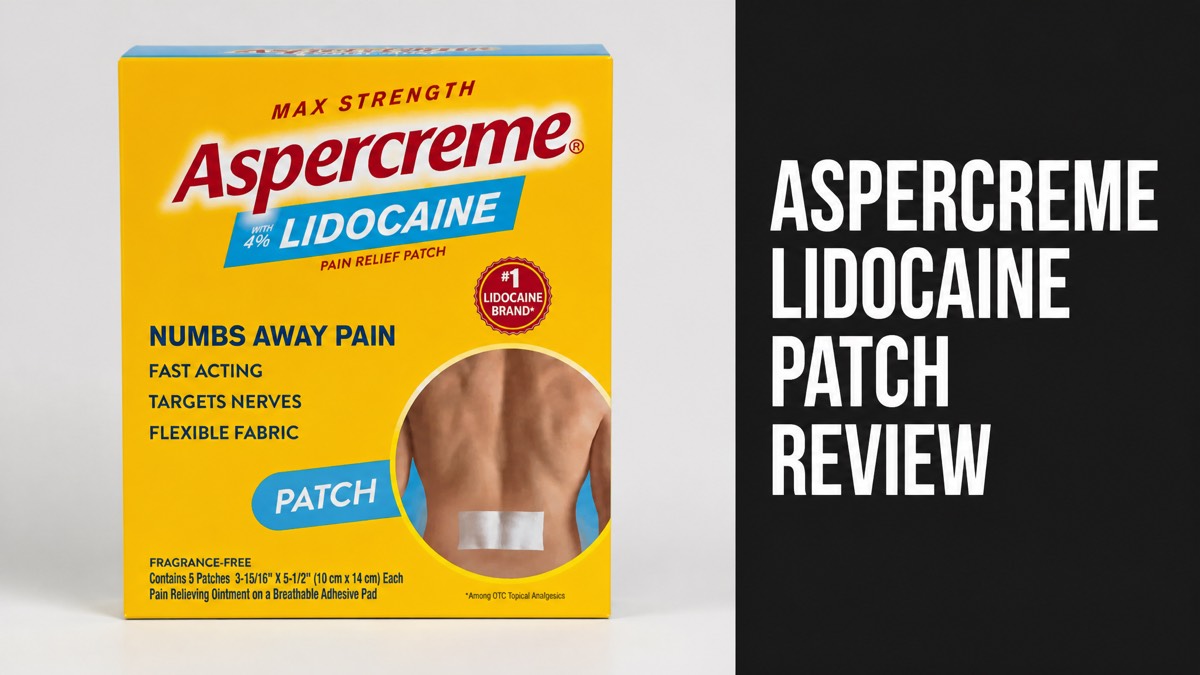
The Aspercreme Lidocaine Pain Relief Patch is an over-the-counter adhesive patch with 4% lidocaine. Adults and children 12 and older use it for minor back, neck, and shoulder pain. It needs no prescription, and most major retailers stock it.
Lidocaine numbs the skin by stopping nerves from sending pain signals. The patch peels in two parts and goes on clean, dry skin. The label caps use at 3 to 4 times per day. Most users report real relief, and the 5-count pack holds a 4.4 out of 5 average across 1,418 ratings.
Curling edges and a minor-pain scope limit the patch. Side effects stay mostly at the skin, and heat is the main risk. Read on for sizes, comparisons with Salonpas and Icy Hot, costs, and a clear verdict on who should buy it.
What Is the Aspercreme Lidocaine Pain Relief Patch?
The Aspercreme Lidocaine Pain Relief Patch is an over-the-counter adhesive patch with 4% lidocaine for temporary relief of minor pain. Adults and children 12 and older can use it without a prescription.
The patch is fragrance-free and built on flexible fabric. Aspercreme calls itself the number one topical lidocaine brand among over-the-counter topical analgesics. Why does the fragrance-free part matter? Many pain products carry a strong medicinal smell, and this one does not.
The label points to three body areas: the back, the neck, and the shoulder. To put it simply, those flat, broad areas suit a patch better than joints that bend all day.
What Sizes Does It Come In?
The standard Large patch measures 10 cm by 14 cm (3.9 by 5.5 inches). Shoppers can buy it in a 5-count pack or a single patch.
The XL patch measures 12 cm by 20 cm (4.7 by 7.9 inches) and ships in a 3-count pack. Aspercreme says it is over 70% larger than the original size.
Size Options:
| Size | Dimensions | Pack |
|---|---|---|
| Large | 10 cm x 14 cm (3.9 x 5.5 in) | 5-count |
| Large | 10 cm x 14 cm (3.9 x 5.5 in) | 1-count |
| XL | 12 cm x 20 cm (4.7 x 7.9 in) | 3-count |
How Does the Patch Work?
Lidocaine is a local anesthetic that stops nerves from sending pain signals. MedlinePlus describes the drug class the same way for both prescription and over-the-counter patches.
Here's the part most people miss: the patch numbs the skin instead of creating a cooling or warming sensation. That separates the product from menthol and camphor patches.
The effect stays local to the patch site. So does the patch fix the underlying problem? No. The label covers minor pain only.
How Do You Apply It?
Application starts with clean, dry, intact skin. The patch must never go on wounds or irritated skin.
The backing peels in two parts. Users pull the middle apart, stick down the exposed half, then remove the remaining liner. Pulling both strips at once makes the patch fold on itself. So what should you do instead? Remove one portion at a time.
Hands get washed after applying or removing the patch. Used patches get folded with the sticky ends together. Children and pets must not reach them, because used patches still contain the drug.
How Long Should You Wear It?
The label sets the limit at no more than 3 to 4 applications per day, one patch on the body at a time. Users should not combine the patch with other topical pain products.
But MedlinePlus is stricter for nonprescription 4% patches. It lists up to 3 times daily and no more than 8 hours per application.
One retailer listing says the patch stays on for up to 12 hours. The numbers disagree. So which one wins? The safest route is the package in hand, and a pharmacist can settle any doubt.
What Are the Benefits of the Patch?
The patch delivers maximum-strength lidocaine for an over-the-counter product. Buyers skip the prescription step. What does that mean in practice? No trip to the pharmacy counter.
Fragrance-free design avoids the medicinal smell of many pain products. Odor-free wear matters for work, travel, and shared spaces.
And a patch keeps the medicine on one spot. Hands stay clean and the dose stays in the area that hurts.
Main Benefits:
- Maximum-strength lidocaine without a prescription
- Fragrance-free and odor-free wear
- Flexible fabric backing
- Targeted placement with clean hands
Does It Actually Relieve Back, Neck, and Shoulder Pain?
Yes. Most users report real relief for minor pain in those areas. The 5-count pack holds a 4.4 out of 5 average across 1,418 ratings, and 72% of them are five stars.
Users apply the patches to low backs, necks, and shoulders. Others report relief for sciatica-related knee pain and for nerve pain in an amputated limb.
The bad news? Results are not universal. A small group says the patch did nothing or made pain worse, and the label limits the product to minor pain.
Does It Stay On?
Yes, on flat areas such as the back and shoulders. Many users report patches that stay put for 12 hours or longer, and some wear one through the night.
Curved areas cause trouble. One user could not keep a patch on the buttock while treating sciatica, and edges roll up on some wearers.
Water works against any lidocaine patch. So can a wet patch survive a shower? Kaiser Permanente notes a wet patch may not stick to the skin.
What Do Customers Say About It?
Customers rate the 5-count pack 4.4 out of 5 on average. The score rests on 1,418 ratings and 426 written reviews.
The spread leans heavily positive. Five-star ratings reach 72%. What about the other end? One-star ratings reach only 6%. In full: five stars reach 72%, four stars reach 14%, three stars reach 6%, two stars reach 3%, and one star reaches 6%.
The wider Aspercreme brand listing on Amazon shows 86% of ratings at four stars or higher. That listing reports over 100,000 orders in the past month.
Rating Breakdown:
| Stars | Share of Ratings | Count |
|---|---|---|
| 5 stars | 72% | 1,025 |
| 4 stars | 14% | 194 |
| 3 stars | 6% | 78 |
| 2 stars | 3% | 37 |
| 1 star | 6% | 84 |
What Do Happy Users Like?
Happy users praise the absence of any scent. Odorless wear lets them use patches around other people without comment. In fact, that is the first thing many reviews mention.
Adhesion earns praise from several wearers. They say the patches stick better than other brands and that some last two days when needed.
Sleep comes up often. Users say the patch eases pain through the night, and they call the relief strong for the money.
What Are the Common Complaints?
The top complaint is edges that roll up and detach. Patches hold for 12 hours or more for many users, yet curling shows up in the neutral reviews. Does that ruin the patch? Not for many users, since they still get 12 hours or more.
Look, application is awkward alone. One user needed a mirror and placed the patch backwards on the shoulders and low back.
Negative outcomes are rare but real. One-star ratings make up 6% of the total, and a few buyers say their pain got worse.
How Does It Compare With Salonpas and Icy Hot?
Salonpas original relies on menthol, methyl salicylate, and camphor instead of lidocaine. Those counterirritants create cooling and warming sensations and carry a strong medicinal scent.
Salonpas also sells a 4% lidocaine patch. Is the formula different? No. The concentration matches the Aspercreme patch and the Salonpas version is odor-free, so the two products compete directly.
Icy Hot Lidocaine combines lidocaine with menthol. What's more, that blend adds a cooling feel that the Aspercreme patch does not have.
Patch Comparison:
| Product | Active Ingredients | Scent |
|---|---|---|
| Aspercreme Lidocaine Patch | 4% lidocaine | Fragrance-free |
| Salonpas Lidocaine Patch | 4% lidocaine | Odor-free |
| Salonpas Original Patch | Menthol, methyl salicylate, camphor | Strong herbal |
| Icy Hot Lidocaine | Lidocaine and menthol | Menthol |
How Does It Differ From Other Aspercreme Products?
Aspercreme original cream uses trolamine salicylate, an aspirin-like compound. It targets inflammation, while the lidocaine patch numbs.
The lidocaine line also includes a cream, a roll-on, a dry spray, and a 3-in-1 foot pain cream. The roll-on and spray reach areas a patch cannot cover.
Aspercreme Arthritis Pain Relief Gel uses diclofenac, an NSAID. Joint inflammation falls under that product instead of the patch.
What Are the Side Effects?
The most common reactions appear at the application site. Redness, swelling, blisters, or changes in skin color can occur and usually fade within minutes or hours.
Heat raises the risk. Why does that matter? Heat can release more drug into the body, so heating pads, saunas, and direct sunlight on the patch are off limits. The label also bans tight bandages.
Users must stop the patch if the condition worsens or lasts more than 7 days. Severe burning, swelling, or blistering at the site also calls for a doctor.
This is important: MRI scans carry a separate warning. Some patches contain metals that can cause burns, so technicians need to know before the scan.
Stop Using and Call a Doctor If:
- Pain worsens or persists beyond 7 days
- Symptoms clear up and return within a few days
- Redness or heavy skin irritation appears
- Severe burning, swelling, or blistering develops at the site
Who Should Avoid It?
People allergic to lidocaine or other local anesthetics should skip the patch. Damaged or irritated skin rules it out as well.
Children under 12 need a doctor's guidance. Pregnant and breastfeeding women should ask a health professional first.
Users should not stack the patch with other topical pain products or place it over an area that already has one. Only one patch belongs on the body at a time.
How Much Does It Cost and Where Can You Buy It?
A small box sells for roughly ten dollars or less at many stores. Exact prices vary by retailer and pack size.
Walmart, CVS, Target, Amazon, and Wegmans all stock the patch. Aspercreme also runs a where-to-buy page that lists more sellers.
Aspercreme says HSA and FSA accounts may cover some of its over-the-counter products. Plan rules differ, so buyers should keep the receipt and check eligibility.
Is It Worth the Price?
Yes, for most buyers with minor pain. Value for the cost comes up repeatedly in positive reviews.
Each patch works once. So how many can one person use per day? The label allows 3 to 4 applications per day, and used patches cannot be reused.
Aspercreme Lidocaine Patch: Final Verdict
The patch delivers solid relief for minor back, neck, and shoulder pain. Bottom line: high ratings, odor-free wear, and maximum-strength lidocaine make the case for it.
Curling edges, label limits, and a minor-pain scope make the case against it. Persistent pain needs a doctor, not a second box.
Who Is It Best For?
Adults with minor pain in flat areas who dislike strong scents fit the profile best. Back, neck, and shoulder users report the strongest results.
The good news? Most buyers fall in the first group. Poor fits include nerve disease, curved body areas, and pain lasting beyond 7 days. Those cases call for professional advice.
Coffee Loving Card Makers is a reader-supported platform. Purchases made through our links may earn us an affiliate commission at no extra cost to you. Learn more.